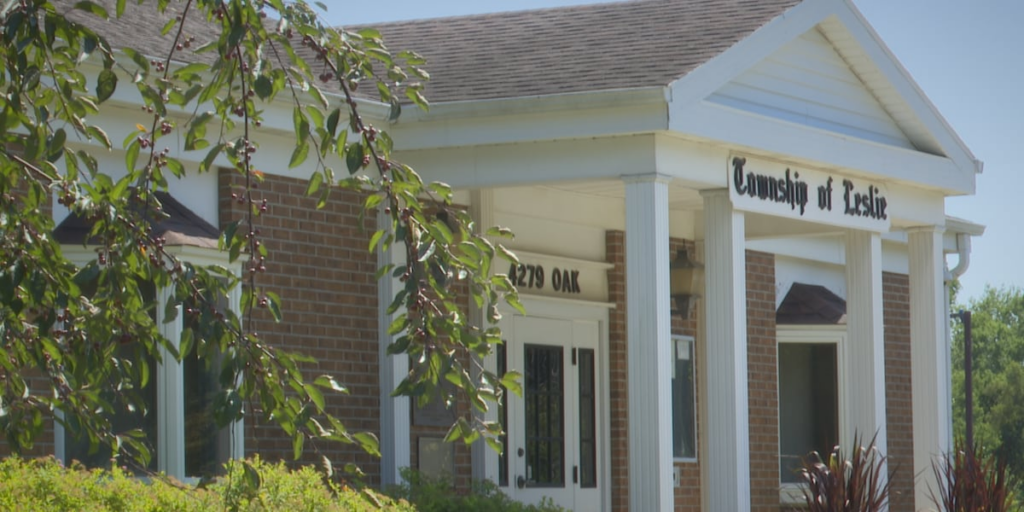
LESLIE TOWNSHIP, Mich. — A significant step in Michigan’s renewable energy journey has been taken, as state regulators approve a large solar project despite local opposition, following a contentious new law that centralizes project approvals.
Leslie Township Supervisor Dallas Henney expressed frustration, stating, “They just said, we’re going to jam it down your throat whether you like it or not. So here we are.” Henney’s concerns arise from Public Act 233, a 2023 law granting Michigan state the authority to greenlight large-scale renewable projects, traditionally under local jurisdiction.
The upcoming Acceleration Solar project, a 90-megawatt solar farm, will span 870 acres across Leslie, Onondaga, and Vevay townships in southern Ingham County. Despite local regulations being stricter than those of the state, the townships reached a settlement with the developer, Ranger Power, rather than allowing unilateral state intervention.
Project Details and Settlement Terms
The settlement includes provisions for additional screening to obscure panels from view, stricter noise regulations, and assigns the responsibility of dismantling the project to the state once it ceases operation. Michigan Public Service Commission Chairman Dan Scripps noted that the agreement also ensures “hundreds of thousands of dollars in direct payments” to the townships, along with funds for legal costs, drain maintenance, and first responder training.
While Ingham County opted out of the settlement, it independently arranged for direct payments with the developer. Henney remarked, “I feel content with that. Not happy, just content.” The settlement received unanimous approval from the Michigan Public Service Commission.
Scripps commented, “This is, in my view, an example of getting this right. It is a law that is working as intended, changing the conversation around development, but also meaningful opportunities for local engagement in the process.”
A Clash of Interests
The law has sparked tension between property owners, township officials, and state interests in promoting clean energy, according to Erik Nordman, Director of the MSU Institute of Public Utilities. He highlighted Michigan’s goal of achieving 100% clean energy by 2040 as a driving force behind such projects.
Research is ongoing to reconcile differences between agriculture and solar development, with initiatives such as agrivoltaics, which integrate farming and solar panels, showing promise.
Despite the progress, the legal battle over Public Act 233 continues. Seventy-nine Michigan townships and counties have appealed to the Michigan Supreme Court following a split ruling by the Court of Appeals. They argue that regulators have improperly limited the definition of a “compatible renewable energy ordinance,” a tool for local zoning control.
Nordman noted that the courts have so far upheld PA 233, even as legislative efforts to repeal the law persist. Until resolved, the Ingham County solar farm serves as a crucial example of the law’s implementation.
Stream News 10 Lansing on your favorite devices! Here’s how to download the News 10+ app on Roku, Fire TV or Apple TV.
Original Story at www.wilx.com