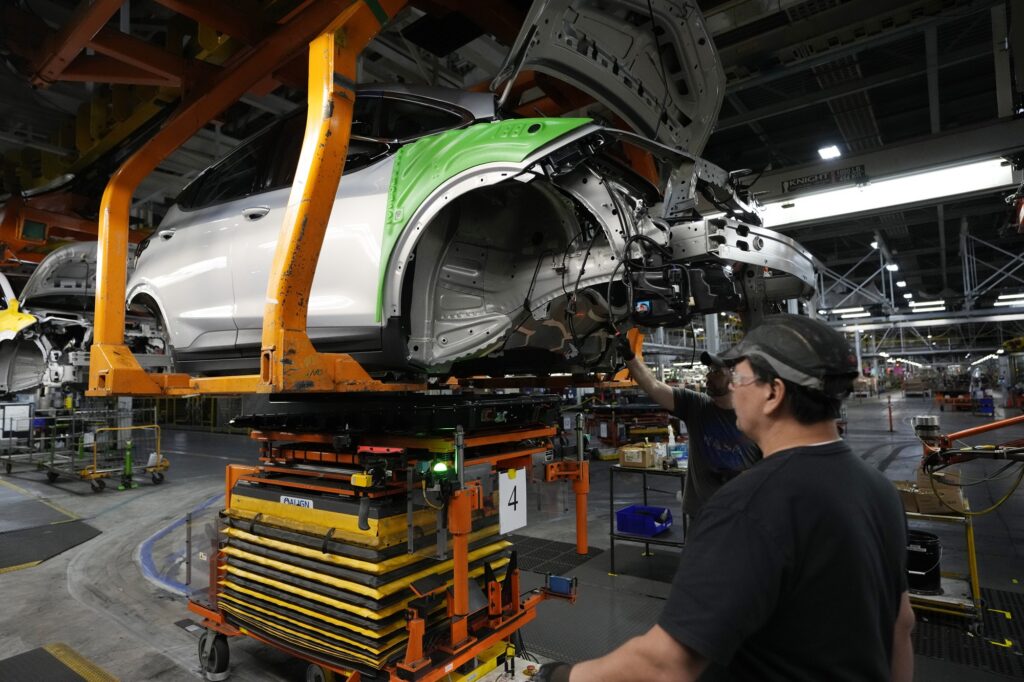
U.S.-Canada Auto Trade Tensions Escalate Amid Tariff Increases
The automotive industry in the United States is navigating turbulent waters as recent decisions have led to significant trade tensions with Canada. The imposition of 50 percent tariffs by President Trump on vehicles manufactured in Ontario is creating substantial challenges for the Big Three automakers, which have been producing several key models in Canada.
Among the vehicles affected are popular models such as GM’s Chevy Silverado and Ford’s F-350 and F-450. These models, along with others, will now face much higher sticker prices due to the newly implemented tariffs. The negotiations to avert these tariffs broke down after Commerce Secretary Howard Lutnick intervened, declaring that tariffs on heavy trucks would remain. Lutnick, who has long been a controversial figure in U.S.-Canada trade relations, previously expressed a desire to shift auto production from Canada to the United States.
The complex nature of the automotive supply chain, which frequently crosses the U.S.-Canada border, further complicates the situation. The tariffs are not limited to heavy trucks; other vehicles, including the Dodge Charger and Chrysler Pacifica, are also impacted. Additionally, tariffs on Canadian steel and aluminum, essential materials for automobile production, have been raised to 50 percent.
The original aim of trade agreements like NAFTA and its successor, the U.S.-Mexico-Canada Agreement (USMCA), was to establish a unified market across North America. The recent tariff hikes threaten to dismantle this integration, posing a risk to the domestic auto industry.
President Trump’s administration has also taken steps to reverse the automotive sector’s shift toward electric vehicles (EVs). On his inauguration day in January 2025, Trump signed the “Unleashing American Energy” executive order, which revoked the goal of EVs making up 50 percent of new car sales by 2030. This move froze the $5 billion National Electric Vehicle Infrastructure program, which was intended to create a nationwide charging network.
Subsequent legislative changes, including the One Big Beautiful Bill Act, eliminated the $7,500 tax credit for new EV purchases. This resulted in a significant decline in planned EV investments in states like Georgia, South Carolina, and Arizona. Key automakers have responded by altering production plans, with Ford canceling its F-150 electric pickup, GM shifting its focus to gas-powered SUVs, and Stellantis halting its electric Ram truck project.
Transportation Secretary Sean Duffy has also relaxed fuel economy standards, reducing the 2031 target from over 50 mpg to 34.5 mpg and eliminating penalties for failing to meet these standards. Meanwhile, China continues to dominate the global EV market, producing 75 percent of all EVs and accounting for over 60 percent of global sales.
Interestingly, while the Trump administration has undermined domestic EV sales, it has simultaneously increased support for domestic battery production, acknowledging the strategic importance of battery technology. However, this contradiction highlights the complexities in U.S. policy as it strives to compete with China in key technological areas.
Political implications of these trade decisions are significant, especially in Michigan, where GOP senatorial candidate Mike Rogers has avoided addressing the tariff issue. This stance could benefit Democratic nominee Abdul El-Sayed, who has criticized Trump’s trade policies as detrimental to Michigan’s economy, particularly given the state’s reliance on auto exports to Canada.
“Trump is escalating a trade war with Canada for his own vanity,” said El-Sayed on social media, emphasizing the economic stakes for Michigan.
Original Story at prospect.org