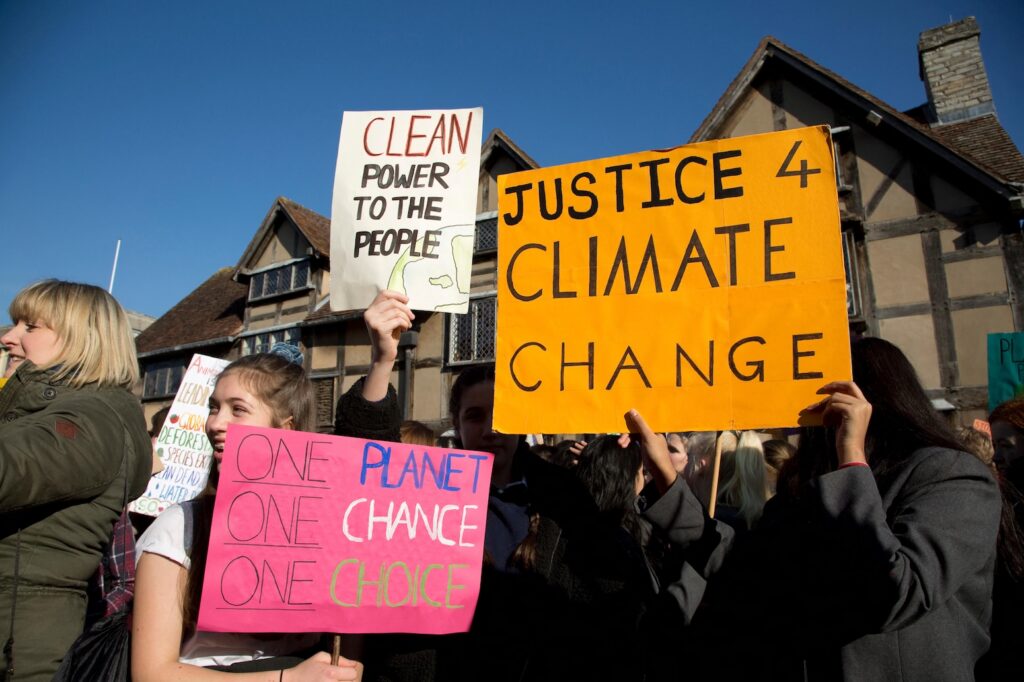
Recent research reveals a significant gap between public perception and actual support for climate action, indicating that people often underestimate the commitment of others while overestimating their actions. This insightful study sheds light on how these misperceptions can affect individual climate-friendly behaviors.
The study, detailed in Nature Climate Change, investigates the disparity between stated support for climate change initiatives and the actions people believe others are taking. Conducted through a series of surveys with over 5,000 participants from Germany and the United States, the research expands upon earlier findings of widespread underestimation of peer commitment to climate issues.
This perceived difference in climate action support is termed a “perception gap”. By examining how individuals perceive others’ climate attitudes and behaviors, the study aims to uncover the impact on personal willingness to engage in climate-positive activities.
An author of the study shared with Carbon Brief that this gap isn’t due to “ignorance or bias” but rather a result of people being inherently poor at making accurate estimations.
Measuring Climate Actions
The notion of rectifying this perception gap is often considered a “cost-effective” strategy to boost public participation in climate initiatives. However, most research has focused on what people claim they would do rather than observing their actual actions, such as monetary contributions or behavioral changes.
To address this, the researchers conducted over 5,000 surveys in Germany and the US between 2024 and 2025. These surveys were split into five experiments focusing on public perceptions of climate support relative to actual behaviors:
| Experiment | What they did |
|---|---|
| Survey one | Participants were asked about donating 1% of their income to WWF and given a chance to donate. They then predicted how many peers would say “yes” and actually donate. |
| Survey two | Participants reviewed a constitutional complaint against the German government led by Greenpeace. They were asked about participating as claimants and/or donating, and then estimated peer participation and support. |
| Survey three | Participants undertook an online “work for environmental protection task”, predicting peer activity levels. They also rated their climate policy support and estimated the same for others. |
| Surveys four and five | Participants were informed about varying levels of peer donation willingness and then asked about their own willingness to support WWF. |
The findings suggest that while Germany and the US are key regions for climate action, they do not fully represent global cultural contexts, prompting the need for further international research.
The Perception Gap
The research highlights that although many participants expressed support for climate action, fewer engaged in tangible behaviors to match this support. Survey one, for instance, showed that 37% of respondents were willing to donate to WWF, but only 4% actually did. Meanwhile, participants overestimated peer donations at 23% and slightly underestimated peer willingness at 34%.
Survey three indicates this perception gap may arise from cognitive limitations in estimating group behaviors. The accompanying chart compares actual policy support and climate-friendly behaviors (blue dots) to survey predictions (red dots), illustrating a trend of overestimating low support and underestimating high support—known as “regression to the mean”.
Individual and environmental factors influenced perceptions of peers’ climate actions, distinct from general errors. Those already engaged in climate actions, who discussed climate issues frequently, or consumed climate-focused media predicted higher climate support levels.
Surveys four and five revealed that awareness of peer beliefs and behavior in surveys influenced participants’ attitudes. Participants informed that 68% were willing to donate showed increased willingness to donate themselves. Conversely, knowing that only 4% actually donated did not significantly affect willingness compared to a control group.
Dr. Kevin Tiede, the study’s lead author from the University of Erfurt, explained that merely informing people about support levels for climate action isn’t sufficient to drive change.
‘Pluralistic Ignorance’
Dr. Tiede described “pluralistic ignorance”, where individuals erroneously believe their views differ from the majority. In climate change, this results in people underestimating the widespread support for climate initiatives.
Stanford University’s Prof Madalina Vascleanu, not involved in the study, highlighted the complexities in encouraging climate action. She noted that direct experiences of climate norms might be more effective than simply being informed of them.
Observable behaviors, such as public protests or adopting vegetarianism, could more effectively encourage climate action than private acts like donations, she suggested.
Prof Mauro Bertolotti from Università Cattolica del Sacro Cuore cautioned that experimental settings might not accurately replicate real-world decision-making processes regarding environmental donations.
‘Targeted’ Communication Strategies
The study advocates for “targeted” communication strategies to foster climate-friendly behaviors among those already supportive of climate action, rather than focusing on converting skeptics. It suggests that addressing the attitude-behavior gap is crucial, recommending the facilitation of climate-positive actions through “convenience and subsidies”. Additionally, ensuring fairness in environmental policy could enhance public support.
Understanding the “effectiveness and co-benefits” of climate action could also aid in bridging the perception gap.
Original Story at www.carbonbrief.org