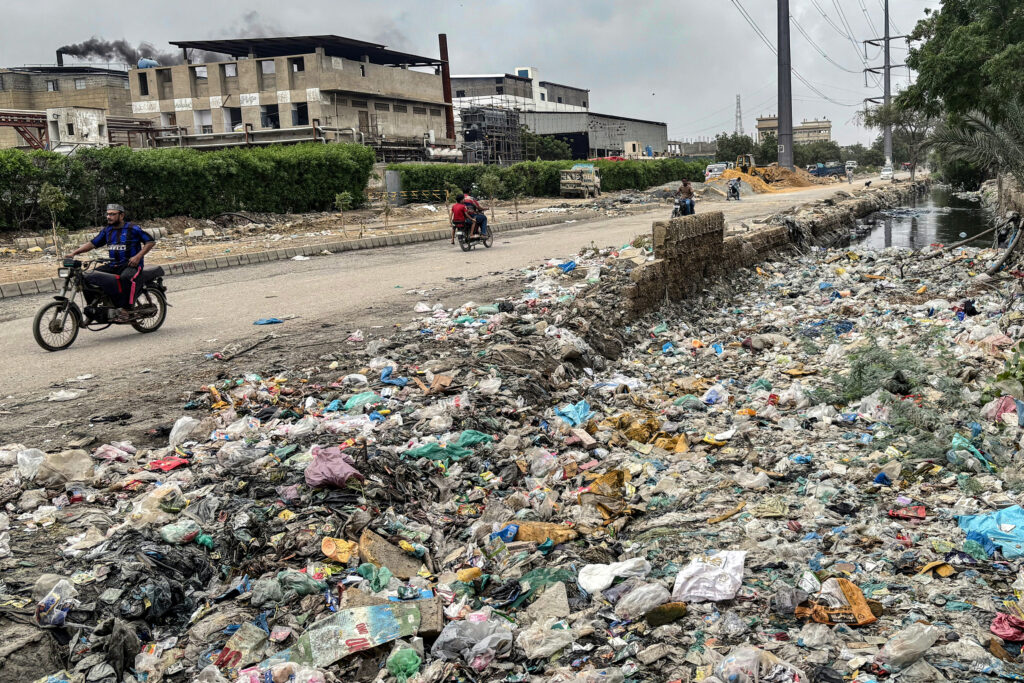
From Living on Earth, public radio’s environmental news magazine, an interview by Paloma Beltran with Judith Enck, founder of Beyond Plastics.
In the post-World War II era, plastics evolved from a wartime resource to an everyday household staple, enhancing corporate profits as plastic waste accumulated. Concerns over plastic proliferation have been met with single-use plastic bans and producer responsibility initiatives. However, significant challenges persist, including stalled United Nations plastics treaty negotiations.
Plastics persist in ecosystems and human bodies long after production, appearing globally from Antarctic ice to coral reefs.
Judith Enck, former EPA regional administrator and founder of Beyond Plastics, discusses these issues in her book “The Problem with Plastic: How We Can Save Ourselves and Our Planet Before It’s Too Late.”
PALOMA BELTRAN: Why is plastic pollution an important issue?
JUDITH ENCK: Plastic impacts environmental and public health issues. Reducing plastic production can benefit the climate, oceans, and communities where plastics are produced. It also addresses health concerns from microplastics found in human bodies and can save taxpayer money.
BELTRAN: How do plastic emissions contribute to carbon dioxide levels?
ENCK: Emissions occur throughout the plastic lifecycle—production, use, and disposal. Facilities emit greenhouse gases during production, and most plastics end up in incinerators or landfills, releasing more pollutants. This is a significant climate issue largely overlooked by policymakers.
BELTRAN: How do oil and gas companies benefit from plastic production?
ENCK: ExxonMobil and others pivoted to plastics as demand for fossil fuels in transport and electricity declines due to electric vehicles and renewable energy. These companies profit while communities bear health and environmental costs.
BELTRAN: What are microplastics and their health effects?
ENCK: Microplastics, smaller than five millimeters, enter our bodies primarily through inhalation and ingestion. They’ve been detected in our blood, organs, and even breast milk, posing potential health risks like increased chances of stroke and neurological diseases.
Regions like Cancer Alley in Louisiana, with dense plastic production facilities, face significantly higher cancer risks. A Johns Hopkins study found cancer rates there are seven times the national average.
BELTRAN: How does plastic pollution affect communities?
ENCK: Low-income and minority communities often host polluting plastic production sites, affecting health outcomes based on ZIP code. Companies target areas perceived to lack political power, but activists like Sharon Lavigne and Diane Wilson are fighting back successfully.
BELTRAN: What legacy do activists leave behind?
ENCK: Activists like Debby Lee Cohen made impactful changes, such as eliminating polystyrene trays from New York City schools, benefiting countless children. Her organization, Cafeteria Culture, continues to work with students to reduce plastic use.
Original Story at insideclimatenews.org