This story is made possible through a partnership between Interlochen Public Radio and Grist, a nonprofit environmental media organization.
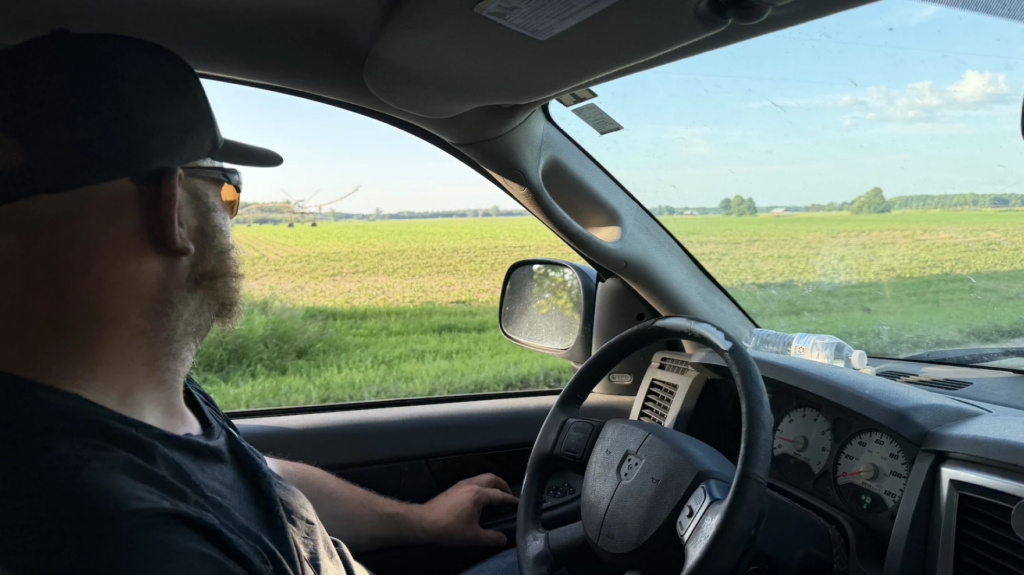
In northern Michigan, the future of renewable energy projects is causing a stir as local communities navigate the implications of Public Act 233. This law, which limits local governments’ authority to reject large-scale renewable developments, is at the center of a debate that includes farmers like Jake Kerby, who views the potential transformation of his childhood surroundings with mixed emotions.
The Shift in Local Authority
According to the legislation, large renewable projects must either receive approval from the Michigan Public Service Commission or through local government channels. Projects exceeding 50 megawatts for solar and battery storage, and 100 megawatts for wind, are subject to these regulations.
Local governments can maintain initial control if they adopt a Compatible Renewable Energy Ordinance that aligns with state standards. These standards include guidelines for application timelines, noise restrictions, and facility setbacks.
Yet, many communities are opting for a second route, which allows developers to seek approval through the Public Service Commission if local ordinances are more restrictive. Currently, 10 projects await decisions under this path, as noted by Sarah Mills from the University of Michigan’s Center for Empowering Communities.
Green Lake Township Supervisor Marvin Radtke emphasizes the challenge of balancing individual property rights with community interests, a task made more complex by the new law. “It’s a very fine line to walk,” Radtke remarked, as the township seeks to draft a workable ordinance.
The State’s Role in Renewable Energy
In some areas, such as East Bay Township, officials have chosen to defer to state processes for large-scale projects, focusing instead on smaller-scale initiatives like rooftop solar. Claire Karner, the township’s director of planning and zoning, believes state oversight is more suitable for complex, large-scale projects.
Lyla Hollis from the Groundwork Center highlights the demanding nature of local permitting, which involves extensive public engagement and coordination with developers. This has led some towns to prefer state-managed processes, though Hollis notes there’s no definitive right or wrong approach.
Catherine Mullhaupt from the Michigan Township Association dispels the notion that local control is entirely overridden by Public Act 233. “You can’t just say no, you have to accommodate,” she explained, referencing the state zoning law prohibiting outright bans on specific land uses.
Despite a lawsuit questioning the Public Service Commission’s interpretation of the law, a recent court ruling largely upheld the Commission’s stance. Mullhaupt stresses the persistent role of local officials in shaping community-responsive decisions.
Looking Ahead
Ranger Power, the company proposing the large solar array in Wexford County, remains committed to engaging with local governments, despite the broader implications of Public Act 233. Drew Vielbig, the company’s director of development, reiterated their focus on collaboration, highlighting solar energy’s pivotal role in Michigan’s energy strategy.
As renewable energy’s share of U.S. electricity hit a record 17% last year, communities like Wexford Township must weigh the benefits of clean energy against the desire to preserve traditional landscapes. Kerby, who anticipates the arrival of large-scale solar, urges residents to stay informed about legislative changes and their potential impacts.
“I would tell people to pay attention to laws that are being passed,” Kerby advised, “and consider how they’re going to affect you.”
Original Story at michiganadvance.com