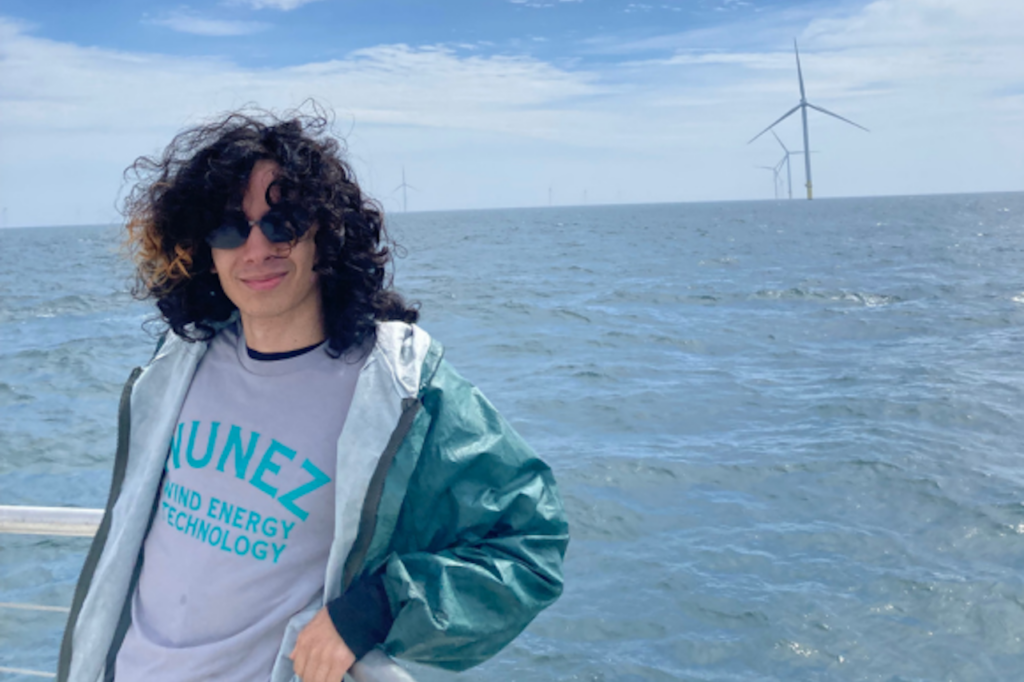
In the face of federal policy challenges, Nunez Community College is forging ahead to prepare the workforce for the future of offshore wind energy. Despite the slowdown in new developments, the college is equipping students with skills and experience vital for careers in this evolving industry.
Challenges in the Offshore Wind Industry
According to a report by Wood Mackenzie, federal permitting reviews have significantly impacted renewable energy investments in the U.S., putting over $121 billion at risk. Approximately 32% of early-stage renewable projects, including wind, solar, and battery storage, are now under increased federal scrutiny.
Nunez’s Wind Energy Technology program, launched in 2024, is the first of its kind in Louisiana, aimed at building a skilled workforce for offshore wind projects across the U.S. and globally. The curriculum, approved by the Global Wind Organisation (GWO), offers students internationally recognized certifications in addition to an associate degree.
Despite the slowdown, the offshore wind industry continues to progress. The Harvard Environmental & Energy Law Program notes that the U.S. has seen a significant increase in utility-scale offshore wind projects, though new leasing and permitting have been hampered by federal policies.
A 2026 industry tracker by the New Bedford Light highlights that many large offshore wind projects on the Atlantic Coast remain active, particularly off the coast of Massachusetts.
Nunez’s Commitment to Training
Recently, three students and two instructors from Nunez’s program visited Rhode Island and Massachusetts, thanks to a National Wildlife Federation Wind Farm Boat Tour Grant. They explored the South Fork Wind and Revolution Wind projects, witnessing turbine installations and marine logistics firsthand.
Kat Bell, coordinator of the Sustainable Energy Career Academy at Nunez, emphasized the value of real-world experience: “While classroom and laboratory instruction provide critical foundational knowledge, observing offshore wind turbines in their real-world environment allows students to connect theory with practice in a way that can’t be replicated on a college campus.”
Student Walker Argao shared his experience, noting the impressive scale of the turbines: “I loved seeing the scale of how large the turbines were. As we approached and got close, the size didn’t grow the way you would expect it to because they were so huge. It was very surreal to hear the noise they made as the blades swung overhead.”
Insights from Operating Wind Farms
Insights gained from the trip will be integrated into Nunez’s curriculum, including video content and lessons on the economic impacts of offshore wind in the New Bedford region.
Bell highlighted the economic benefits for local communities: “The fishing community’s livelihoods were enhanced with reliable paychecks when they contracted their boats for environmental surveys during the permitting and installation processes.”
The trip also included participation in the ARROW conference and a visit to the National Offshore Wind Institute, where students and faculty exchanged insights with other wind technician training programs. Student Maria Lopez-Tagaloa found the conference enlightening: “At the ARROW conference, I really appreciated the conversation about not only the sociological effects of renewable energy, but also the environmental effects and the collaborative attitude between the wind industry and other maritime industries.”
To keep up with industry demands, Nunez recently added four new GWO-certified training modules, covering blade repair, lift operations, hazardous energy control, and slinger/signaler training, ensuring that students are prepared for the evolving offshore wind sector.
Original Story at bizneworleans.com