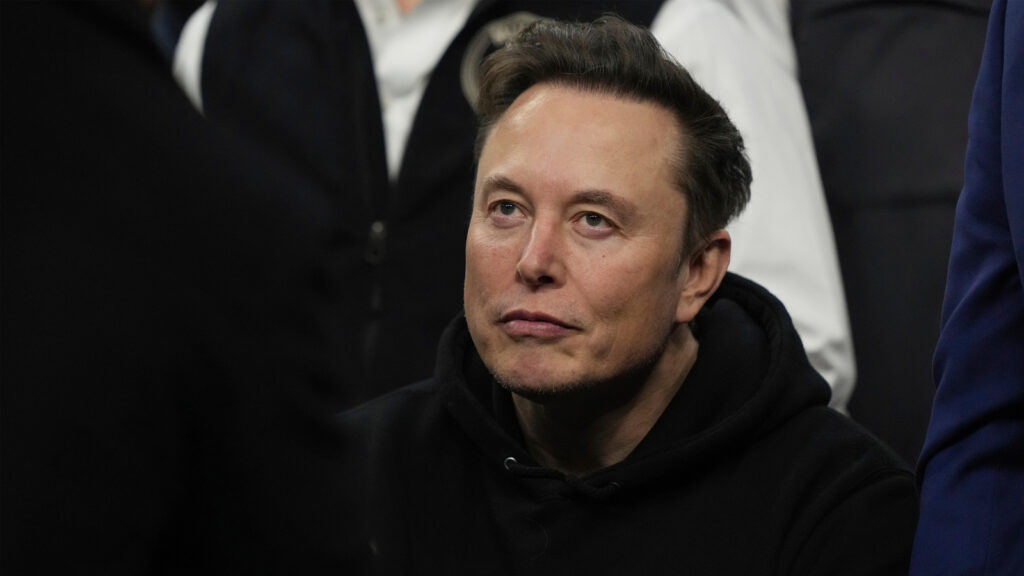
Elon Musk has achieved a new milestone, becoming the world’s first trillionaire following the remarkable performance of SpaceX in its debut on Wall Street. The rocket company, founded by Musk, saw its shares surge during one of the largest initial public offerings (IPO) in history.
SpaceX shares skyrocketed over 19% after trading began, indicating investors’ optimism about the company’s long-term plans despite its current financial losses. The stock opened at $150 and peaked at $168 before closing just under $161, positioning SpaceX as the sixth largest public company in the U.S. with a market valuation of $2.1 trillion. This valuation surpasses even Tesla, another of Musk’s high-profile ventures.
With his significant holdings in both SpaceX and Tesla, Musk’s net worth has reached an estimated $1.1 trillion, as reported by Forbes.
Reasons Behind SpaceX’s Public Debut
Elon Musk explained that the decision to take SpaceX public was driven by the need for substantial funding to support its ambitious goals of deploying satellites, building space-based data centers, and eventually establishing human colonies on Mars. From Starbase, SpaceX’s base in South Texas, Musk participated in the Nasdaq opening ceremony, emphasizing his vision “to make life multiplanetary.”
“Not just a few astronauts, I mean literally you,” Musk declared. “Whoever you are watching this, SpaceX wants to be able to take you to the moon, take you to Mars, and ultimately beyond.”
Musk’s reputation for technological innovation and bold promises successfully fueled excitement for the IPO. Generally, companies going public experience a 7% increase in their stock price on the first trading day, according to Jay Ritter from the University of Florida’s Warrington College of Business. Investors were eager to buy into SpaceX at $135 per share before trading started, leading to a record $75 billion raised, surpassing the previous IPO record held by Saudi Aramco in 2019.
SpaceX’s ambitious plans include establishing a colony of one million people on Mars and creating space outposts to ensure humanity’s survival. The company also aims to launch massive orbital data centers and surpass competitors like Anthropic and OpenAI in the AI sector. However, these ventures require more capital than the current revenues from its rocket and satellite operations. From 2025 to March 2026, SpaceX, formally known as Space Exploration Technologies Corp., reported losses of $8.7 billion.
Investment Considerations
Investing in SpaceX is largely seen as a bet on Elon Musk himself. His control over the company is unique, with an 82% interest in a special class of shares, despite holding about half the ownership stake. This structure has drawn criticism from some shareholder advocacy groups.
“There’s a lot of hype, but I see the faith that investors have in Musk,” said Yordys Coro, an IT support contractor from Miami, who saw his $14,000 investment in SpaceX grow to $17,000 within hours. “I’m going to hold on.”
While Wall Street bankers are enthusiastic about SpaceX and the substantial fees they stand to earn, not everyone agrees with the stock’s high valuation. Morningstar analysts, who do not receive investment banking fees, labeled the IPO as “significantly overvalued,” highlighting the technological challenges SpaceX faces, such as protecting its orbiting data centers from radiation and catching up to AI leaders. They estimate SpaceX’s worth at $780 billion—less than half its IPO value.
In regulatory filings, SpaceX acknowledged that some business plans rely on “unproven technologies.” The company also noted that its AI division, xAI, lacks a clear path to profitability while it competes with rivals.
During a recent conference with the CEO of JPMorgan Chase, Musk spoke about futuristic concepts like “moon hotels” and a Martian colony but provided little detail on his plans for the AI chatbot Grok, instead focusing on satellite technology.
Musk’s Path to Wealth
Despite the challenges, Musk has a track record of achieving the seemingly impossible. His journey to becoming a trillionaire began with the creation of Zip2 and PayPal, which netted him approximately $200 million after their sales. He used these funds to launch SpaceX and invest in Tesla, defying odds by developing a space company that reuses rockets and reinvigorating the electric vehicle market.
Musk’s immense wealth is largely tied to stock holdings and performance-based stock grants. His compensation package from Tesla drew criticism, even from the Vatican, due to its size. At Tesla, Musk has faced shareholder concerns over his regulatory disputes and divided focus among multiple enterprises. However, the rising stock price has alleviated these issues, with Tesla delivering a 20,000% return to shareholders since its public debut in 2010.
SpaceX is the first of several “megacap” companies, with Anthropic and OpenAI expected to follow suit. Nasdaq has adjusted its rules to allow SpaceX inclusion in index-linked funds within just 15 days, accelerating investor access to the company’s shares.
Yet, not all investors welcome SpaceX’s presence in their portfolios. Some pension funds for firefighters, teachers, and other workers in California and New York have expressed concerns over provisions in the IPO, such as mandatory arbitration of shareholder claims and Musk’s extensive control over the company.
Original Story at abc7.com