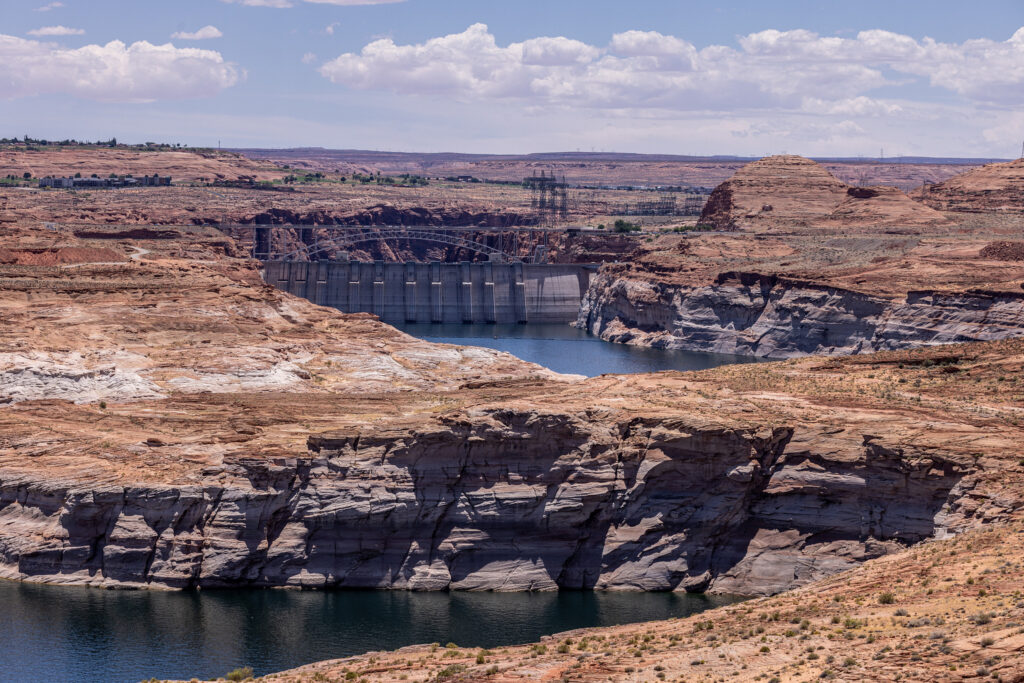
Water managers across the Colorado River Basin, including Max Wilson from Phoenix, are on edge as they anticipate a pivotal federal report that will shape future water allocations and potential reductions. The report, which has been long-awaited, is expected to outline strategies for managing the river’s essential reservoirs amid ongoing water scarcity.
Wilson, serving as a water resources management advisor for Phoenix, has been closely monitoring the federal website, eagerly awaiting the report’s release. “We are waiting with bated breath for the federal government to speak,” Wilson remarked, underscoring the high stakes involved for the region.
This upcoming federal document is a culmination of three years of negotiations and is one of two crucial reviews that will dictate reservoir management post-2023. However, early indications suggest that the plan might not bring the positive news many had hoped for. “While this will be the culmination, we anticipate, of some bad news and frankly a flawed process, I don’t think any of us are expecting to be surprised by the content,” Wilson noted.
Since 2023, stakeholders have been attempting to forge new guidelines for water release and storage at Lake Powell and Lake Mead. Political disagreements and adverse water conditions have stalled consensus, prompting the federal government to propose its own framework. According to preliminary outlines, water release decisions will occur biennially, with ongoing negotiations set for the next decade.
More uncertainty under the new plan
The plan is described as a flexible framework, allowing for adaptability to changing conditions, according to Anne Castle, a former Colorado River official. However, it demands continuous renegotiations, diverting resources from implementing effective water management solutions. Wilson expressed concerns over prolonged uncertainty, stating, “We’re looking at a 10-year period of essentially forever negotiations where the valley and southern Arizona will be at immense risk.”
The combined storage of Lakes Mead and Powell, critical for 40 million users, is at a historic low. The Colorado River’s output has diminished by 20% over the past 27 years, with an even more dramatic 33% drop since 2020, according to Brad Udall, a research scientist at Colorado State University’s Colorado Water Center. “That’s a stunning drop. There’s nothing like it in the historical record,” Udall emphasized.
Impacts upstream and downstream
While Colorado water officials have been reticent about the plan, the implications are significant. Blue Mesa Reservoir, a key water source in Colorado, is being considered as a potential resource for downstream states, though this poses challenges for the Upper Basin. Castle highlighted the temporary nature of such releases, warning that without addressing the supply-demand gap, reservoirs will continue to deplete.
Legal disputes loom as states like Arizona threaten litigation over perceived violations of the 1922 Colorado River Compact. Arizona’s argument is that upstream states could face mandatory water deliveries if they fail to meet flow requirements. However, upstream states argue that climate change, not water usage, is responsible for reduced flows.
For Phoenix, the uncertainty means potentially fluctuating access to Colorado River water. The city, along with others drawing from the Central Arizona Project, faces the possibility of significant water cuts. Preparations are underway, including new infrastructure to tap alternative water sources, yet Wilson warns that more conservation efforts may be necessary.
Overall, the anticipated federal report is a step in managing the Colorado River crisis, but it underscores the complexities and contentious nature of water allocation in a region facing severe environmental challenges.
Original Story at coloradosun.com