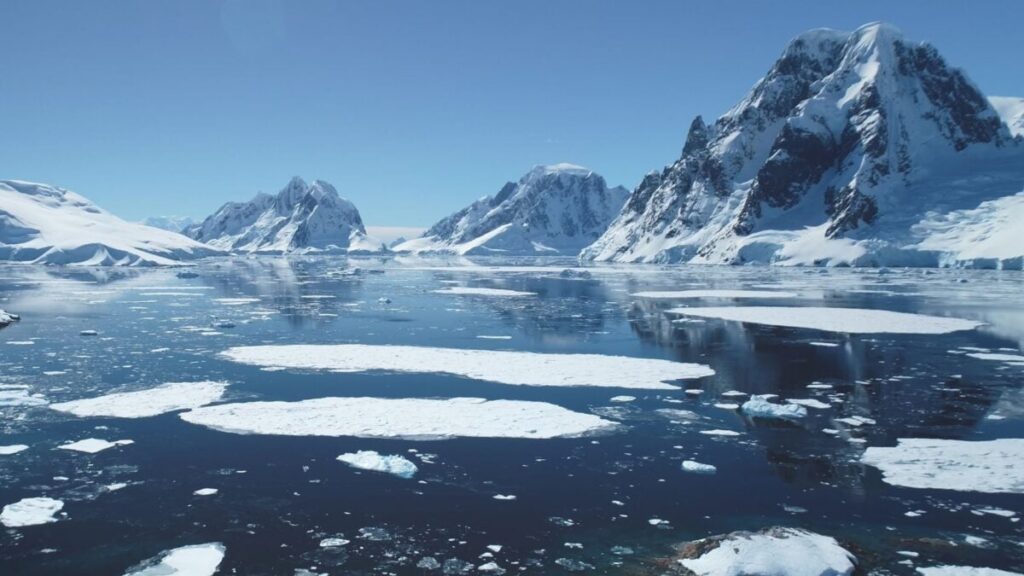
In a surprising twist of nature’s extremes, Antarctica is currently witnessing an unexpected weather phenomenon. The Antarctic Peninsula, typically enveloped in the harsh grip of winter, has been hit by an unusual heatwave for several weeks, raising concerns among scientists about the implications of such temperature surges.
On June 6, temperatures at Argentina’s Esperanza base in Hope Bay soared to an unprecedented 59.7 degrees Fahrenheit (15.4 degrees Celsius), as reported by scientists to The Guardian. This new record surpasses the previous high set in 1998 by 3.6 degrees F (2 degrees C). In addition to Esperanza, two other Argentine research stations, Marambio and San Martin, also recorded similar temperature spikes during June 5 and 6, according to France 24.
Raúl Cordero, a climate scientist from the University of Groningen, described the situation to The Guardian as “absolutely crazy,” noting that the new temperature record is approximately 36 degrees F (20 degrees C) above the norm for this period. “That is a huge anomaly,” he emphasized.
A Brutal Heatwave in a Rapidly Warming Region
The Antarctic Peninsula is no stranger to climate changes, as it remains one of the fastest-warming regions on the planet. Since 1950, it has experienced more warming than any other part of the Southern Hemisphere, with average temperatures climbing by almost 5.4 degrees F (3 degrees C). The global phenomenon of climate change has greatly accelerated this trend.
The rapid warming is largely driven by the loss of sea ice. When ice diminishes, it exposes the darker ocean surface, which absorbs more solar heat due to its lower albedo. This effect amplifies regional temperatures and quickens the pace of ice melting, fostering a feedback loop that exacerbates warming, as explained in a study.
The record temperatures earlier this month highlight the outcomes of this accelerated warming. The Esperanza base recorded these temperatures during a winter heatwave, characterized by the maximum daily temperatures remaining above freezing for a sustained period of three weeks, noted by The Guardian.
Snow and Ice Disappearing
The persistent warmth has led to “large areas in the far north of the white continent to remain free of snow,” Cordero mentioned to France 24. This creates an “unusual scene in the Antarctic landscape during winter,” he stated.
Thomas Caton Harrison from the British Antarctic Survey pointed out that an unexpected quantity of precipitation is falling as rain instead of snow. “This has implications for polar ecosystems such as penguin colonies,” he explained, adding that it complicates operations for those working at Antarctic bases due to the runoff and ice from liquid rain.
Chilean glaciologists Luis Muñoz and Natalia Mestre, during a recent ascent of the Collins glacier on King George Island, observed rain-induced ice melting. “There was a direct impact on the glacier, which should be receiving snow now,” Muñoz shared with The Guardian. “It should not be suffering ablation at this time of the year. This is obviously not good for the glacier.”
As these experts document the swift alterations in Antarctica’s climate, the occurrence of winter heatwaves like the current one is expected to increase in frequency and severity, casting doubt on the longevity of the current record.
Original Story at gizmodo.com