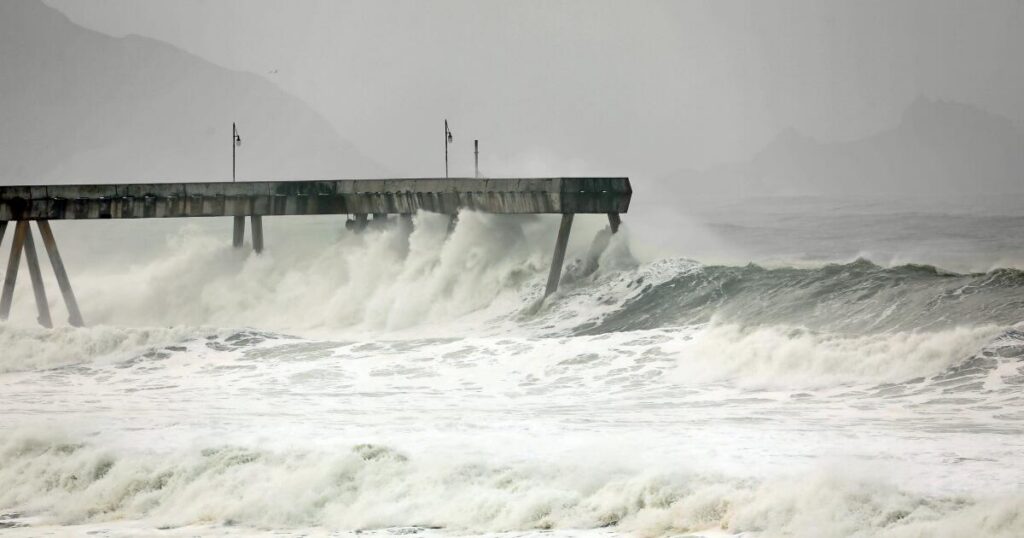
Cracks in Pacifica Pier Highlight Coastal Vulnerability
Amid a backdrop of escalating oceanic threats, the Pacifica Municipal Pier, a beloved California landmark, has been temporarily closed due to structural concerns. City workers observed significant cracks and falling concrete, prompting immediate safety measures.
This incident is part of a broader pattern of structural challenges facing California’s coastal infrastructure. Officials from Pacifica, located just south of San Francisco, cited “cracking, separation, and displacement of the concrete walkway and structural elements” as reasons for the closure. Structural engineers are currently assessing the pier’s integrity.
Images captured by municipal staff reveal a prominent crack traversing the structure, along with another critical crack beneath the foundation of the pier’s Chit Chat Cafe, which is also closed.
The pier, now 53 years old, has shown signs of deterioration before. In 2021, a section was closed when handrails collapsed, and after severe storms in early 2023, the pier was partially inaccessible for over a year due to damage.
These storms also wreaked havoc on coastal areas such as Aptos and Capitola, causing significant destruction to piers and waterfronts. In Santa Cruz, a section of the wharf was torn away by fierce waves in 2024.
Throughout 2024, structural damage from winter storms led to the temporary closure of at least 10 public piers along the California coast, with several others earmarked for future upgrades.
“These things are costly to maintain,” noted Zach Plopper, senior environmental director at Surfrider. “They are a part of our California coastal culture in many ways, but we’re going to need to reckon with, one, the state that they’re in, and two, the continuous and worsening threats they’re going to experience.”
Most California piers, built in the early 20th century, were not designed to withstand the evolving challenges of storms, rough seas, and rising sea levels. Plopper emphasized the unpredictable nature of the upcoming winter, expected to be intensified by El Niño and a marine heat wave, posing further risks to piers, roads, and other coastal infrastructure.
While no single storm triggered the recent damage in Pacifica, a 2025 report by engineering firm GHD had already categorized several pier sections as “poor” or “serious,” recommending closure ahead of potential severe weather events.
The report cited missing concrete, exposed rebar, and corrosion as significant concerns. The structure’s ongoing exposure to harsh marine conditions is noted for its detrimental impact.
Repairing the pier was estimated to cost $19 million in a 2023 city report. That same year, a state law was introduced mandating coastal municipalities to prepare for future sea level rise, which has risen about 8 inches over the past 150 years and is projected to increase by another foot in the next 25 years.
“We’re going to see profound shifts on our coastline, none that we have ever experienced before,” Plopper remarked. “Building static structures on the coast just doesn’t work all that well. We’re going to have to make some really hard decisions.”
Original Story at www.latimes.com