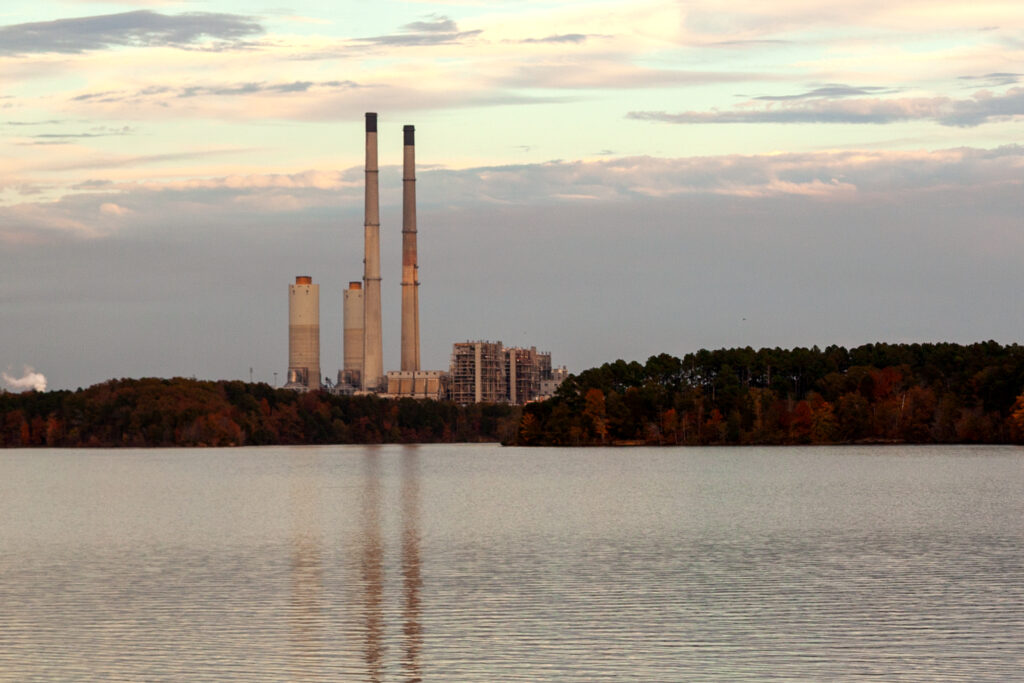
Duke Energy might receive $28.4 million from taxpayers to upgrade two coal-fired power units in Person County, North Carolina, an area already dealing with the construction of new natural gas plants, a pipeline, and a proposed Microsoft data center.
The Roxboro plant in Person County is one of 13 sites nationwide anticipated to receive grant funding from the U.S. Department of Energy. The agency uses the Cold War-era Defense Production Act to support these projects, marking an effort by prior administrations to promote fossil fuel use.
The utility will negotiate grant terms with the agency over six months, with an implementation date set between 2027 and 2029. Duke is contributing $44 million in ratepayer funds alongside the federal money.
The company applied last year to fund upgrades for Units 2 and 3, including improvements to plant boilers, fans, turbines, and pulverizers. These units are scheduled for coal use until retirement on January 1, 2034.
“This funding supports essential upgrades that ensure reliable power for our North Carolina customers while minimizing costs,” said Kendal Bowman, president of Duke Energy’s utility operations in North Carolina.
Units 1 and 4, also coal-burning, will be phased out for new natural gas plants by January 1, 2029.
The 60-year-old Roxboro plant is located near Hyco Lake and an elementary school. In 2020, state environmental regulators ordered Duke to excavate 17 million tons of coal ash stored at the plant, moving it to a double-lined landfill on-site.
The clean-up is expected to be finished by 2036.
Previously, unlined coal ash basins leaked, contaminating private wells. Duke provided alternative water supplies through a 2019 settlement agreement with environmental groups.
“The Roxboro coal plant has caused toxic coal ash contamination,” said Steph Gans of Clean Water for North Carolina. “Using the Defense Production Act to allow more coal ash production while the EPA considers weakening coal ash regulations endangers public safety.”
The grant will not alter plant retirement dates, according to Duke.
The N.C. House recently passed a bill requiring the state Utilities Commission to allow Duke to operate coal and natural gas plants until it receives the necessary certificate for a large nuclear facility, projected for 2028.
The bill might increase customer bills due to rising fuel and construction costs, critics say. It could also let Duke bypass its net-zero carbon emissions target by 2050.
Supporters, including state Rep. Dean Arp, cite the necessity of coal and natural gas for reliability, referencing Winter Storm Elliott in 2022 when utilities including Duke curtailed power.
Duke’s Roxboro plant was among those that failed, causing blackouts for 500,000 customers on Christmas Eve due to mechanical failures and underestimated demand.
Meanwhile, Duke, which earned $5 billion last year, is asking for a 15 to 18 percent rate hike to cover distribution, transmission, power plant projects, and coal ash clean-up costs.
Other developments near Roxboro include Enbridge’s T15 natural gas pipeline and a proposed Microsoft data center.
“Customers expressed frustration over being charged for coal ash cleanup,” Gans said during rate hike hearings. “These actions will maintain high costs in the future.”
Original Story at insideclimatenews.org