Forecasts for the Colorado River: A Looming Water Crisis
As the Colorado River faces yet another potentially dry winter, experts warn of severe consequences for the region’s water reservoirs. A recent report suggests that the river’s water supply could be significantly depleted, affecting millions across seven U.S. states, tribal lands, and Mexico.
Building upon a previous analysis, the new study examines potential outcomes of both dry and wet winters. Despite a wetter season’s temporary benefits, experts caution that the long-term drought issues fueled by climate change remain unresolved. “Both scenarios demonstrate the need to adopt significant additional measures to permanently decrease consumptive uses across the entire Basin,” the report’s authors noted.
Serving over 40 million people, the Colorado River is vital for the upper basin states—Colorado, New Mexico, Utah, and Wyoming—and the lower basin states—Arizona, California, and Nevada. However, water use has consistently exceeded the natural flow, necessitating significant reductions.
The latest report indicates that the imbalance between supply and demand will persist regardless of weather variations. If water consumption in 2027 mirrors the driest years since 2000, the U.S. could surpass the river’s natural flow by 2.59 million acre-feet, increasing the risk of reservoir depletion.
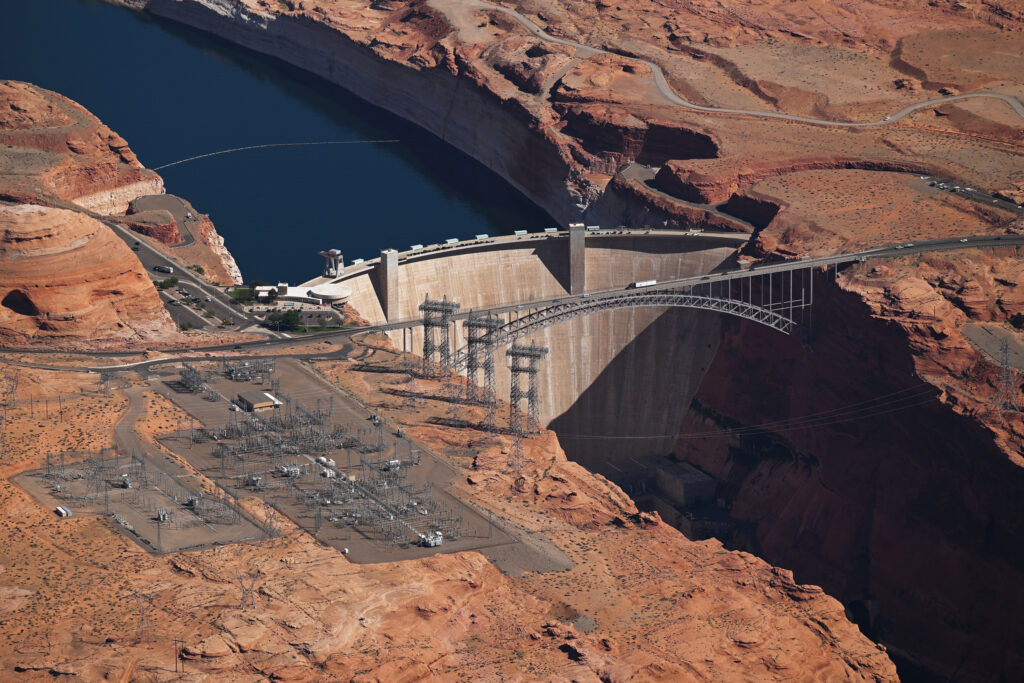
Such depletion could severely impact Lake Mead and Lake Powell, the U.S.’s largest reservoirs, potentially compromising their ability to generate electricity and maintain structural integrity. Anne Castle, a senior fellow at the University of Colorado Law School and report co-author, highlighted the strain on agricultural water users, who might face pressure to sell water to urban areas, thereby affecting rural economies.
Even with a wetter winter, akin to the third wettest year of this century, any surplus would be short-lived. The report suggests that within two years, overconsumption would return reservoirs to current low levels. Mark Squillace, a natural resources law professor, emphasized the necessity of reducing consumption, particularly among farmers, to sustain the river’s future.
As reservoir levels decline, discussions among basin states have shifted towards a short-term agreement, though legal disputes could arise over water allocations. The Bureau of Reclamation is expected to release a decision this summer on future river management.
Hydrological forecasts from the report show a bleaker outlook than the Bureau’s May projections, which were based on historical data. Eric Kuhn, former general manager of the Colorado River Water Conservation District, noted the recent trend of lower river flows and the need for improved forecasting models.
Despite potential variations in seasonal precipitation, the long-term outlook for the Colorado River depends on balancing consumption with available resources. “Every time we go through a wet period, we don’t recover enough and we haven’t reduced basic uses enough,” Kuhn stated, underscoring the need for sustainable water management strategies.
Original Story at insideclimatenews.org