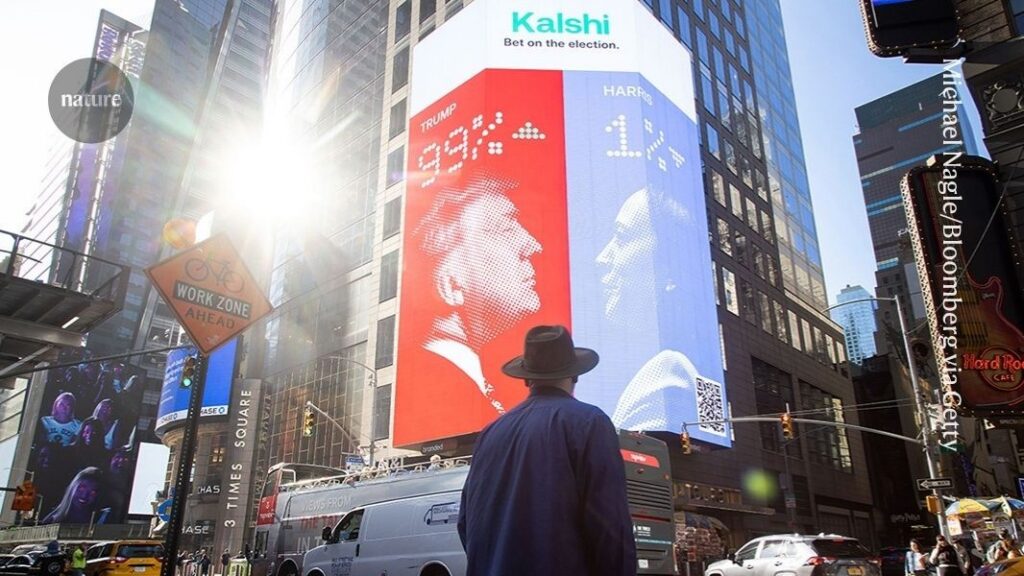
How Prediction Markets Are Shaping the Forecasting Landscape
In the evolving world of forecasting, prediction markets such as Polymarket and Kalshi have emerged as intriguing platforms. By allowing participants to bet on outcomes ranging from disease outbreaks to artificial intelligence advancements, these markets offer a unique perspective on global events. But how do these markets fare against traditional expert analyses?
Participants in prediction markets buy and sell shares based on the potential outcomes of future events. Unlike traditional methods that rely on expert opinions or set odds, the share prices in these markets reflect collective market sentiment. This means the prices adjust according to the perceived probability of an event’s occurrence.
The concept behind these markets is rooted in the “wisdom of crowds” theory, suggesting that large groups can collectively make more accurate predictions than individual experts. According to Polymarket, economic incentives drive these market prices to reflect true probabilities as knowledgeable participants enter the fray.
While some research indicates that prediction markets can outperform other forecasting techniques, particularly in political contexts1, skepticism remains regarding their efficacy in scientific domains. Richard Borghesi from the University of South Florida notes that while prediction markets can serve as “potentially helpful forecasting supplements,” they are not replacements for rigorous scientific methods like peer review and expert judgment.
Concerns over market manipulation and insider trading have also surfaced. A notable incident occurred when Norwegian officials investigated unusual betting patterns on Polymarket for the Nobel Peace Prize, just hours before Venezuelan opposition leader Maria Corina Machado was announced as the winner. source
Insight into Disease Outbreaks
The application of prediction markets to scientific forecasting, particularly disease outbreaks, raises questions about their reliability. When a hantavirus outbreak was reported on a cruise ship in May, Polymarket initially predicted a 19% chance of the World Health Organization (WHO) declaring a hantavirus pandemic. This probability later decreased to 5%, with approximately $14 million in shares exchanged. Kalshi, on the other hand, forecasts a 7% chance of a global health emergency declaration by WHO in 2026.
Prediction market participants often refer to scientific data such as WHO updates and case numbers. However, expert researchers utilize comprehensive models that incorporate data from hospital surveillance, genomic data, and other sources to predict disease spread. Infectious-disease researcher Vaithi Arumugaswami suggests the likelihood of a hantavirus pandemic is “very, very low,” echoing assessments by the US Centers for Disease Control and Prevention and WHO.
The trading patterns observed in these markets might reflect heightened anxiety about pandemics, a sentiment that has grown since the COVID-19 pandemic, according to Harvard University epidemiologist Bill Hanage. “In that regard, Polymarket bets do “tell you something about how the public feels.”
Climate Change Predictions
Climate change is another hot topic in prediction markets, where some bets are “reasonably in line with experts’ estimates,” says Zeke Hausfather, a climate scientist at Berkeley Earth. This alignment suggests that, in some areas, prediction markets may provide valuable insights that complement traditional scientific forecasting methods.
Original Story at www.nature.com