This is the second story in a series on “climate gentrification.” Support for this series was provided by The Neal Peirce Foundation, a nonprofit organization dedicated to supporting journalism on ways to make cities and their larger regions work better for all people.
Unseen Forces Redefining Miami’s Neighborhoods
MIAMI — Latonya Floyd, a resident of a historically Black neighborhood in Miami, was taken by surprise when a photographer aimed his camera at her family home. His explanation: he was documenting the property for a real estate investor. This unsolicited visit was a sign of the increasing interest of investors in her community, a place her family had called home for generations.
The Floyds, having witnessed the turbulent history of their neighborhood from the 1960s racial uprisings to the crack cocaine epidemic, had no intention to sell. However, the dynamics in Miami’s Black neighborhoods are shifting rapidly due to a phenomenon known as “climate gentrification.”
As sea levels rise, making oceanfront properties vulnerable, developers and wealthier residents are turning their attention inland to historically Black neighborhoods like Floyd’s. Miami has seen a surge in cash home purchases, with investors increasingly buying out long-standing Black-owned homes.
In Floyd’s neighborhood, property transactions have escalated dramatically. Half of the homes on her block have been sold since 2023, with rental prices skyrocketing from $800 in 2021 to $2,200. The situation reflects a broader trend where rising seas are pushing wealthier residents away from the coast, reshaping the demographic and economic landscape of Miami’s historically Black neighborhoods.
The Impact of Climate Gentrification
Miami’s Black communities, situated on a natural limestone ridge approximately 8 feet above the coastline, have become attractive alternatives for those fleeing flood-prone areas. The shift has led to a significant drop in the city’s Black population, now around 10% from 17% in just 15 years.
Floyd remarked on the unexpected role of climate change in this transition, acknowledging, “It is crazy to think that [climate change] is a part of the shift we’re seeing, the gentrification.”
Research predicts that by the end of this century, climate-induced relocations could surpass the Great Migration. In Miami alone, over 1 million people might be displaced due to the impacts of climate change.
Community Efforts and Challenges
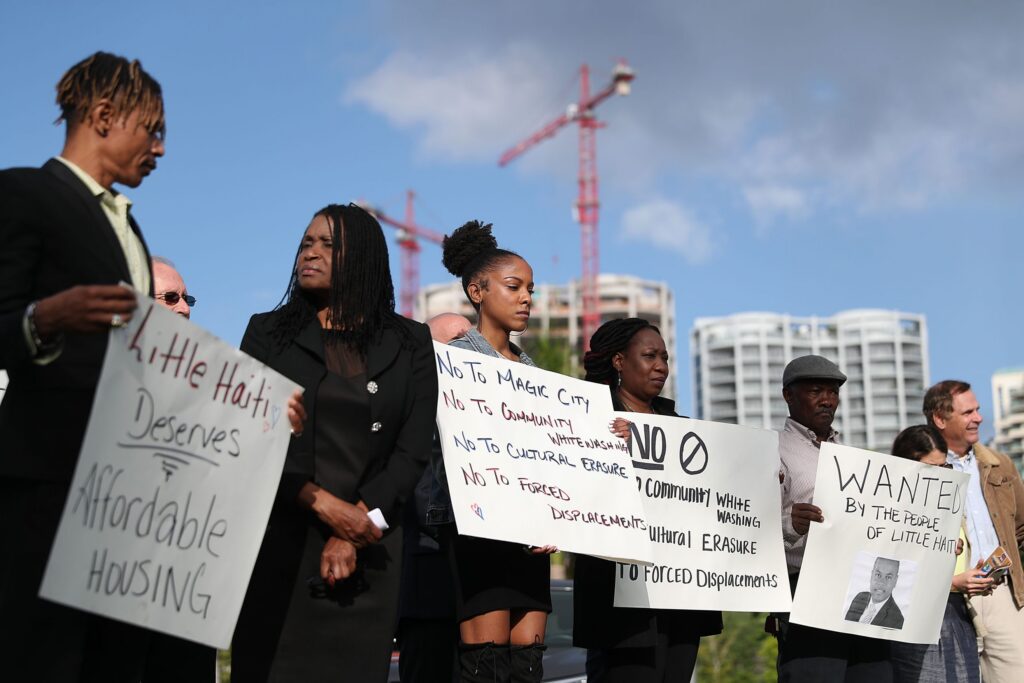
Residents of Miami’s Black neighborhoods are mobilizing to resist these changes. Organizations like Struggle for Miami’s Affordable and Sustainable Housing, Power U, and the Right to the City Alliance are advocating for community land trusts, fighting evictions, and lobbying for equitable development policies in climate and housing plans. They aim to ensure that the neighborhoods remain affordable and inclusive.
The journey for residents like Floyd and others in similar communities is both a struggle to retain their homes and a push to influence broader policy changes that could help mitigate the effects of climate gentrification.
The Historical Context
The roots of these changes trace back to historical decisions. Miami officials originally placed railroads and industrial sites inland, and by the 1930s, Black neighborhoods were established around these areas, exposing residents to pollution. Despite the environmental challenges, these locations offered a degree of protection from natural disasters like Hurricane Andrew in 1992.
The economic and racial dynamics have evolved over the decades, with developers gradually converting owner-occupied homes into rentals, reducing homeownership and altering the socio-economic fabric of these neighborhoods.
Insurance and Economic Pressures
Insurance dynamics also play a significant role in the housing market’s transformation. Post-Hurricane Andrew, insurance companies adjusted their risk models, which contributed to a shift in market dynamics as coastal properties became less attractive.
Today, Miami’s home insurance costs have nearly doubled since 2014, with predictions of further increases as sea levels rise and flooding becomes more frequent. These changes are prompting wealthier residents to seek higher ground, further fueling the climate gentrification process.
Finding Hope in Community Solutions
Community-driven solutions are emerging as a beacon of hope for those affected by these shifts. Efforts by groups like SMASH to establish land trusts and promote cooperative housing are gaining traction, though significant financial hurdles remain.
The story of Miami’s Black neighborhoods is a complex interplay of climate, history, and socio-economic forces. As these communities navigate the challenges of climate gentrification, they continue to fight for a future where they can remain in the places they’ve called home for generations.
Original Story at capitalbnews.org