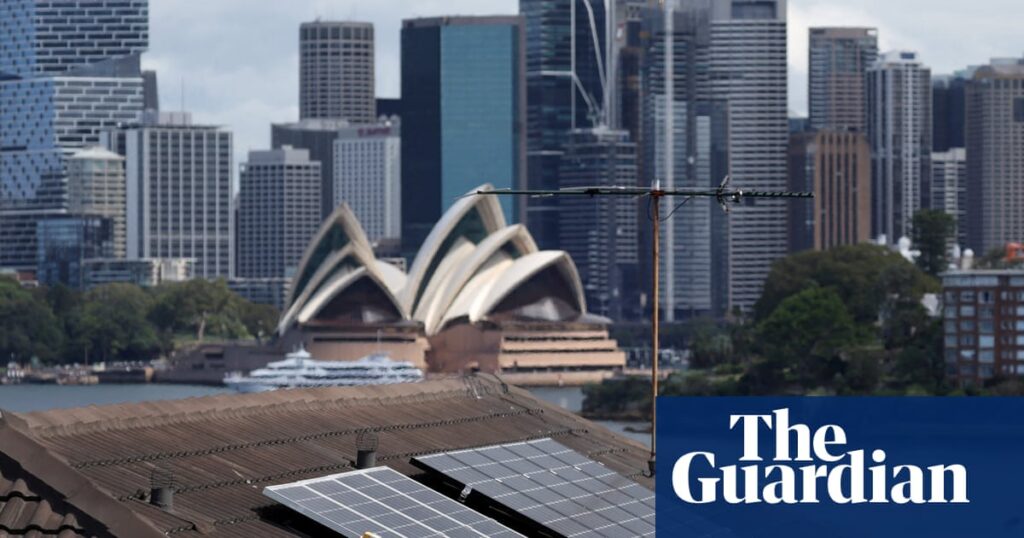
As Europe and Asia grapple with intense heatwaves and fluctuating oil markets, Australia is quietly leading a transformative shift in renewable energy. This transition was symbolically highlighted by the demolition of two large chimneys of one of Australia’s major power stations and a significant announcement from the Australian energy minister about a potential 10% reduction in electricity prices in certain areas.
Australia is making remarkable strides in home renewables and battery technology, showcasing a model for what can be achieved with effective policy measures. Already a global leader in domestic solar power with installations on one in three homes, Australia continues to contribute significantly to the climate crisis due to its extensive fossil fuel exports. However, the nation is now accelerating its transition with a focus on battery technology.
According to recent analysis, nearly 60% of household-scale battery capacity installed worldwide this financial year will be in Australia. Since July, approximately 415,000 units have been connected, equating to about one battery for every 25 Australian homes. Industrial-scale battery installations are also rapidly increasing, positioning Australia behind only China and the US in new capacity growth.
Tristan Edis, author of the analysis and director with Green Energy Markets, states, “It’s amazing… if you’re a battery manufacturer focused on residential right now you really must be focused on Australia.” Batteries counter the argument that renewables are unreliable by storing solar power for use when needed.
The rise in battery usage is also driven by a taxpayer-funded subsidy from Anthony Albanese’s Labor government, which allocated A$2.3bn to reduce household costs by 30%. The expectation was to support 1 million battery installations by 2030, but uptake has far surpassed predictions, with over 1,000 batteries being installed daily.
Despite the success in renewables, Australia remains a significant exporter of coal and gas. The Albanese government has approved numerous fossil fuel developments since its election, highlighting a continued commitment to these industries.
The national target to generate 82% of electricity from renewable sources by 2030 faces hurdles due to investment uncertainties and delays in transmission connections, as per the Clean Energy Council.
Nonetheless, battery construction continues to surge, demonstrated by AGL’s commissioning of a 500-megawatt battery system at the former Liddell coal site. Alison Reeve from the Grattan Institute notes the profound change, emphasizing that the advent of long-duration batteries has effectively addressed past criticisms of solar energy’s limitations.
Australia’s remarkable progress in renewable energy, particularly in battery technology, illustrates a new model for energy markets where households serve as both producers and consumers. This shift promises increased energy flexibility and efficiency, setting a benchmark for global energy transitions.
Original Story at www.theguardian.com