In the face of soaring gas prices in Virginia, now exceeding $4 per gallon due to the ongoing conflict in Iran, and the rising costs of electricity straining household finances, the urgency of a shift towards renewable energy sources is ever more apparent. The United States has the potential to spearhead advancements in green technology and, with strategic investments, could pave the way for a sustainable energy future.
While the Trump administration’s focus on oil and gas has posed significant challenges, Virginia is forging ahead with its own clean energy initiatives. Even as the national landscape is shaped by White House policies, the expansion of wind and solar energy demonstrates a growing public demand for sustainable energy solutions and leadership that supports such progress.
In a landmark achievement, March 2025 marked the first time that renewable energy sources provided over half of the nation’s electricity, accounting for 50.8% of total energy consumption. Fossil fuels like coal and oil contributed 49.2% during the same period, according to data from energy think tank Ember. This milestone reflects significant progress from a decade ago when fossil fuels dominated 65% of U.S. electricity production, with wind and solar making up a mere 5.7%.
Although this progress is noteworthy, renewable energy still trails behind other sources, particularly natural gas. The U.S. Department of Energy projects that fossil fuels will supply about 71% of the country’s energy needs by 2050 (source).
Several factors have driven this shift, starting with the scientific consensus on the detrimental effects of fossil fuel emissions on climate change. Fifty years ago, atmospheric carbon dioxide levels were at 331.56 parts per million, but by May 2025, the National Oceanic and Atmospheric Administration recorded a rise to 425.93 ppm (source). These increased levels contribute to global warming, affecting regions like Hampton Roads, which faces significant threats from rising sea levels.
The decreasing costs of renewable energy infrastructure and storage further support this shift. Although natural gas remains the cheapest energy source per kilowatt-hour, wind and solar are rapidly bridging this cost gap (source).
Another driving factor is the nation’s pursuit of energy independence. Historically, the U.S. has been involved in international conflicts due to its dependency on foreign oil. Despite being the third-largest exporter of crude oil, the U.S. remains vulnerable to global market fluctuations. While domestic oil consumption has plateaued at around 20 million barrels a day since its peak in 2005, the country has seen substantial growth in renewable energy sources like wind, solar, hydroelectric, biomass, and geothermal.
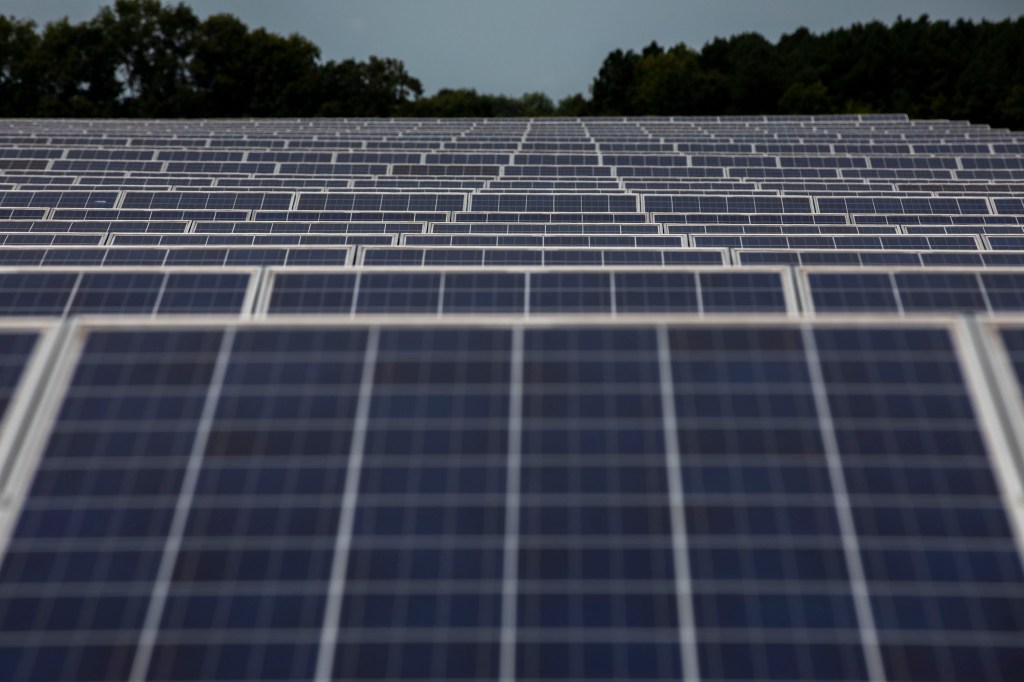
Virginia is at the forefront of this renewable energy movement, exemplified by projects like the Dominion Virginia Offshore Wind initiative off the coast of Virginia Beach and the widespread installation of solar panels throughout the state. Recent legislative efforts in Virginia include bills aimed at expanding solar energy and integrating it into the grid, aligning with the Virginia Clean Economy Act’s ambitious goals.
While balancing green energy targets with affordable energy remains a challenge, the long-term costs of continued fossil fuel reliance are significant. The United States has the opportunity to lead the global transition to renewable energy, with support from both public and private sectors playing a crucial role in realizing this vision.
Original Story at www.pilotonline.com