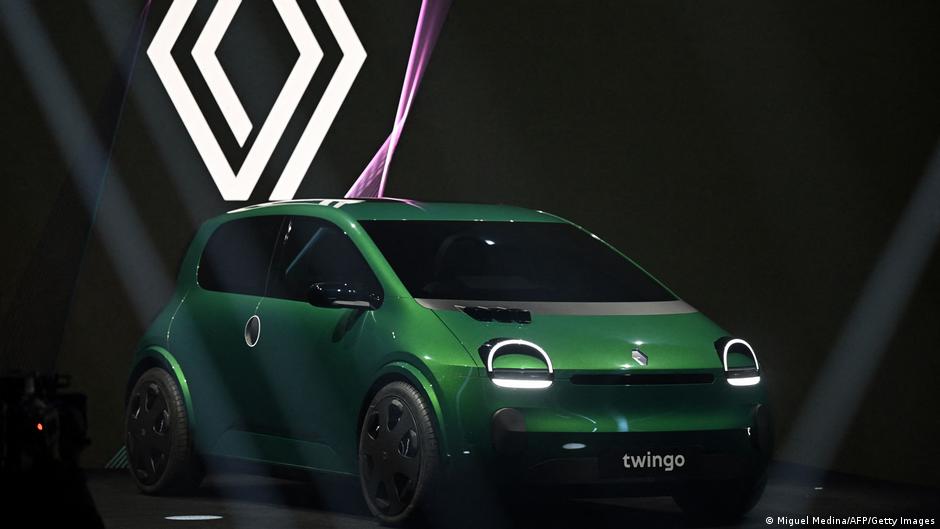
Renault’s latest addition to its lineup, the electric Twingo, not only appeals to urban drivers in Europe but also highlights significant shifts within the global automotive industry.
Following a swift development period lasting just 21 months in Shanghai, after beginning in France, the Twingo is now being produced in Slovenia. It arrives at dealerships this month, priced at just under €20,000 ($23,000).
This development journey exemplifies the competitive nature of the auto industry, with China emerging as a pivotal hub where legacy carmakers focus on speed, cost-efficiency, and technology.
“The real competition is not China versus the West, it’s fast systems versus slow systems,” stated Bill Russo, a former Chrysler executive and current car industry analyst.
He added, “If you want to understand where the future of the auto industry is going, you have to understand how China builds these types of products.”
Automakers Seek Chinese Advantage
Companies like Tesla, Volkswagen, and GM have long been producing in China for both domestic and international markets. Recently, they have begun designing and developing models there to leverage the robust ecosystem of EV suppliers and expertise.
Renault and Mercedes expanded their research facilities in Shanghai in 2024, while Volkswagen enhanced its R&D center in Anhui province in 2025. Toyota followed by relocating its car development to China that same year.
According to Alexandre Marian of AlixPartners, “China has become, as one supplier said, the gym of the world in terms of the automotive industry.”
However, legacy carmakers face pressure to reduce costs and speed up product development globally, even in their home markets, as they compete with Chinese rivals.
Vehicle development cycles in China average around two years, significantly shorter than those of traditional automakers, thanks to increased automation and streamlined supplier coordination.
For Russo, the industry’s tech-focused shift is evident in these reduced lead times.
Redefining the ‘Le Frog’ in China
Renault ceased selling its brand in China in 2020, but by 2023, a visit to the Shanghai Motor Show convinced them to pursue development within China.
Olivier Laik, head of Renault’s A-segment cars, explained, “The thing was about getting this grip on how to accelerate our procedure of development.”
Renault’s Shanghai-based ACDC Center enabled closer interaction with China’s automotive ecosystem.
The original Twingo, introduced in 1992, was affectionately nicknamed “Le Frog” for its round design features. Initially, updating it to an EV was less appealing due to the lower profit margins of smaller cars in Europe. However, producing it in China reduced costs, maintaining its competitive pricing.
Efficiency in Supplier Relationships
Typically, a new Twingo’s development would span 42 months, according to Laik. Traditionally, this includes extensive validation across different environments. However, by working in parallel, Renault engineers could address issues as they arose.
Renault adopted a “build to plan” model, designing parts themselves and sending exact specifications to suppliers, which reduced both costs and time. This also included assembling some parts, like seats, in-house.
In France, the design team worked faster, with frequent meetings and weekly updates to company vice presidents.
Applying “China Speed” Elsewhere
Renault reports that using its Chinese ACDC Center cut costs by 40% compared to traditional development. The company is planning two more models for release, one for its Dacia subsidiary and another for partner Nissan, aiming for even shorter development times.
Future models will incorporate more Chinese parts, as exemplified by the Twingo’s front lights, sourced from a Chinese supplier after failing to meet requirements from European sources.
The challenge remains whether these efficiencies, known as “China speed,” can be replicated in home markets.
Streamlining Legacy Systems
According to Alexandre Marian, legacy manufacturers can improve by adopting better AI technologies and moving away from hierarchical structures that slow down progress. He notes that European engineers are skilled and experienced but need empowerment to adapt effectively.
Bill Russo emphasizes that adaptation is key not only for electric vehicles but also for autonomous driving and software development.
“It’s a pressure cooker here,” Russo said. “If you’re not fast, then you’ll miss the opportunity.”
Edited by: Tim Rooks
Original Story at www.dw.com