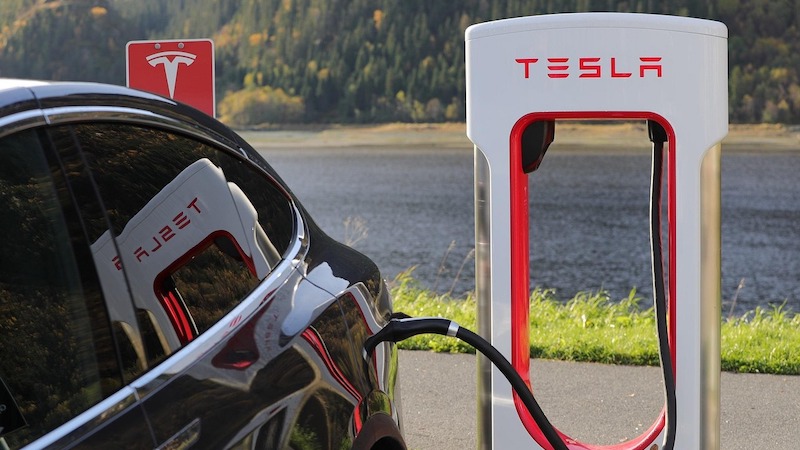
As global climate initiatives intensify, a recent study by the EHU-University of the Basque Country sheds light on who truly benefits from government grants aimed at bolstering electric vehicle (EV) ownership. Surprisingly, these grants are primarily aiding affluent households, raising questions about the social equity of such programs.
The collaborative research effort between the EHU-University of the Basque Country and BC3 research centre has identified a pattern: EVs are predominantly owned by individuals with higher incomes, more education, and those residing in urban environments. This pattern highlights a significant societal gap that current governmental incentives fail to bridge, prompting researchers to suggest that income-based grant allocation could mitigate this issue.
In the fight against climate change, road transportation remains a formidable obstacle, being a major greenhouse gas emitter with rising emission levels. Electrifying the vehicle fleet has emerged as a pivotal strategy for reducing these emissions. Yet, Spain lags behind, with one of Europe’s oldest vehicle fleets and a mere 600,000 EVs, far from the 2030 target of 5.5 million, according to the Spanish Directorate-General for Traffic (DGT).
EHU researcher Mercè Amich delved into national EV purchase trends and the effectiveness of MOVES schemes, the primary incentive programs for EV acquisition. “We need to understand what is going on, because, at the current rate, the targets are not going to be met. In other parts of Europe, electric vehicle uptake is indeed proving successful. You don’t need to go all the way to Northern European countries. Portugal, for example, is doing it much better. What we found in our study is that most electric vehicles are located in urban areas, in households with high incomes and a higher level of education. There is a significant social divide when it comes to acquiring electric vehicles, and current grant schemes are contributing to this inequality. Unless access to these technologies is made more widely available, climate targets are not going be met,” explained Amich.
The research identifies income, education, and urban residency as primary factors influencing EV purchases. Amich noted, “The higher one’s income is, the more property one owns. It is in households with incomes well above the average that there are the most electric vehicles. Most electric vehicle owners have a university degree and live in large cities, particularly in Barcelona and Madrid.” This study is pioneering in that it uses actual EV ownership data, moving beyond prior reliance on preference surveys and offering a clearer picture of actual consumer behavior.
Socially and Environmentally Ineffective Grants
The EHU study critiques the MOVES grants managed by the Ministry for Ecological Transition, highlighting their inefficiencies. Analysis shows that these resources are not reaching those most in need of EVs nor are they effectively rejuvenating the vehicle parc. Amich stated, “We do not have any data detailing whether owners of electric vehicles took advantage of the MOVES Schemes. But as there are so few of them on the market, we can be fairly certain that the data are linked. So if we match the information, we can see that the grants are being given to people who could afford an electric vehicle without them. This means that they are failing to change purchasing behaviour, which is precisely the aim of this type of public policy.”
Moreover, the research indicates that many EV owners are not replacing old internal combustion cars but rather adding EVs to their existing collection, diminishing the environmental benefits of the grants.
Proposals for Improving Grant Scheme Design
To correct these social and ecological imbalances, the study offers several recommendations. It suggests implementing an income threshold for grant eligibility to ensure that financial aid reaches those who truly need it. “Right now, a wealthy individual in Madrid looking to buy a Tesla receives the same level of support as someone who does not have as much money.” This implies that public funds are subsidizing high-end EV purchases for financially capable individuals. “There should be an income cap, as is the case with other types of support,” stated Amich.
Environmentally, the study urges a reassessment of the requirement for scrapping older combustion vehicles, ensuring that EVs replace the most polluting ones. This condition was initially part of the MOVES Schemes but was later withdrawn, undermining the environmental intent of the grants.
Original Story at www.eurasiareview.com