EV Charging Challenges: A National Park Trip Exposes Industry Flaws
Electric vehicle (EV) charging infrastructure has become a hot topic as more drivers shift from gasoline to electric cars. However, a recent experience by Vartan Badalian, a New York attorney, at Yosemite National Park highlights significant issues in the current charging network. This incident sheds light on broader concerns affecting EV adoption nationwide.
An Attorney’s Eye-Opening Experience at Yosemite
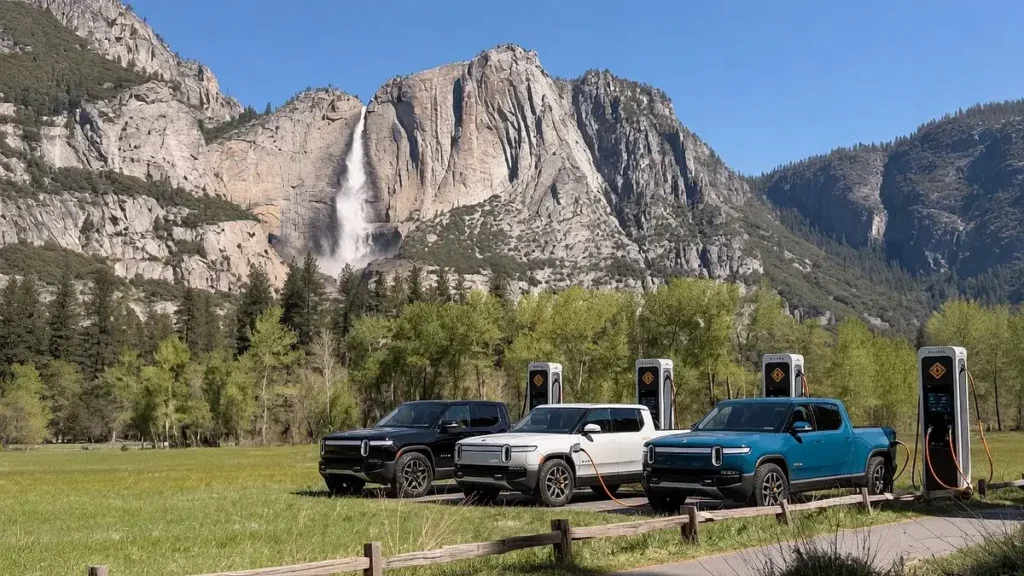
During a visit to Yosemite, Vartan Badalian attempted to charge his EV using two Rivian Level 2 chargers. Despite both chargers showing availability, neither worked. Badalian noted the cumbersome process requiring an app, an account, and network connectivity to initiate a charge that ultimately failed. Fortunately, he didn’t need the charge to continue his trip, but the experience underscored significant flaws in the system.
In contrast, Badalian found success with a Tesla Level 2 Wall Connector at his campsite, which functioned seamlessly without requiring apps or accounts. He stated, “The complexity is invisible. Apple didn’t win by building the most powerful phone. They won by making the most powerful phone feel simple. The EV charging industry went the opposite direction.“
The Complexity Problem in EV Charging
Modern networked Level 2 chargers entail more than just electricity delivery. They involve cloud servers, payment systems, and authentication, introducing multiple potential failure points. Badalian’s experience mirrors the findings of the 2025 J.D. Power U.S. Electric Vehicle Experience Public Charging Study, which reports dissatisfaction among users due to cost and complexity, despite a decrease in charger failures.
Badalian’s successful experience with the Tesla Wall Connector exemplifies the importance of simplicity. Tesla’s focus on user experience ensures their chargers rank high in satisfaction studies. The seamless operation of Tesla’s network contrasts with the Rivian chargers at Yosemite, which prioritize data collection and network management over user convenience.
Business Model Versus User Experience
The complexity in EV charging infrastructure is partly driven by the need to satisfy venture capital metrics, such as user engagement and data collection. Simplicity, while beneficial for users, does not generate the data or subscription opportunities that venture capitalists find appealing. This misalignment results in an infrastructure that prioritizes business models over user experience.
Badalian suggests a solution: if a charger fails twice consecutively, it should default to a “dumb” mode, delivering free power to users and placing the financial burden on network operators to maintain functionality.
Practical Tips for EV Drivers
For those navigating an imperfect charging network, several strategies can mitigate issues:
- Use PlugShare to confirm charger status before arrival, as it provides real-time updates from other drivers.
- Maintain a buffer range to reach alternative chargers, especially in remote areas like Yosemite.
- Know the networks your EV can access, and consider carrying adapters for compatibility with Tesla Superchargers.
- If a charger fails, try other stalls at the same location.
- Report failed sessions to network providers and on PlugShare to help drive maintenance efforts.
The Broader Implications of Charging Infrastructure
Reliable EV charging is not just a convenience issue but an ethical one, impacting those who rely on public infrastructure. A network requiring apps and accounts could exclude individuals less familiar with technology. Simpler, more reliable chargers could democratize access to EVs, benefitting communities and advancing environmental goals.
The lesson from Badalian’s Yosemite trip is clear: the industry must prioritize reliability and user experience to foster wider EV adoption.
Original Story at www.torquenews.com