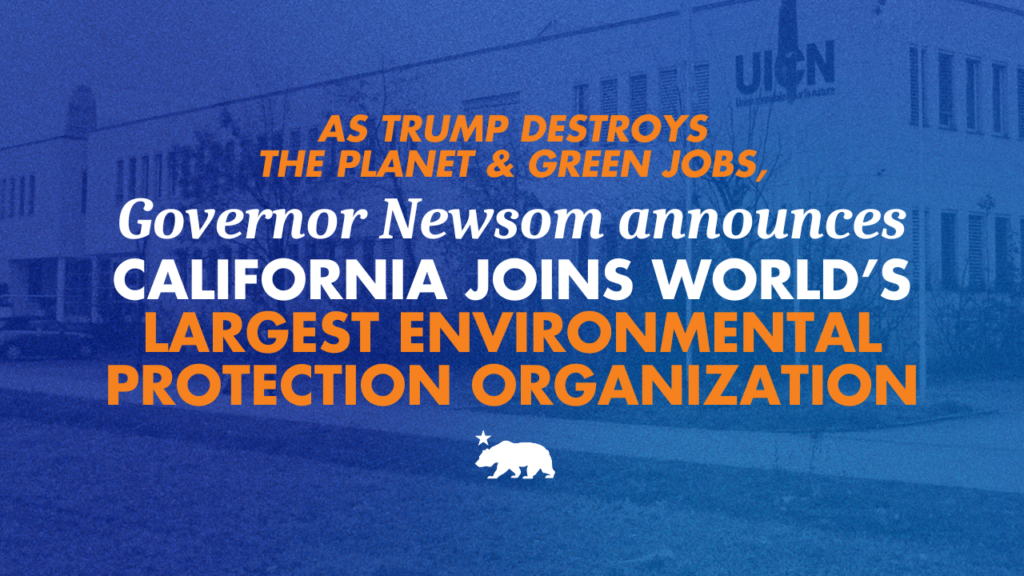
California’s Role in Global Environmental Leadership
In an era where environmental challenges transcend borders, California is stepping up as a pivotal player in global conservation efforts. As a member of the International Union for Conservation of Nature (IUCN), the state aligns itself with an extensive network of governments and organizations committed to safeguarding ecosystems and wildlife.
Strengthening Conservation Efforts
California’s environmental initiatives are widely recognized, as evidenced by the state’s ambitious goals for carbon neutrality and clean energy expansion. It aims to conserve 30% of its lands and coastal waters by 2030, demonstrating a commitment to sustainability that aligns with the IUCN’s standards, including the Red List of Threatened Species and the Green List of Protected and Conserved Areas.
The IUCN Green List acknowledges California’s marine protected area network as a model for effective management, underscoring the state’s dedication to balancing ecological protection with community benefits.
Global Partnerships and Initiatives
California’s leadership extends beyond its borders. The state has forged numerous international partnerships, promoting shared climate solutions. Recently, California co-led the Mediterranean Climate Action Partnership in Los Angeles, collaborating with regions across five continents to address climate vulnerabilities such as wildfires and droughts.
Through its IUCN membership, California is poised to influence global environmental policy, enhance tribal stewardship, and advocate for nature-based solutions. The state will also be instrumental in crafting IUCN’s inaugural strategy for subnational governments.
International Collaborations
- United Kingdom (2026): A memorandum of understanding fosters cooperation on clean energy and climate resilience, reinforcing a history of collaboration. Read more.
- Chile (2025): Focused on methane emissions reduction, this partnership explores new methods in waste, agriculture, and energy. Learn more.
- Colombia (2025): Collaborating on forest conservation and clean energy, this agreement aims to protect the Amazon and bolster biodiversity. Details here.
- Nigeria (2025): This partnership addresses sustainable urban transport and climate adaptation, promoting zero-emission vehicles. Explore more.
- Brazil (2025): Agreements focus on wildfire prevention and low-carbon transportation, supporting biodiversity and environmental conservation. Read more.
- Kenya (2025): Aimed at reducing emissions and boosting trade, this partnership advances sustainable land use policies. Discover more.
- Noord-Holland (2024): Collaborating on next-gen air mobility, this initiative supports California’s air mobility plans.
- Australia (2023): Informing vehicle emissions standards, this MOU enhances renewable energy incentives. Learn more.
- British Columbia (2023): A mutual wildfire assistance agreement establishes a framework for cross-border support.
- China (2023): Multiple MOUs focus on reducing greenhouse gas emissions and fostering clean energy.
- Denmark (2021): Collaboration on water efficiency and drought resilience modernizes California’s data systems.
- Mexico (Baja California & Sonora): Agreements promote zero-emission freight corridors and clean ports, enhancing supply chains.
Filling the Leadership Void
Amidst shifting federal policies, California under Governor Newsom’s leadership remains steadfast in its climate commitments. As other leaders waver, California continues to spearhead efforts to cut pollution, foster job creation, and drive the clean energy economy, positioning itself as a beacon of climate action.
Original Story at www.gov.ca.gov