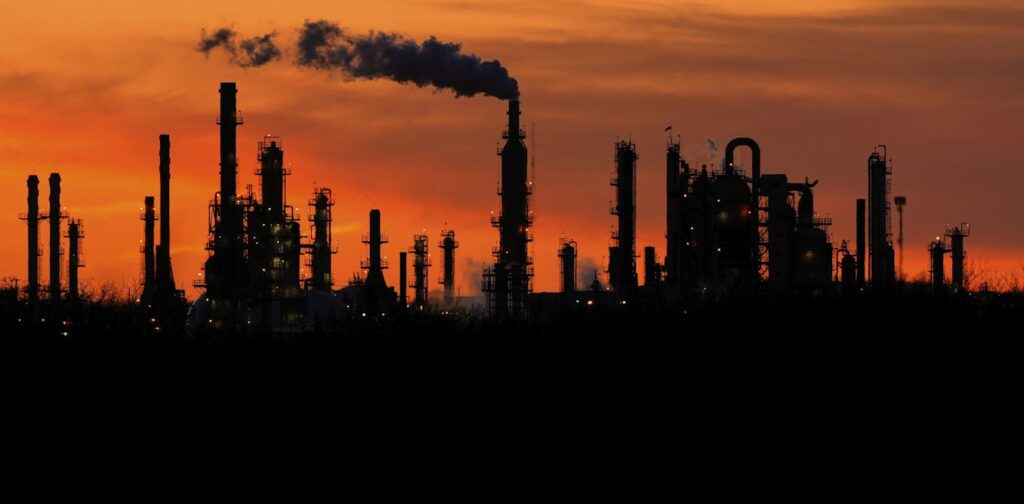
In a groundbreaking move, representatives from over 50 nations are convening in Santa Marta, Colombia, between April 24 and 29 for the inaugural Conference on Transitioning Away from Fossil Fuels. This historic event seeks to establish a committed coalition dedicated to moving towards a sustainable future, free from the heavy reliance on fossil fuels.
The conference aims to chart a clear path for “implementing a progressive transition away from fossil fuels, creating sustainable societies and economies.” The urgency of this mission is underscored by the fact that fossil fuels, such as coal, oil, and gas, remain the primary drivers of climate change. However, despite years of international climate negotiations, including those under the United Nations Framework Convention on Climate Change (UNFCCC), the term “fossil fuels” is glaringly absent from the pivotal 2015 Paris Agreement.
For decades, petrostates and fossil fuel lobbyists have successfully stifled discussions on phasing out fossil fuels in global talks. The question now is whether the Santa Marta conference can make meaningful strides where other global efforts have stumbled.
The Road to Santa Marta
The UNFCCC’s first formal acknowledgment of fossil fuels came only in 2023 during COP28, marking what some hailed as the “beginning of the end” of the fossil fuel era. However, COP29 in Azerbaijan saw a regression, hindered by the host’s promotion of fossil fuels, leading to unresolved commitments about the transition away from these energy sources.
Frustrated by the stagnation, several nations endorsed the Belém Declaration on the Transition Away from Fossil Fuels, with Colombia and the Netherlands spearheading the Santa Marta conference to advance this agenda.
(AP Photo/Andre Penner)
Anticipating Santa Marta’s Outcomes
The Santa Marta gathering is distinct from the UN’s COP meetings, as it involves 53 countries and the European Union in discussions without formal negotiations. Participants will engage in an academic conference, a people’s summit, and high-level government meetings. Attendance from the private sector is contingent upon alignment with the conference’s objectives.
The conference’s main deliverable will be a report focusing on three key areas. The first area examines reducing economic dependence on fossil fuels, crucial for Global South countries burdened by high debt and costly energy transitions. For countries like Colombia, fossil fuels are vital for funding social programs, making this an essential aspect of a fair transition.
The second focus is on “transforming supply and demand,” which includes the challenging topic of phasing out fossil fuel production and addressing fossil fuel subsidies. Additionally, discussions will highlight the need to expand renewable energy while ensuring energy security and access.
Lastly, the third area addresses “international co-operation and climate diplomacy,” with emphasis on reforming investor-state dispute settlement (ISDS) mechanisms. These mechanisms often allow corporations to challenge government policies that impact their investments, potentially hindering climate initiatives.
In March, over 220 experts, including Nobel laureate Joseph Stiglitz, urged Colombian President Gustavo Petro to champion a world free of ISDS at the Santa Marta conference. Following this, Petro announced Colombia’s withdrawal from the system.
Implications for Future Climate Dialogues

(AP Photo/Joshua A. Bickel)
The Santa Marta co-hosts emphasize that this conference complements rather than replaces multilateral negotiations. The outcomes from Santa Marta are expected to inform the Brazilian COP30 presidency’s efforts to develop a roadmap for fossil fuel phaseouts to be presented at COP31 in November 2026.
Such initiatives highlight the growing trend of “minilateralism” in climate action, as seen with the Clean Energy Transition Partnership and the Powering Past Coal Alliance. These smaller coalitions have shown success in advancing climate goals.
Canadian Prime Minister Mark Carney has expressed support for such alliances, describing them as crucial for middle powers in shaping a new global order. The Santa Marta conference presents an opportunity for Canada to align with these efforts, emphasizing the need to reduce dependence on fossil fuels and enhance resilience against global market volatility.
Original Story at theconversation.com