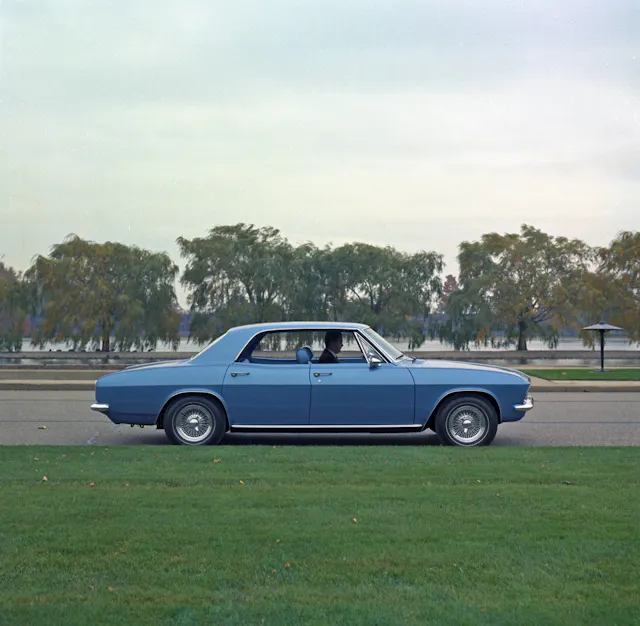
In the mid-1960s, as muscle cars roared into the spotlight and gasoline cost a mere 30 cents per gallon, General Motors made a bold move. Amidst this era of powerful gas engines, GM introduced the Electrovair II, a 1966 Chevrolet Corvair reimagined with electric power. Though never intended for mass production, this vehicle served as a test bed for electric vehicle technology.
At a time when gas was abundant and affordable, the idea of an electric car might have seemed premature. Yet, GM’s Electrovair II showcased significant advancements in EV technology. Following earlier experiments, this model demonstrated GM’s commitment to exploring alternative fuels, a journey that began with electric trucks in the early 1900s and continued with vehicles like the 1966 Electrovan.
A Viable EV
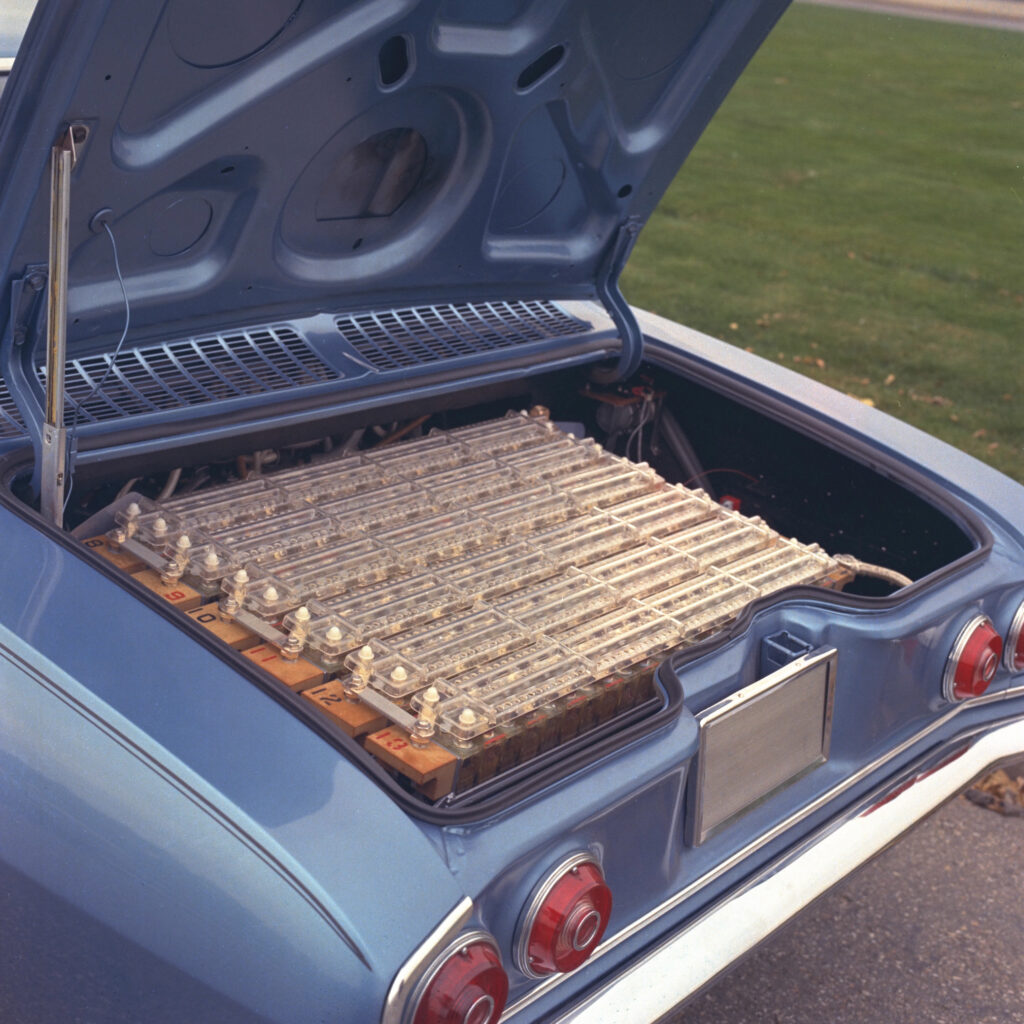
The Electrovair II was capable of highway speeds and offered a driving range between 40 and 70 miles. This performance was comparable to the gas-powered Corvair and not far off from the 73-mile range of the 2011 Nissan Leaf, the first mass-market EV. GM chose the Corvair platform for its light weight, equipping the Electrovair II with silver-zinc batteries, known for their high power output despite a limited lifespan of 100 charges.
In total, 286 battery cells powered a 115-horsepower motor, adding 680 pounds to the vehicle’s weight. Despite this, using lead-acid batteries would have added an extra 2,600 pounds. Thus, the Electrovair II’s 26.4 kWh capacity was a notable achievement for its time, allowing for sufficient performance with a 0-60 mph time of 16.7 seconds and a top speed of 80 mph.
The high cost and limited battery life of the Electrovair II’s components made it impractical for production. However, GM’s then-Executive Vice President Ed Cole was optimistic, stating that the technology developed for the Electrovair II had applications beyond electric cars. “Any progressive industry must be alert and attuned to both its own and other technologies,” Cole remarked. He emphasized GM’s commitment to electric propulsion for its potential in reducing air pollution and improving driving comfort.
A GM engineers’ report echoed Cole’s sentiments, highlighting the ongoing challenges and opportunities in EV development: “These car studies have given us a state-of-the-art evaluation of electric cars. They have re-emphasized the inherent problems and even uncovered some new ones. This simply means that research and development must continue.”
Today, the Electrovair II remains a testament to GM’s early exploration of electric vehicles, preserved at the GM Heritage Center in Michigan, and continues to symbolize the potential of electric propulsion technology.



Original Story at www.hagerty.com