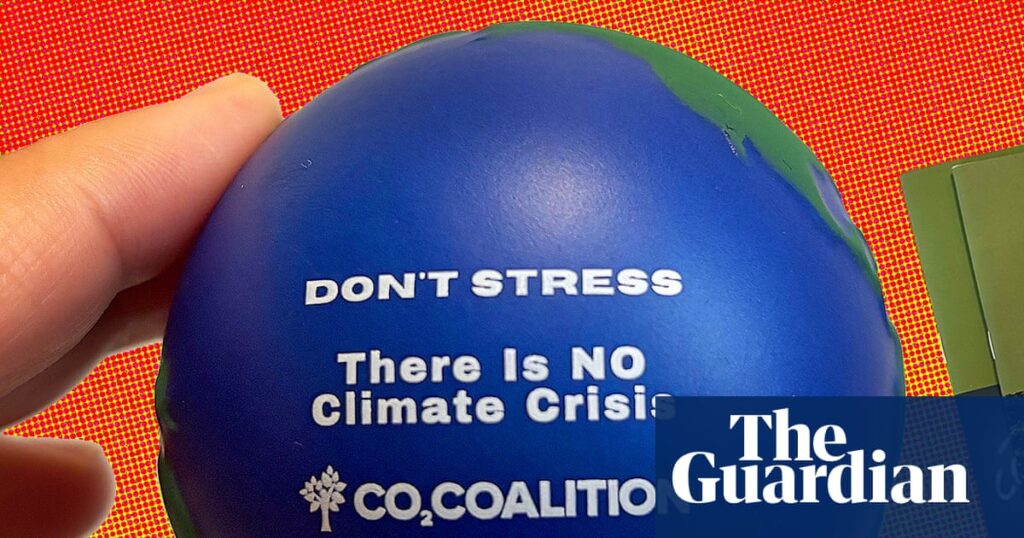
As the U.S. recorded its hottest March in history, a group of climate change skeptics convened to promote their views and influence on federal policy. Hosted by the Heartland Institute, the event attracted primarily middle-aged men who claimed that global climate concerns are unfounded.
“I feel wonderful,” stated James Taylor, president of the Heartland Institute. “The truth is winning out.”
Highlighting the gathering’s influence, Lee Zeldin, EPA Administrator and a potential candidate for attorney general under Donald Trump, delivered the keynote speech. Zeldin claimed that earlier administrations pushed climate science as part of an elite agenda and celebrated the shift away from “doom-and-gloom” predictions.
Despite the scientific consensus on the urgency and human causes of global warming, the conference attendees were welcomed with materials denying the climate crisis. The CO2 Coalition banner outside the ballroom proclaimed, “Good news. There is no climate crisis.”
The event featured materials such as pamphlets titled “Fossil fuels are the greenest energy source” and stress balls labeled, “Don’t stress. There is no climate crisis.” Attendees expressed varying degrees of skepticism, with some denying global warming and others disputing human involvement.
“I believe humans have played a role in climate change. That is a far cry from saying I believe in a ‘climate crisis’,” stated Taylor.
Presenters collectively argued that carbon emissions are beneficial, renewable energy is damaging, and climate policies are driven by a powerful “leftist” conspiracy. Naomi Oreskes, a historian of science, noted that rightwing think tanks like the Heartland Institute present themselves as underdogs, yet have support from powerful entities like Shell and ExxonMobil.
Taylor dismissed funding inquiries regarding Heartland’s ties to oil companies, emphasizing their advocacy for freedom and affordable energy. He claimed that oil companies now support the UN climate agenda and fund activist causes more than Heartland.
With Trump in office, groups such as the Heartland Institute, the CO2 Coalition, and CFACT have gained significant influence. Oreskes remarked that it would have been unthinkable years ago for an EPA administrator to align with such views. Yet, climate skeptics now hold considerable sway.
The Heartland Institute has contributed to Project 2025, a guidebook for Trump’s potential second term, focusing on repealing climate regulations. CFACT influenced the Trump administration’s policy decisions, such as canceling offshore wind project funding in California.
Despite these developments, polls show that most Americans, including a substantial number of young Republicans, acknowledge climate change. Taylor referenced a survey indicating reluctance to pay higher electric bills to combat climate change, suggesting limited public concern.
The conference also addressed youth engagement, with suggestions to create a hashtag movement to counter climate narratives. However, the session was disrupted by activists who highlighted the generational impact of climate change denial. An organizer of the protest emphasized the importance of challenging misinformation.
Original Story at www.theguardian.com