California’s Wildfire Preparedness Faces Challenges Amid FEMA Funding Delays
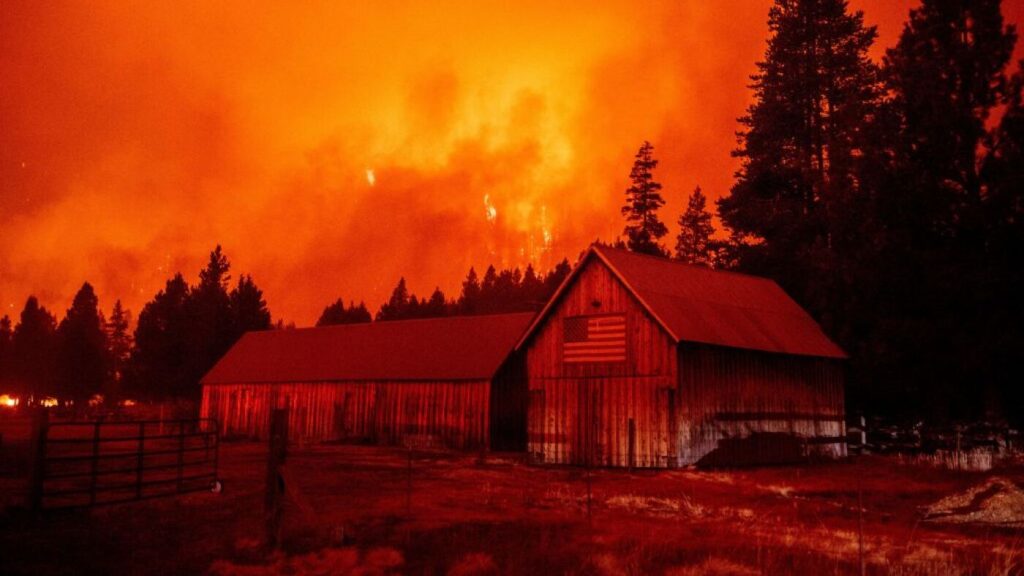
Placerville, a small city in California, symbolizes the growing threat of wildfires in communities across the United States. The landscape’s dense vegetation and older wooden homes create a setting ripe for disaster. “It’s a perfect storm for devastation,” notes Tanya Harlow, the wildfire resilience officer for El Dorado County.
In an effort to mitigate these risks, Placerville is part of a pilot program to fortify homes against wildfires. Funded mainly by the Federal Emergency Management Agency (FEMA), the initiative provides financial assistance to residents for fire-resistant upgrades and vegetation clearance. However, the program faces significant delays due to a backlog at FEMA, which affects hundreds of communities nationwide.
El Dorado County is poised to enroll over 500 homes in the program but requires FEMA’s approval to proceed. This delay echoes a wider issue where states report sluggish disaster funding disbursals under the Trump administration. FEMA currently owes almost $10 billion to communities, funds crucial for infrastructure repair following major disasters.
According to Pam Bates from the Shasta County Fire Safe Council, the funding bottleneck is halting essential disaster projects, straining local budgets. “We’re just at a standstill,” Bates says, reflecting the frustration felt by many awaiting FEMA’s response.
Grants Face Additional Scrutiny
FEMA has not provided clarity on the slowed funding. However, the bottleneck coincides with a policy initiated by former Department of Homeland Security Secretary Kristi Noem, mandating an additional review of grants over $100,000 for waste and fraud. Although this policy was revoked by Noem’s successor, Markwayne Mullin, most funds remain unreleased.
Some grants, like those from FEMA’s Hazard Mitigation Grant Program and Public Assistance Program, are vital for rebuilding and retrofitting infrastructure. These projects, often funded upfront by communities, await FEMA reimbursement.
Andrew Rumbach from the Urban Institute highlights the impact of these delays: “In some states, emergency measures to cover costs could mean cutting other important programs.”
Community-Level Resilience
Placerville resident Adele Montgomery, who has lived in her home for over 40 years, is taking steps to safeguard her property. With a house surrounded by trees, she is creating defensible space by trimming branches and clearing brush. Her aging wooden deck remains a concern, and she has applied for support from El Dorado County’s Weber Creek Project, a $25 million initiative funded by FEMA.
Despite the program’s potential benefits, Montgomery and others wait for FEMA’s approval of an environmental review submitted by the county. Harlow emphasizes the need for community-wide participation to enhance resilience: “Real resilience really is at the community level.”
Other California areas, like Plumas and Shasta counties, also experience delays in FEMA funding for wildfire safety projects. With deadlines approaching, there is hope for extensions.
Funding Challenges and Future Implications
FEMA’s slowed funding is unusual, even for an agency known for bureaucratic delays. Reports indicate that financial disbursements began to decelerate in June last year, with a significant backlog accumulating before a partial release of funds this February.
Criticism of FEMA’s policies and staffing cuts under the Trump administration has been vocal. North Carolina Sen. Thom Tillis questioned the legality of Noem’s review policy, stating, “People are hurting in Western North Carolina from the most significant storm they’ve ever experienced.”
With recent climate challenges, investing in disaster preparedness is crucial. Research shows that proactive measures can save money long-term by mitigating damage. As Rumbach explains, “Mitigation has shown over and over again to be a good investment.”
Original Story at www.npr.org