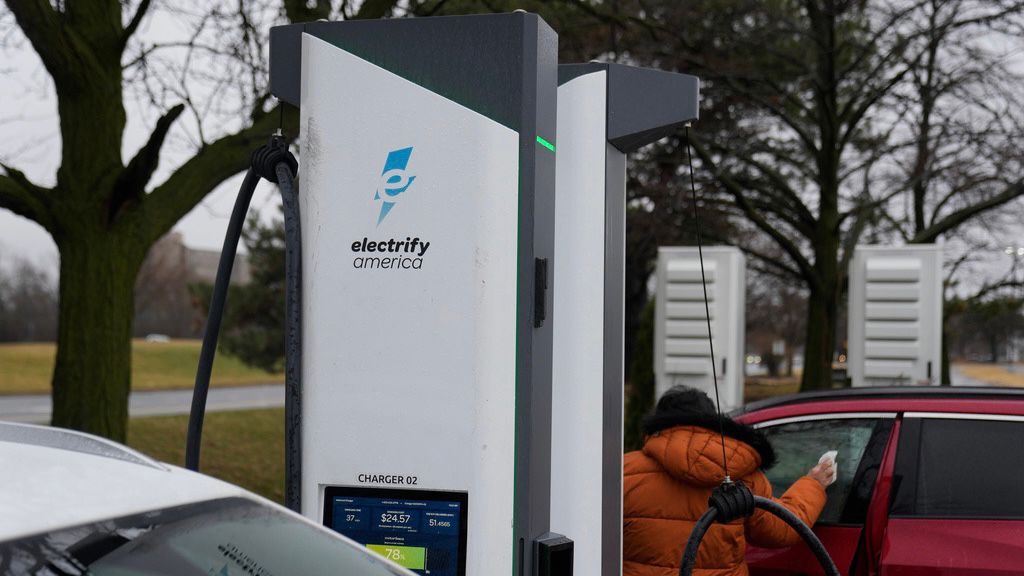
Rising Gas Prices and Global Uncertainty Drive Surge in Electric Vehicle Interest
Amid ongoing concerns about the Iran conflict and escalating fuel costs, a significant shift towards electric vehicles (EVs) is taking place in the United States. Data from Cox Automotive reveals a notable uptick in both interest and sales of EVs in the first quarter.
Stephanie Valdez Streaty, Director of Industry Insights at Cox Automotive, highlighted, “Gas prices don’t translate to sales immediately, but it definitely translates into consideration,” during an online symposium on electric vehicles hosted by the Electrification Coalition.
Key Highlights
- Amidst ongoing Iran conflict and rising fuel costs, interest and sales of EVs have surged in early 2026, as per Cox Automotive.
- Stephanie Valdez Streaty of Cox Automotive noted that rising gas prices influence consumer consideration towards EVs.
- New EV interest rose by 16% through March compared to late 2025 following the cessation of a $7,500 federal tax credit by the Trump administration.
- Used EV interest soared by 30% in March, with over 100,000 units sold, setting a quarterly record.
The demand for new electric vehicles increased by 16% through March, compared to the last quarter of 2025, following the end of the $7,500 federal tax credit by the Trump administration. This recovery led to approximately 215,000 new EVs being sold in the initial months of 2026, with popular models like the Toyota BZ and Tesla Model Y spearheading this growth. Brands such as Rivian, Cadillac, and Lexus reported year-over-year increases in sales.
According to Cox, the average price for a new electric vehicle in March stood at $54,508, compared to around $50,000 for a traditional gas-powered vehicle. Valdez Streaty noted that this marks the smallest price gap recorded between electric and gasoline vehicles, contributing to the rise in EV sales.
Despite these trends, high purchase prices remain a primary barrier to EV adoption among Americans, as reported by AAA.
Loren McDonald, CEO and chief analyst at Chargeonomics, commented, “We’re seeing monthly sales increase, but what’s holding the EVs’ overall numbers back is we’re losing a lot of models.” Several brands, including Acura, Chevrolet, Dodge, and others, have discontinued existing EV models or scaled back future plans due to tariffs and the end of the federal tax credit from the Biden era.
While new EV sales are rebounding, the used EV market is growing even faster. Valdez Streaty reported a 30% spike in interest for used EVs in March, with quarterly sales surpassing 100,000 units, setting a new record.
The Manheim Used Vehicle Value Index indicated a 20% increase in EV sales during the first quarter compared to the previous year. EV values are rising more swiftly than non-EVs, with a 7.9% increase compared to a 6% rise for non-electric vehicles. Notably, retention values for three-year-old EVs now surpass those for hybrids and gasoline-powered vehicles, reversing a long-standing trend linked to battery life concerns.
McDonald observed that certain consumer groups are considering more affordable used EV options: “With rising prices for everything and consumers less likely to spend, a lot of people who are two- or three-car households in the suburbs who have been thinking of getting an EV and don’t want to spend $50,000 or $60,000, maybe they’ll spend $20,000 or $30,000 on a three-year-old Tesla.”
Looking ahead, Cox Automotive forecasts a growing supply of used EVs, with 300,000 expected to come off lease in 2026, increasing to 600,000 in 2027, and potentially reaching 660,000 by 2028.
Valdez Streaty remarked, “This will provide consumers a wide range of EVs at different price points and make them more affordable.”
Original Story at spectrumlocalnews.com