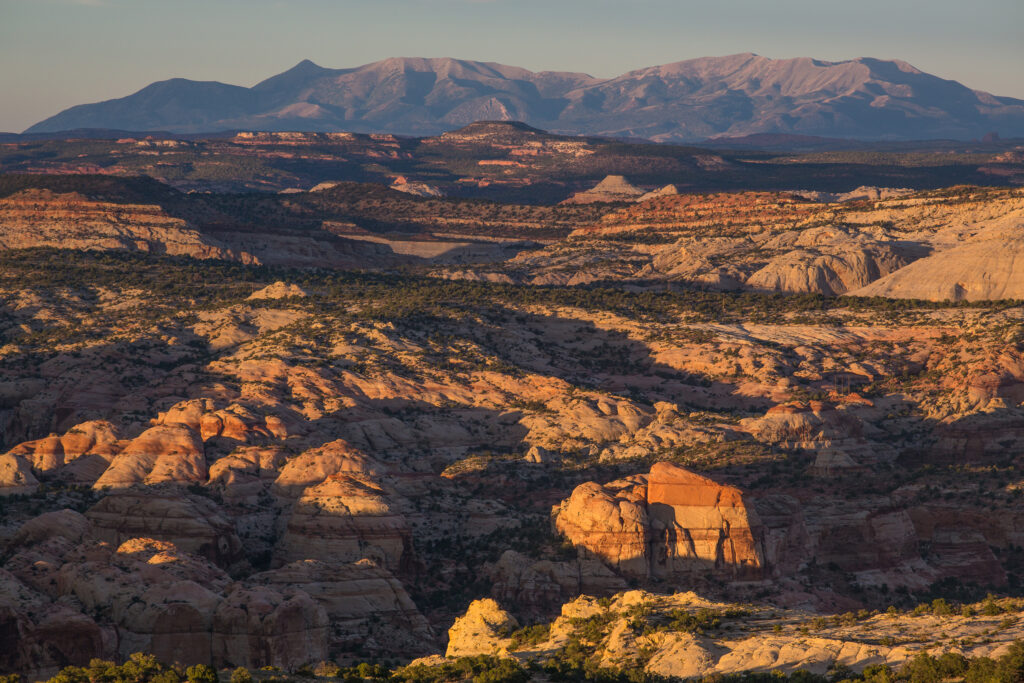
Lawmakers in Utah are using an obscure law to challenge protections for the Grand Staircase-Escalante National Monument, aligning with a Trump-era objective to reduce conservation lands’ protections nationwide.
This week, Utah Republicans Sen. Mike Lee and Rep. Celeste Maloy introduced a “joint resolution of disapproval” in both the Senate and House. This resolution requires Congress to vote on whether the Congressional Review Act (CRA) should overturn a resource management plan for the vast redrock landscape in southern Utah. If passed by both chambers, the plan will be nullified, potentially leading to similar actions against other resource management plans.
“This is the blueprint for managing land uses such as hiking, grazing, and skywatching,” said Axie Navas of The Wilderness Society. “Representative Maloy and Senator Lee aim to dismantle that blueprint using a top-down approach.”
A recent analysis indicated that Republicans have employed the CRA 22 times in this Congress to reverse Biden administration actions, primarily on environmental issues.
This is the first instance of the act targeting a national monument. The Trump administration had previously tried to reduce the monument’s size from 1.9 million acres to 1 million acres to accommodate multiple uses, potentially paving the way for oil, gas, and mining activities, according to Steve Bloch of the Southern Utah Wilderness Alliance.
The alliance challenged this move, but President Joe Biden reversed the decision, restoring the acres and initiating a new management planning process involving the Bureau of Land Management, state leaders, and local stakeholders.
“Utahns include Tribal Nations. We contribute to the state’s history and future,” said Davina Smith-Idjesa of the Navajo Nation. “Undermining Tribal collaboration weakens public land management and endangers monuments nationwide.”
In June 2025, Sen. Lee’s attempt to allow the sale of federally owned land was unsuccessful. Later, he proposed an amendment permitting national park land sales.
Conservationists argue these measures would harm the national park system, already strained by recent layoffs. “Senator Lee’s actions suggest a desire to sell public lands to private interests, and rescinding the management plan might be part of a larger agenda,” said Jackie Grant of Grand Staircase Escalante Partners.
Last year, Maloy laid the groundwork to use the CRA to lift protections on national monuments by asking the Government Accountability Office (GAO) to determine if the management plan is a rule, thus subject to Congressional review. The GAO confirmed in January that it qualifies as a rule.
“The Joint Resolution ensures Congress reviews and potentially disapproves significant agency actions,” Lee’s office stated.
Approval by Congress would nullify the plan and prevent similar rules without further authorization. Southern Utah officials welcomed Lee and Maloy’s actions.
“With 80 percent of our County designated as monument, the 2025 rules severely impact local families and businesses,” stated the Kane County Commission via Lee’s office. “We applaud efforts to empower our federal delegation.”
Conservation and tribal groups fear this could lead to reduced protections or elimination of other monuments. Secretary of the Interior Doug Burgum ordered a review of monuments, and the Department of Justice claimed the president has the authority to eliminate them.
“Monuments like Grand Staircase-Escalante and Bears Ears are targets,” Bloch said. “This could lead to the removal of essential protections and even the monuments themselves.”
These initiatives face opposition, even among Trump supporters. A poll by Colorado College found bipartisan support for maintaining national monuments, with “MAGA supporters” interest rising from 81 percent last year to 87 percent this year.
Original Story at insideclimatenews.org