The electric vehicle (EV) industry is currently experiencing a significant shift as legacy automakers face unexpected challenges. Slower-than-anticipated demand for EVs, coupled with substantial financial write-offs, is forcing these companies to reassess their strategies. Meanwhile, China is rapidly advancing in the EV sector, leaving Western automakers struggling to keep pace.
The Current Landscape
Original Equipment Manufacturers (OEMs) are grappling with a persistent decline in global vehicle volumes, a trend that has lingered since the COVID-19 pandemic. This situation is compounded by the need to address significant financial losses related to ambitious EV investments. As a result, OEMs are re-evaluating their strategies to better align with market realities.
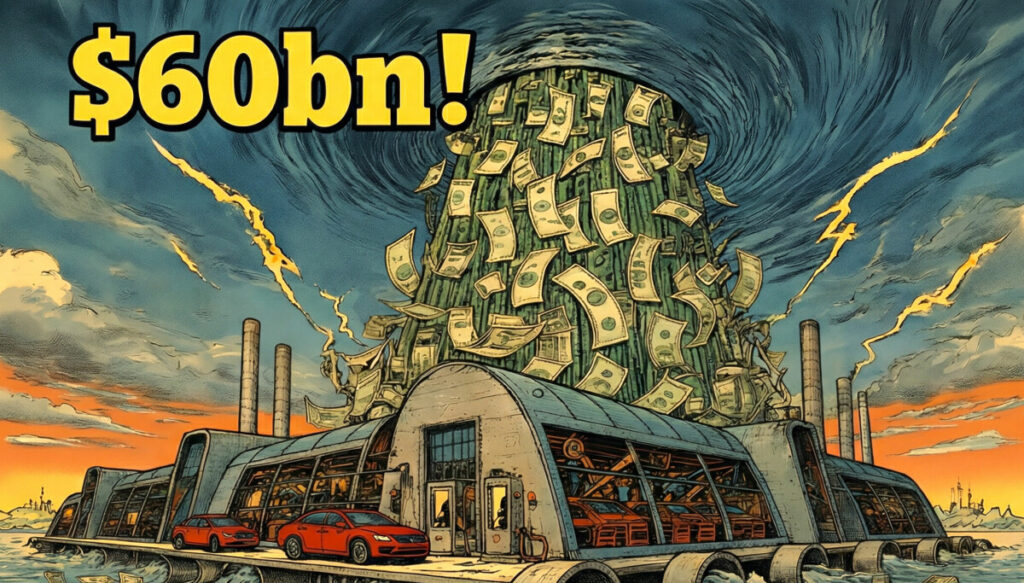
Recent reports indicate that several major OEMs have faced substantial write-downs on their EV investments. This reset reflects a broader industry recalibration aimed at matching EV production with actual market demand, rather than merely adhering to regulatory targets. While the transition to electrification remains inevitable, it is becoming increasingly clear that this journey will not be uniform across regions, consumer segments, and vehicle types.
Significant Financial Impacts
| OEM | Write-Down | Details |
|---|---|---|
| Stellantis | $26.5bn |
• Scaling down the EV supply chain due to demand not meeting expectations of the “Dare Forward 2030” plan. • Selling its 49% stake in a Canadian battery JV with LG Energy Solution. • Platform impairments and product cancellations. • Revised assumptions for warranty claims in North America and Europe. • Reviving diesel production in Europe. |
| Ford | $19.5bn |
• Scrapping the fully electric F-150 Lightning and replacing it with a new EREV. • Special charges for repurposing facilities away from pure EV production. • Ending its JV with SK On for battery production. • Redirecting battery production to energy storage solutions. |
| General Motors | $6bn | • Elimination of a planned Michigan facility initially designated for EV production. |
| VW/Porsche | $6bn |
• Delay of the software-led Scalable Systems Platform (SSP). • Delay of electric 911 until the 2030s. • Postponement of Porsche K1. |
| Honda | $1.7bn | • Impairments on EVs sold in the U.S. and scrapping some EV development. |
| Nissan | $1.0bn | • Part of a wider $11bn restructuring plan. |
| Total | $60bn |
Factors Behind the Shift
Several factors contribute to this industry-wide reevaluation. While EV sales are projected to reach 20.7 million units by 2025, the growth rate has not met expectations. High purchase prices, combined with charging infrastructure concerns, have dampened consumer enthusiasm. Meanwhile, the lower prices of used EVs have made new models less appealing, further slowing adoption rates.
Regulatory changes have also played a role. The European Union has relaxed its 2035 internal combustion engine (ICE) ban, now requiring only 90% of new vehicles to be zero-emission by that year. In the U.S., the elimination of a significant federal tax credit adds to the challenges facing the EV market.
Additionally, Chinese manufacturers are aggressively entering Western markets with more affordable EVs, intensifying competition for legacy automakers. This influx of cheaper options makes it difficult for established companies to compete on price alone.
Implications for Manufacturing and Logistics
The slower transition to EVs has significant implications for the automotive supply chain. Delayed or cancelled investments in EV projects will impact every level of the supply chain, from battery suppliers to logistics providers.
-
OEMs are likely to pivot back to traditional powertrains, including internal combustion engines, hybrids, and extended-range EVs, while scaling down new EV platforms and joint ventures.
-
Tier 1 suppliers may reduce investments in new powertrain development, leading to potential delays or deferments in projects like gigafactories.
-
Logistics providers will need to adapt to changes in inbound and outbound flows, as well as cost pressures from OEMs and suppliers.
-
The industry may see restructuring, mergers, and acquisitions as companies adjust to the new landscape.
-
OEM write-offs will influence future investment strategies, limiting available capital and increasing caution in future ventures.
While full electrification is still on the horizon, the path to that future is proving more complex than anticipated. The current reset will shape the industry’s evolution and impact all stakeholders involved.
Original Story at www.automotivemanufacturingsolutions.com