An Updated Icon: The 2026 Nissan Leaf’s New Chapter
As electric vehicles continue to dominate discussions about the future of transportation, Nissan’s Leaf, though less heralded than some of its competitors, has been a pioneer in the field. Since its debut in 2011, the Leaf has been pivotal in shifting perceptions about EVs. Now, an all-new 2026 model seeks to revitalize its presence in the market with a fresh design and enhanced technology.
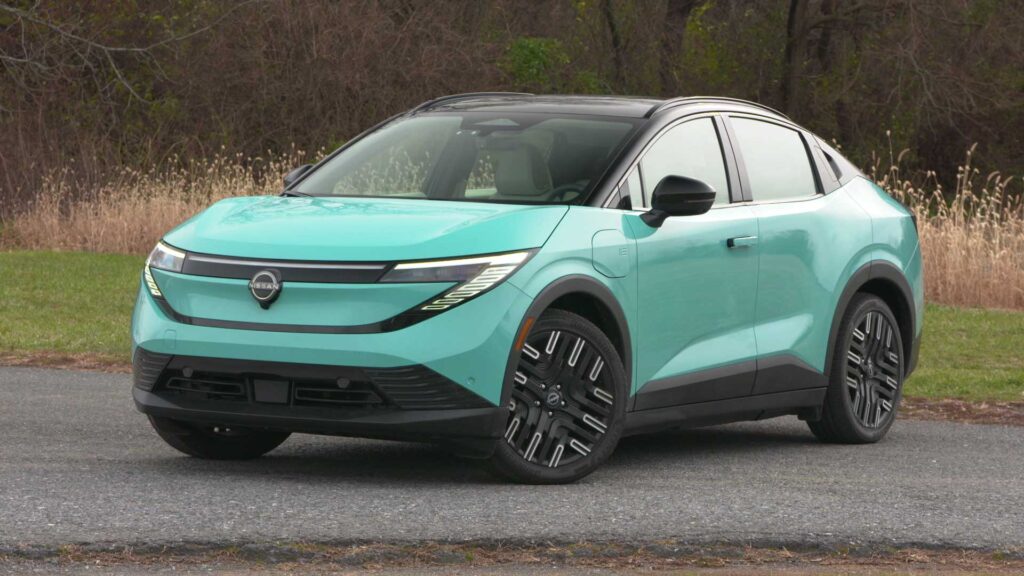
Back in 2011, the Leaf was a rare sight on American roads, where skepticism about electric vehicles was rampant. Over the years, however, it contributed to a wave of new battery-electric vehicles, though it gradually fell behind the competition. The upcoming 2026 model aims to reposition the Leaf as a trendsetter, moving away from its previous SUV-adjacent hatchback design to a sleek coupe-style SUV appearance.
Significant design updates include a more dynamic exterior with features like flush-mounted door handles and sculpted fenders, enhancing its aerodynamic efficiency. The lighting has also been revamped with new LED elements, including full-width running lamps and distinctive tail lamp designs that nod to Nissan’s Japanese roots.
Inside, the emphasis is on technology without overwhelming the user. The interior showcases dual 14.3-inch screens housed together, and manual controls for essential functions like radio and gear selection are conveniently placed. High-end features such as headrest-integrated Bose speakers and a panoramic roof with adjustable transparency add unexpected luxury.
Despite its SUV look, the 2026 Leaf is actually shorter than its predecessor. It maintains a roomy feel in the front with a flat floor and a refined center console. Rear seat space has been slightly improved, though it remains more suited for short journeys. The cargo area has decreased to 20 cubic feet but offers flexibility with a maximum space of 55.5 cubic feet thanks to the Divide-N-Hide feature.
The Leaf can be surprisingly fun to drive at times, even in a track environment like our handling course.
Performance-wise, the Leaf sticks to its front-wheel-drive format, available in three trims featuring a single motor producing 214 horsepower and 261 lb-ft of torque. A more affordable variant with a smaller motor and battery is expected later. The 75-kWh battery provides a range of up to 303 miles, an impressive figure for its category, though the high-end Platinum+ version with 19-inch wheels has a lower range of 259 miles. Charging is facilitated through a NACS port, with fast charging capabilities reaching 80% in just 35 minutes.
Driving the Leaf is an engaging experience, likened to the nimbleness of ’80s economy cars. In Sport mode, it offers substantial grip, quick steering, and reduced body roll. Acceleration is smooth, reaching 60 mph in 7.1 seconds and completing a quarter-mile in 15.5 seconds. Braking performance, while effective, provides minimal feedback.
The Leaf’s energy efficiency stands at 33-kWh per 100 miles, and its pricing aligns closely with previous generations, starting at $31,485. As competitors introduce their first battery-electric vehicles, the 2026 Nissan Leaf leverages its longstanding experience, modern design, and improved range to reclaim its position as a frontrunner in the EV market.
Specifications
As Tested
- Motor Setup: Single, Front-Mounted Motor
- Battery Size: 75-kWh
- Horsepower: 214
- Torque: 261 lb-ft
- EPA Range: up to 259 miles
- EPA Efficiency: 33-kWh / 100 miles
- 0-60 mph: 7.1 seconds
- 1/4 Mile: 15.5 seconds at 92 mph
- Braking, 60-0 (avg.): 111 feet
- MW Test Loop: ~ 196 miles
Original Story at motorweek.org