As climate change intensifies, so do the conversations around how we can best tackle its impacts. At Yale @ Climate Week NYC, experts from Yale School of the Environment delved into various aspects of the climate crisis, offering insights and solutions that challenge traditional approaches. Their discussions ranged from climate adaptation to the implications of GDP and the role of AI in climate communication.
Adaptation vs. Emissions: A Less Polarizing Approach
While efforts to reduce carbon emissions often spark political debates, focusing on climate adaptation is less contentious, according to insights shared by Jennifer Carman, director of Survey Strategy at the Yale Program on Climate Change Communication (YPCCC). Her research indicates that framing policies around “extreme weather” maintains significant bipartisan support, with only a minor drop in Republican backing when the term “climate change” is used.
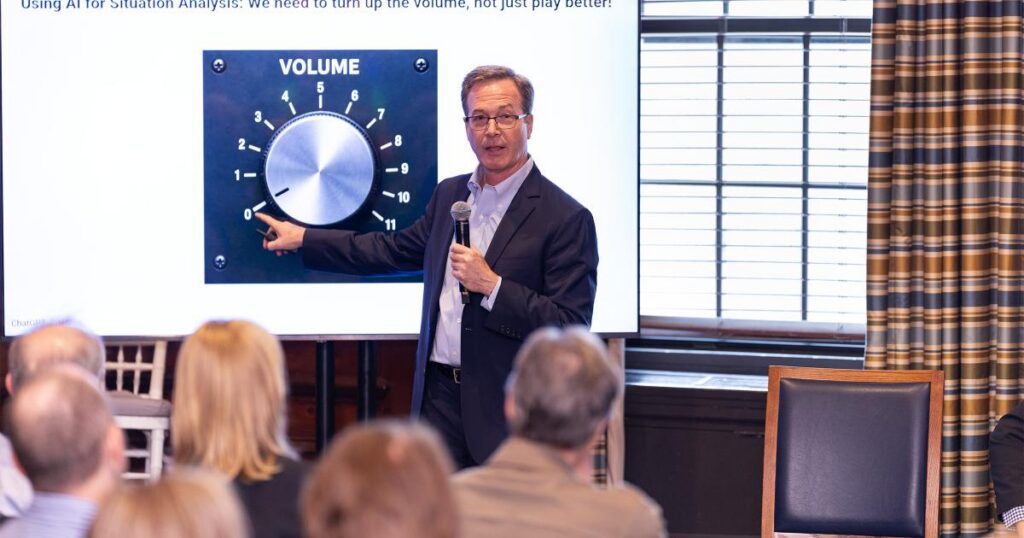
Anthony Leiserowitz, the JoshAni-TomKat Professor of Climate Communication and director of YPCCC, emphasized the complexity of adaptation, advising stakeholders to understand their audience better. “It’s not ultimately about quality; it’s about quantity. We need to turn up the volume, not just play better,” he noted. The IMPACT Survey, previewed at the event, aims to gauge public perceptions on climate risks and adaptation policies across 12 countries, with results expected before COP32 in 2027.
Rethinking GDP: Addressing Blind Spots
During the session “Beyond GDP in Practice: Wealth Accounts for Sustainability, Competitiveness, and Climate,” Eli Fenichel, the Knobloch Family Professor of Natural Resource Economics, criticized GDP for failing to account for environmental losses. He likened it to a soccer team ignoring the goals conceded. This oversight disproportionately affects rural populations reliant on natural capital, as highlighted by Valerie Hickey of the World Bank Group.
To address these blind spots, Fenichel suggests connecting existing data to allow policymakers to focus on key metrics. He believes AI can play a crucial role in organizing and harmonizing this information, describing the issue as a “boring plumbing problem” that is nonetheless solvable.
Turning Up the Volume on Climate Change
With the rise of AI, the landscape of climate communication is rapidly evolving. Anthony Leiserowitz discussed this shift during “Climate Communication in the Age of AI,” noting that AI has already reshaped the field. Using AI, his team analyzed millions of articles, discovering that climate change received minimal media coverage—just over 0.5% of all content.
Leiserowitz argues for increasing the quantity of climate-related communication. Panelists like Eric Asche and Michael Treff highlighted AI’s potential to expedite content creation and response times, crucial in the fast-paced media environment.
Understanding Climate Migration
Climate migration is often perceived as a singular event, but the reality is far more complex, explained Brianna Castro, assistant professor of Urban Sustainability. Her research reveals that most climate-induced migrations occur over short distances and within countries, including in developed nations like the U.S.
Each decision to stay or move involves significant resource investment, making future relocations increasingly difficult. Castro views early, temporary migration as an adaptive strategy, where one family member moves to support the rest. She suggests policy changes, such as flexible school enrollment, to ease the burden on migrating families.
Urban Wildlife: Adapting Together
More than 80% of the global population lives in urban areas, which are also home to diverse wildlife. Gabriel Gadsden ’26 PhD and Thomas Lovejoy Conservation Fellow highlighted the challenge of designing cities to accommodate both people and wildlife in “Creatures of Change: Multi-Species Urbanism.”
Nyeema Harris, who has studied Detroit’s urban wildlife, emphasized the need for people to adapt their perceptions and behaviors. Her research shows the complexity of human-wildlife interactions, challenging the narrative of animals as villains. Harris advocates for a “stewardship metric” to assess how human activities impact local wildlife, urging a shift from mere attitude changes to tangible behavioral adjustments.
“`
Original Story at environment.yale.edu