Air Quality Concerns Loom Over World Cup Final Between Argentina and Spain
The world eagerly awaits the thrilling World Cup final between Argentina and Spain, set to unfold just outside New York City on Sunday. However, a looming threat in the form of wildfire smoke from Canada now casts a shadow over the match, with FIFA yet to announce any protective measures for the health of players or spectators.
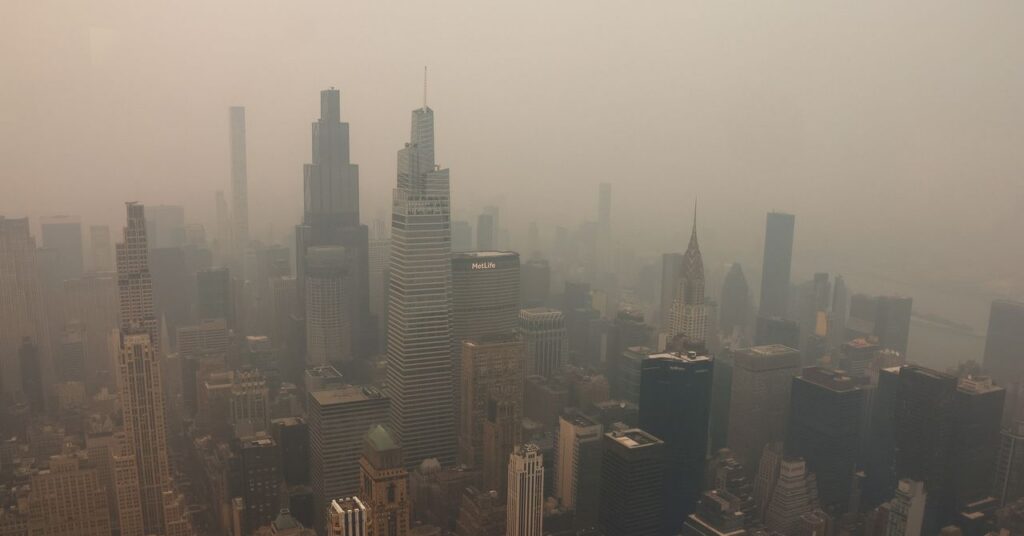
Recent days have seen vast areas of the Midwest and East Coast shrouded in smoke due to Canadian wildfires, affecting over a dozen states. Particularly in New York, residents have endured orange and hazy skies, prompting the state to issue an air quality alert as conditions reached “unhealthy” and “very unhealthy” levels. Authorities advised, “Avoid spending time outdoors, if possible.” More details on the advisory can be found here.
As of Friday morning, air quality at the stadium remained troublingly high in the “unhealthy” range. While forecasts suggest improvement to “moderate” by kickoff, unpredictable smoke patterns could still pose risks. With the stadium being open-air, athletes like Lionel Messi and Lamine Yamal, alongside thousands of fans, face potential exposure to smoke, risking symptoms such as a burning throat, coughing, or headaches, especially among vulnerable groups like children, the elderly, and those with respiratory issues.
Preparation for the game has already seen players exposed to compromised air quality. The Spanish team, for instance, practiced outdoors in New Jersey on Thursday. “These are high-level athletes who are moving a lot of air through their lungs,” remarked Courtney Howard, an emergency room physician and Global Climate and Health Alliance official, to the Associated Press. “They shouldn’t be practicing outside if the air quality levels are at hazardous sort of ranges for wildfire-related air pollution.”
FIFA, the World Cup organizer, has yet to outline any contingency plans for smoke-related air quality issues. When questioned, both FIFA and New York City health officials did not respond immediately. FIFA has previously communicated its protocols for extreme heat, including mandatory water breaks, but omitted any air quality considerations. In a prior statement, FIFA mentioned, “Climate-related risks are assessed as part of overall tournament planning and managed in close coordination with host cities, stadium authorities, and national agencies.” Read more on this topic here.
Other sports leagues have adopted proactive measures in response to air quality concerns. The National Women’s Soccer League (NWSL), for example, incorporated extra hydration breaks during a game in New York when the air quality index reached 101, and they opt to cancel or postpone games when the index surpasses 200. Similarly, Major League Baseball and Major League Soccer have adjusted schedules due to smoke-related issues.
The World Cup, now in its fifth and final week, has so far managed to avoid major disruptions from wildfire smoke. “FIFA seems unprepared for these wildfires,” commented Nicholas Watanabe, a University of South Carolina professor. “At the same time, it looks like the worst of the pollution will dissipate before the World Cup Final, so FIFA will dodge a bullet and likely push forward with the match.”
Despite these observations, questions remain about whether entities like FIFA and other sports organizations are adequately addressing climate-induced threats. FIFA has already faced criticism this year regarding its extreme heat policies. Trinity Rodman, who played in a smoky NWSL game, expressed concerns: “If we have to have a hydration break every 15 minutes, then we shouldn’t be playing the game.” More insights on this can be found here.
Original Story at www.wired.com