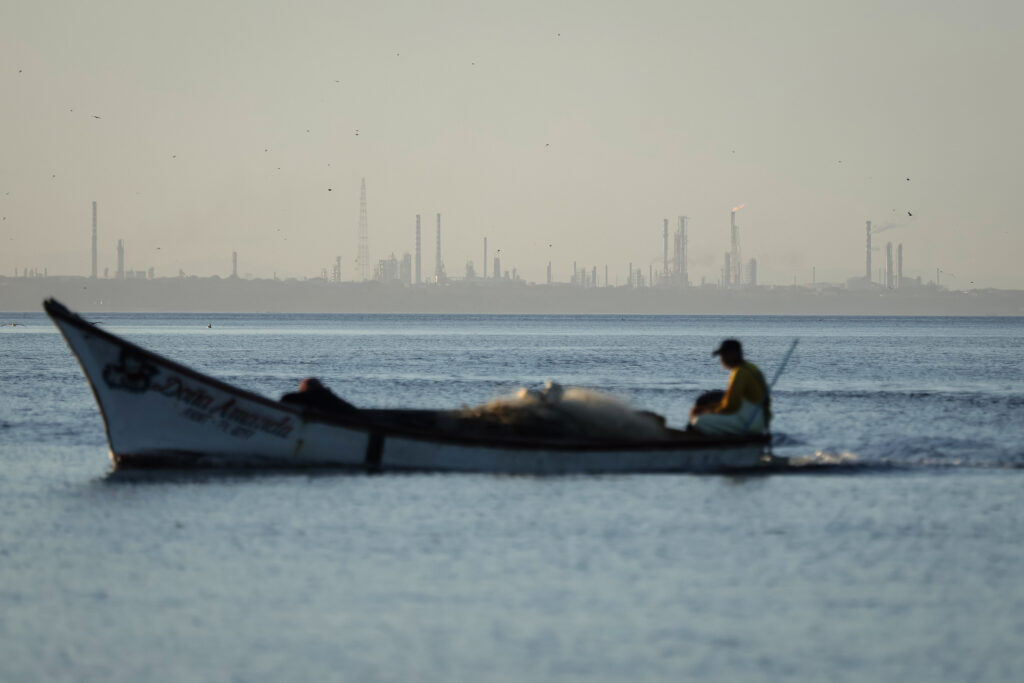
From our collaborating partner Living on Earth, public radio’s environmental news magazine, an interview by Jenni Doering with Paasha Mahdavi, an associate professor of political science at the University of California, Santa Barbara.
The capture of President Nicolás Maduro by U.S. authorities in early January has reignited discussion about Venezuela’s vast oil reserves. However, Venezuela is also ideally situated for renewable energy, particularly wind.
Paasha Mahdavi, an associate professor at the University of California, Santa Barbara, focuses his research on the intersection of oil, gas resources, and environmental governance. He highlights Venezuela’s potential to harness renewable energy due to its geographical advantages.
JENNI DOERING: Venezuela is famous for its oil resources, but what makes it ideal for renewable energy?
PAASHA MAHDAVI: Besides being known for its oil industry, Venezuela has outstanding offshore wind potential, in addition to solar and geothermal energy opportunities. Its windy, shallow waters facilitate wind turbine construction, much like the Great Plains in the U.S.
DOERING: What’s the potential scale for wind energy in Venezuela?
MAHDAVI: According to the World Bank, Venezuela’s offshore wind capacity potential is 381 gigawatts, which is ten times its current electricity capacity of 38 gigawatts, signaling a massive opportunity.
DOERING: How much renewable energy is currently used in Venezuela?
MAHDAVI: Virtually none, outside of hydropower. Solar, wind, and geothermal energy usage is nearly zero, partly due to environmental concerns associated with hydro projects.
DOERING: How might Venezuela’s oil workforce transition to renewable energy?
MAHDAVI: This is crucial for a just transition. Skills in the oil industry can transfer to sectors like offshore wind and geothermal. Training pathways can adapt existing expertise, enabling workers to shift to renewable energy jobs.
DOERING: What barriers hinder Venezuela’s renewable energy transition?
MAHDAVI: The main obstacles are government priorities and institutional capacity. Historically, Venezuela has favored oil and gas under Maduro and Chávez. Additionally, lacking bureaucratic and legal frameworks deters investment and development in wind energy.
DOERING: While wind energy isn’t easily exported, how could it boost Venezuela’s economy?
MAHDAVI: Exporting electricity is challenging, but undersea cables could provide clean power to the Caribbean. Reliable electricity from wind energy can support local industries and innovations, as seen in countries like Norway and China, which have become significant clean energy exporters.
DOERING: Are there examples of other South American countries balancing economic growth and climate action?
MAHDAVI: Colombia, unlike Venezuela, is attempting to decarbonize under a government focused on climate action. This contrasts with Venezuela’s continued emphasis on oil and gas.
DOERING: How significant is the decision for Venezuela to embrace renewable energy?
MAHDAVI: It’s crucial. Transitioning to clean energy would position Venezuela as a leader in global green initiatives. This move is vital for global climate efforts and could inspire similar actions worldwide.
Original Story at insideclimatenews.org