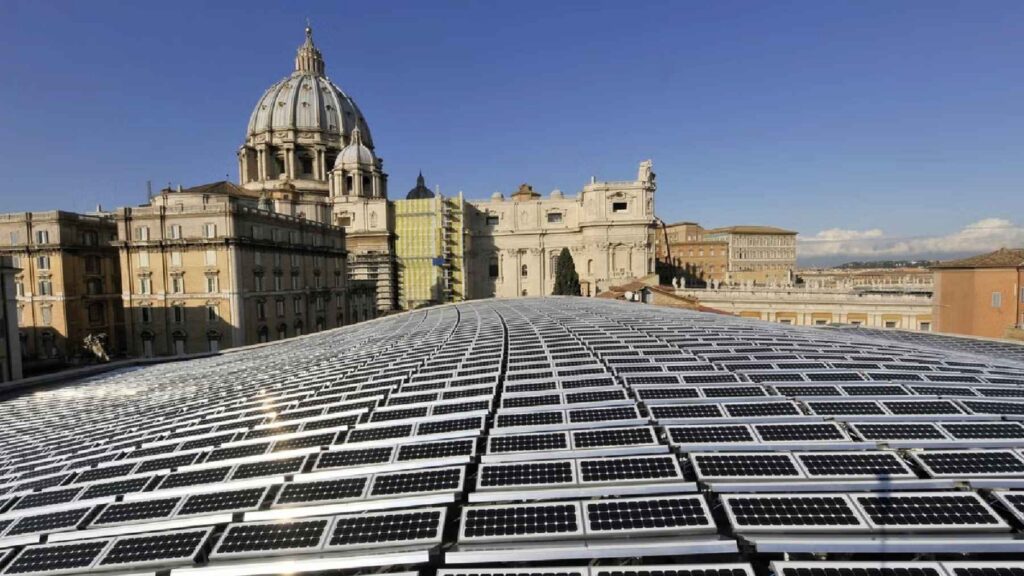
In an intricate dance of diplomacy and infrastructure, the Vatican has embarked on an ambitious project to install a large solar farm on its extraterritorial property in Italy. This endeavor highlights the complexities of international treaties, energy policies, and the challenge of sustainable development on foreign soil.
Typically, installing solar panels on one’s property involves straightforward procedures. However, when it comes to the Vatican, the process has been anything but simple. Since June 2024, the Vatican has been navigating a complex path to solar energy, culminating in a significant committee meeting just last week.
Why a Field of Panels Needed a Treaty
The proposed site for this solar farm is Santa Maria di Galeria, a 424-hectare area north of Rome, owned by the Vatican under a 1951 agreement with Italy. This land has been crucial for Vatican Radio transmissions since 1957, broadcasting shortwave radio to continents around the world.
As the site is extraterritorial, selling electricity to the Italian grid involved international negotiations. A treaty was signed between the Holy See’s Archbishop Paul Richard Gallagher and Italy’s ambassador, Francesco Di Nitto, on July 31, 2025. Following its ratification by the Italian parliament on April 1, 2026, the agreement officially took effect on May 27, 2026. The treaty’s details can be accessed here.
The Vatican’s Unique Financial Position
Financially, the Vatican’s approach is unique. While it benefits from tax exemptions on importing solar panels, it foregoes the typical subsidies available in Italy for solar energy projects. Such incentives usually make solar projects financially viable, raising questions about the Vatican’s financial strategy for this project.
Italy, however, stands to gain from this arrangement. The country can count the Vatican’s solar field towards its EU clean energy targets, even though the Vatican is not an EU member. The project is estimated to cost under 100 million euros (approximately $114 million), with any surplus power benefiting local communities.
Leo XIV’s Forward-Thinking Initiative
Pope Francis initiated this project with his apostolic letter, Fratello Sole, urging the creation of a solar plant to meet the energy needs of both the Vatican City State and the radio station. Leo XIV furthered this initiative by establishing the Fratello Sole Foundation on June 1, 2026, to oversee the project.
The foundation, designed to function more like a utility than a charity, will manage the production, distribution, and sale of electricity. Its operations will extend to several extraterritorial properties as defined in the 1929 Lateran Treaty.
Agrivoltaics: Balancing Energy and Agriculture
The design concept for the solar farm embraces agrivoltaics, where solar panels are elevated to allow for agricultural activities beneath. This dual-use approach aims to maintain the land’s agricultural productivity while generating renewable energy. The crop types to be grown under these panels remain unspecified, but similar projects have shown varying results depending on the crop and climate.
Awaiting Construction
As of now, the Vatican’s solar plant remains in the planning stages. With a treaty in place, a dedicated foundation, and a memorandum with a utility company, the groundwork is set for future developments. No official capacity figures have been released, though estimates suggest a potential capacity near 100 megawatts.
The Vatican aims to achieve carbon neutrality through this project, making it potentially the first state to cover its electricity needs entirely through renewable energy. Upcoming milestones include the foundation’s board finalizing its operational regulations by early September, with construction tenders to follow.
The Vatican’s existing solar setup includes 2,400 panels on the Paul VI Audience Hall roof, generating approximately 300 megawatt-hours annually since 2008, a testament to its ongoing commitment to sustainable energy solutions.
Original Story at www.autonocion.com