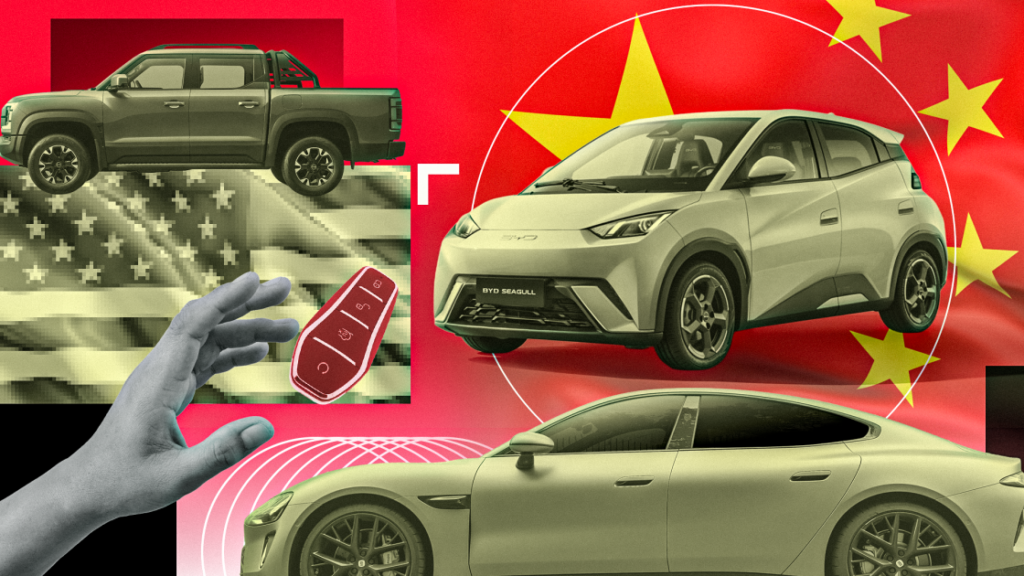
Amidst a rapidly evolving electric vehicle (EV) landscape, American consumers face an unexpected dilemma: admiring innovative foreign EVs from afar, unable to purchase them due to stringent regulations. This situation leaves many pondering the future of affordable and accessible electric transportation in the U.S.
Jim Farley, CEO of Ford, expressed his admiration for the Xiaomi SU7 at the 2024 Aspen Ideas Festival. Farley’s unexpected appreciation for the Chinese electric car, which he imported from Shanghai to Chicago, highlighted a growing interest in foreign EV innovations. “I don’t want to give it up,” he stated, signaling the potential impact of such vehicles on the American market.
Influencer Marques Brownlee further fueled interest with his review of the Xiaomi SU7 Max, praising its advanced features such as dual-motor All Wheel Drive, 800V fast-charging, and an impressive range of nearly 500 miles. Brownlee noted the car’s combination of quality, pricing, and software integration, describing it as an “elite” offering.
Yet, U.S. regulations pose a significant barrier. Current laws enforced by the National Highway Traffic Safety Administration restrict the importation of foreign-market vehicles until they are 25 years old, unless they meet specific safety and emissions certifications. This effectively keeps models like the Xiaomi SU7 out of reach for American consumers.
Simultaneously, satellite imagery has revealed vast parking lots in Europe filled with surplus EVs from another Chinese manufacturer, BYD, underscoring the disparity in global EV distribution. Meanwhile, U.S. policies further complicate the situation. The Federal Communications Commission (FCC) has enacted bans on foreign-made unmanned aircraft systems and routers, citing national security concerns.
These challenges extend to other advanced technologies. Import restrictions and tariffs have kept cutting-edge Chinese batteries and solar products out of the U.S. market, limiting access to affordable energy solutions. Observers note a stark contrast between the advancements available globally and those accessible to American consumers.
Efforts by U.S. EV Companies
While foreign EVs capture attention, some U.S. companies are making strides. Aptera, a California-based startup, is developing an aerodynamic, solar-assisted vehicle promising 40 miles of daily driving under optimal conditions. Despite enthusiasm, Aptera faces production hurdles due to funding issues and regulatory challenges favoring traditional vehicles.
Tesla, under Elon Musk’s leadership, continues to pursue its mission to accelerate sustainable energy but faces criticism for focusing on high-margin vehicles. Musk has warned that without trade barriers, Chinese EVs could dominate the market, yet he has not actively sought to eliminate these barriers.
Market Dynamics and Policy Implications
The disconnect between U.S. policies and global EV advancements raises questions about the country’s strategic direction. The Biden administration’s tariff expansions have been perceived as a means of protecting domestic industry, yet critics argue it stifles competition and innovation.
Musk’s influence on policy, including significant investments in political campaigns, adds another layer of complexity. His alignment with certain policies has drawn scrutiny, especially given his past commitments to sustainable transportation.
The current regulatory environment leaves many wondering whether the U.S. will remain competitive in the global EV market. The path forward may require reevaluating trade policies and fostering an environment that encourages innovation and accessibility.
Original Story at www.pcmag.com