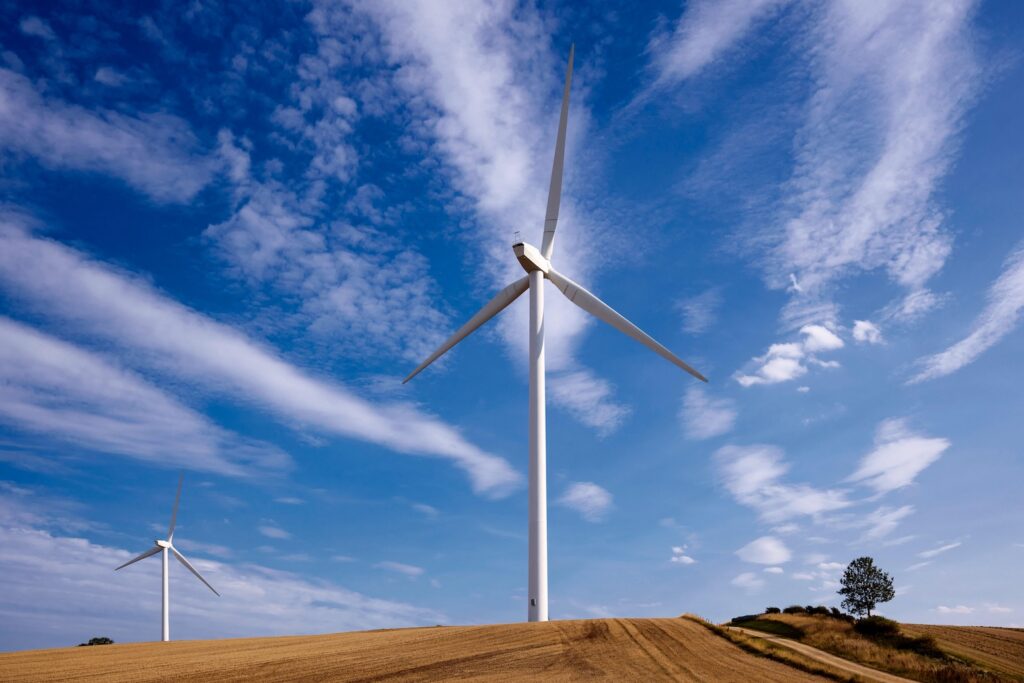
In a remarkable turn of events, the UK’s reliance on gas imports has significantly decreased amid soaring gas prices. Thanks to unprecedented wind and solar power generation, the nation has saved £5.9 billion in potential gas imports since the onset of the Hormuz crisis, according to a Carbon Brief analysis.
Gas prices have surged to levels not seen since the 2022 energy crisis, yet wind and solar power have increased their output by 14% compared to the previous year. This surge in renewable energy production has led to a nearly 10% reduction in gas-fired electricity generation in 2026 so far.
Wind and solar energy now account for a record 41% of the UK’s electricity needs in 2026, surpassing the 25% contribution from gas, as per Carbon Brief’s findings. This shift has mitigated the need for gas imports worth £5.9 billion since the outbreak of war between the US and Iran in February 2026.
The reduced dependency on gas imports has saved the UK the equivalent of more than 100 additional tanker deliveries of liquefied natural gas (LNG). The savings in September 2026 alone amount to £1.3 billion, driven by record wind and solar generation of nearly 10 terawatt hours (TWh) alongside rising gas prices.
Reports from Carbon Brief in April and May confirmed the ongoing impact of renewable energy on reducing gas dependency. UK wholesale gas prices have remained high since Russia’s supply cut-off to Europe after the 2022 Ukraine invasion.
From 2023 until early this year, gas averaged 90p per therm—nearly triple the 2019 prices before the Covid and Ukraine crises. The Middle East conflict starting in March further increased prices to an average of 134p per therm, almost four times the 2019 level.
By September 2026, gas prices peaked at 189p per therm, the highest since the 2022 global energy crisis. As winter approaches, prices are expected to rise further due to increased heating demand and the unresolved Hormuz crisis.
European gas stocks are low, forcing competition with Asia for LNG supplies. In the UK, high gas prices are escalating household bills under Ofgem’s price cap, while electricity bills remain relatively stable.
Nesta predicts that from October 1, typical household gas bills will rise by 33% compared to April, adding about £200 annually. Conversely, electricity bills are only up 4% due to expanding clean-energy sources. Director for sustainable future at Nesta, Andrew Sissons, noted on social media that “the link between electricity and gas prices has already begun to break”.
Additionally, high fossil-fuel import costs are affecting EU countries and low to middle-income nations, with the EU reportedly spending an extra €100 billion since the crisis began. Meanwhile, UK diesel prices have reached record highs of around £2 per litre, whereas electric vehicles are up to nine times cheaper to operate, according to Carbon Brief analysis.
Energy Secretary Miatta Fahnbulleh addressed the Labour party conference, highlighting the UK’s vulnerability to global fossil-fuel markets as a reason for high energy bills. Prime Minister Andy Burnham emphasized that the expansion of clean energy is helping mitigate the impact of high gas prices on electricity bills. He stated, “We are already taking more control of our electricity prices with a massive expansion of home-grown renewables and nuclear. I have asked Miatta to speed up the breaking of the link between what we pay for power at home and the international gas market, to get bills down.”
Original Story at www.carbonbrief.org