

This article originally appeared on The Conversation.
In a dramatic weather turn, Western Alaska’s Yukon-Kuskokwim Delta faced the aftermath of a powerful storm on October 12, 2025. This storm, a remnant of Typhoon Halong, caused significant flooding in villages up to 60 miles inland, pushing homes off their foundations, and leaving many residents stranded. Local officials reported that over 50 individuals required rescue operations in Kipnuk and Kwigillingok, with hundreds more displaced and at least one fatality.
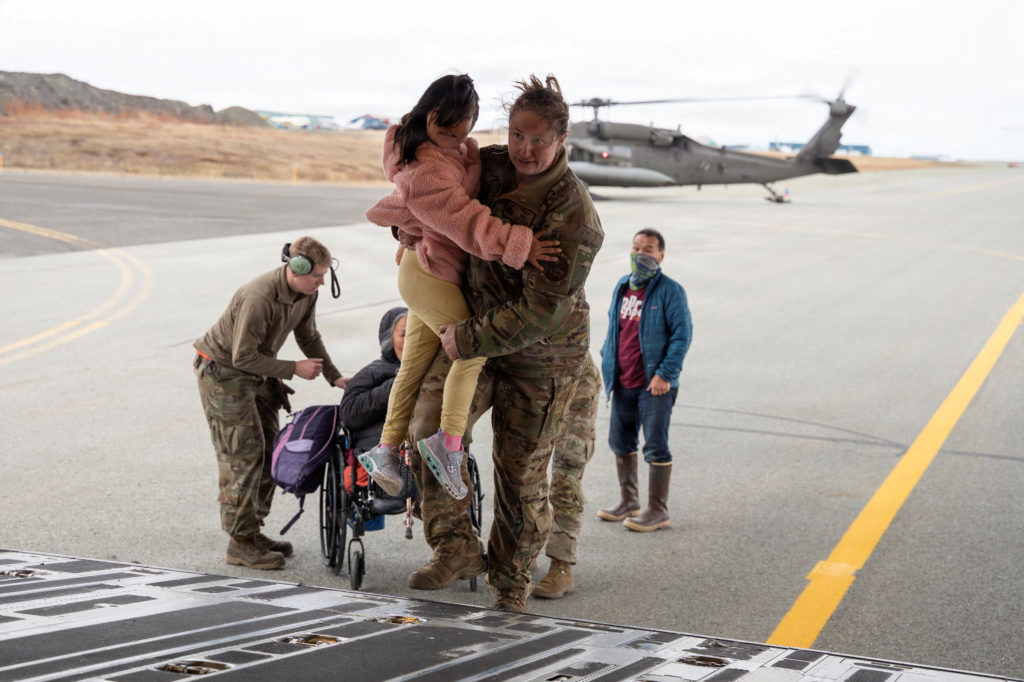
WATCH: Rescue crews airlift hundreds out of rural Alaskan villages after powerful storm
Typhoon Halong’s intensity was partly attributed to unusually warm Pacific Ocean temperatures this season. Rick Thoman, a meteorologist at the University of Alaska Fairbanks, highlighted the unique challenges facing Alaskan communities post-disaster. Unlike the contiguous United States, where resources and infrastructure are more accessible, remote villages in Alaska lack such conveniences, complicating recovery efforts.
What made this storm unusual?
As an ex-typhoon, Halong shared similarities with 2022’s Typhoon Merbok. Initially a formidable storm east of Japan, Halong’s trajectory was influenced by the jet stream, carrying it toward the Bering Sea. However, as it neared Alaska, weather models unexpectedly adjusted, showing a faster path and an atypical route between Saint Lawrence Island and the Yukon-Kuskokwim Delta coast.
In contrast to Merbok, which was accurately predicted, Halong’s exact path and strength were uncertain until it was merely 36 hours from reaching Alaskan waters, leaving minimal time for evacuations.
Did the loss of weather balloon data canceled in 2025 affect the forecast?
The impact of missing weather balloon data remains unclear. However, since late August, no upper-air observations have been conducted at Saint Paul Island, and Kotzebue has been without such data since February. Bethel and Cold Bay have reduced observations, while Nome was without data for two days as the storm approached, possibly affecting forecast accuracy.
Why is the delta region so vulnerable in a storm like Halong?
Western Alaska’s flat terrain allows storm surges to penetrate deep inland. Much of the land is near sea level, exacerbated by thawing permafrost, subsidence, and rising sea levels. With limited escape routes, inhabitants are left vulnerable, as seen in Bethel, located 60 miles up the Kuskokwim River, which also experienced flooding.
These isolated communities are accessible only by air or sea, complicating relief efforts. The region, still recovering from a 2024 flood, faces a housing crisis compounded by the recent disaster.
What are these communities facing in terms of recovery?
Residents face tough choices: remain in their communities or relocate as winter nears. The housing shortage and logistical challenges of rebuilding, requiring supplies delivered by barge, add to the complexity. Even with national aid, reconstruction is unlikely until the following summer.
READ MORE: Chronic housing shortage leaves Maui residents displaced a year after deadly wildfire
The National Guard may provide some assistance, but the scale of reconstruction needed is immense, and solutions are not straightforward.
Is climate change playing a role in storms like these?
Future studies may explore the role of climate change, but current data indicates that Halong traversed unusually warm North Pacific waters, which likely intensified the storm. This warmth was accompanied by a surge of warm air, with Unalaska recording a high of 68 degrees Fahrenheit on October 11, an unprecedented temperature for the month.
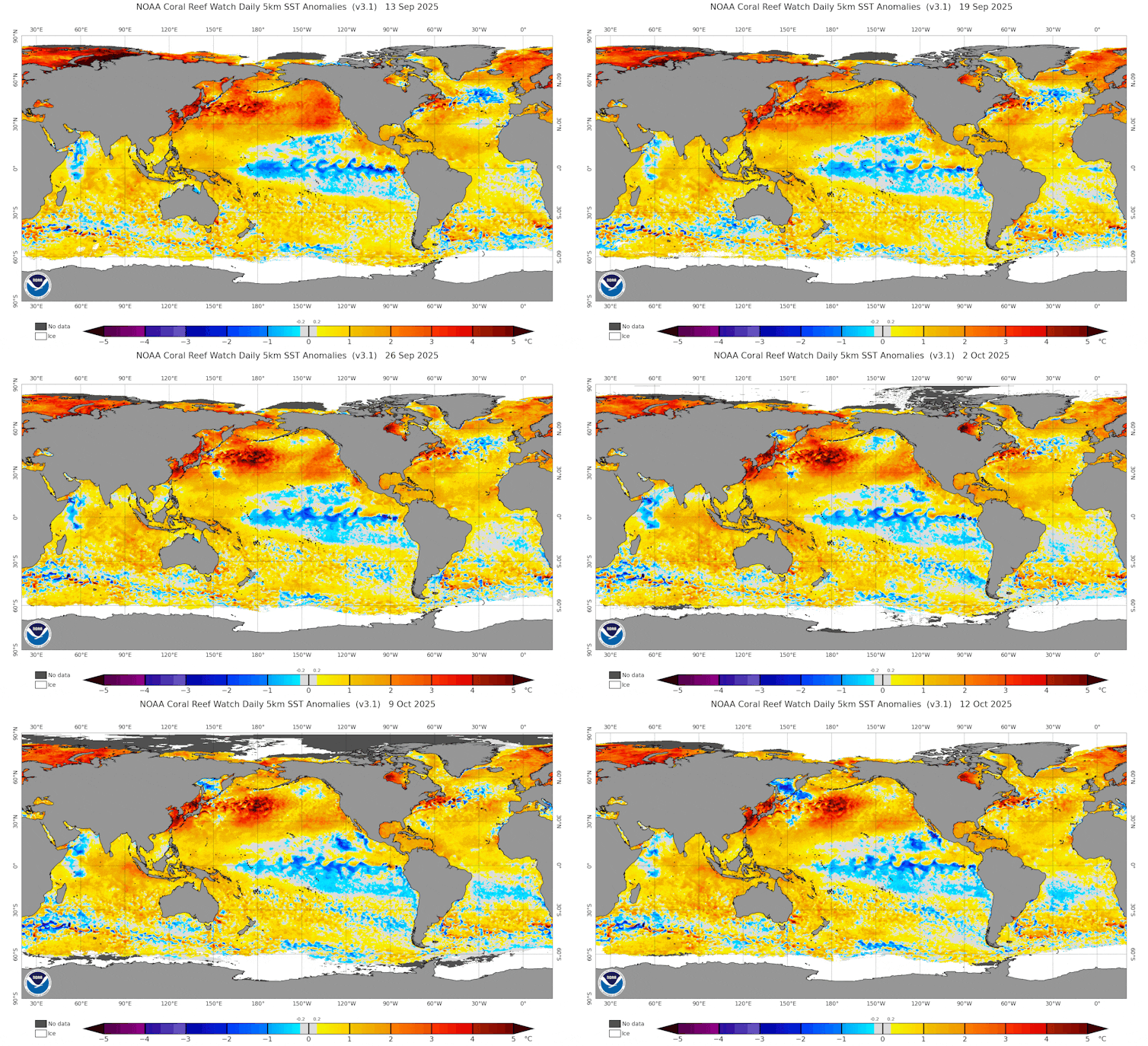
A comparison of daily sea-surface temperatures shows how anomalously warm much of the northern Pacific Ocean was ahead of and during Typhoon Halong. Graphic by NOAA Coral Reef Watch
Halong also brought lots of very warm air northward with it. East of the track on Oct. 11, Unalaska reached 68 degrees Fahrenheit (20 degrees Celsius), an all-time high there for October.
This article is republished from The Conversation under a Creative Commons license. Read the original article.
Original Story at www.pbs.org