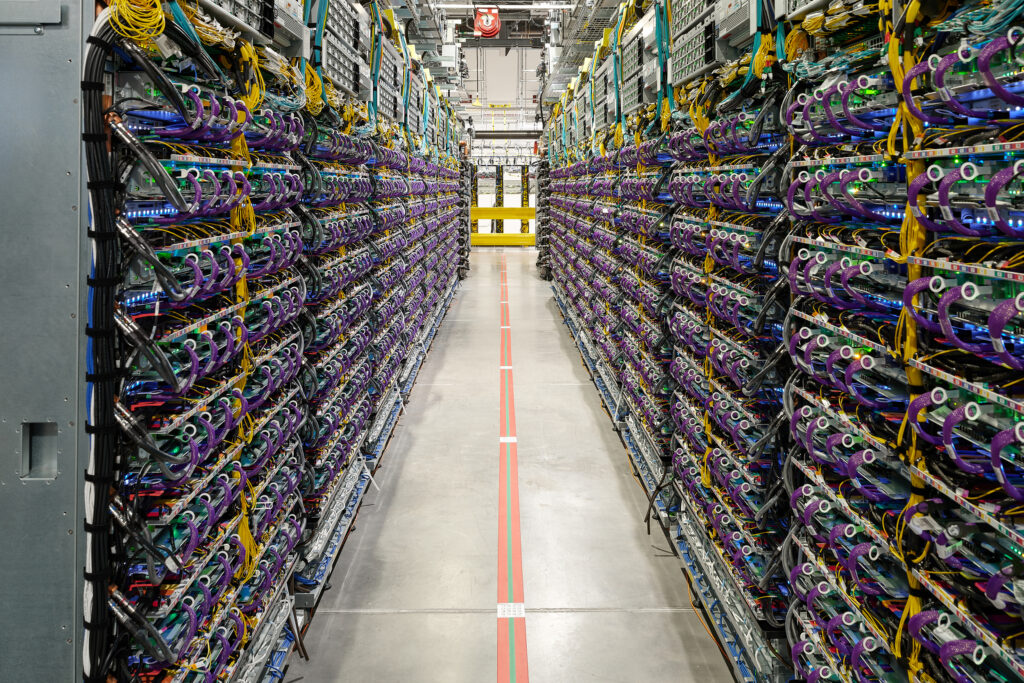
A proposed Google data center in Michigan stands out for its renewable energy usage and ability to reduce power consumption during high-demand periods.
Announced last week, the project is a collaboration with DTE Energy and could serve as a model for clean and efficient electricity provision to data centers.
In contrast, some developers plan to build large gas-fired power plants alongside expansive data centers. The largest, announced last week, is a 9,200-megawatt gas plant in southern Ohio by Japan’s SoftBank Group Corp. and SB Energy.
The Piketon, Ohio, ribbon-cutting was a lively event, featuring Trump administration officials, music, and local workers in safety vests.
Google’s announcement was understated, disclosed via a blog post and a state regulatory filing.
The contrasting approaches in Ohio and Michigan highlight the choice between cleaner energy sources and fossil fuels.
Forest Bradley-Wright, of the American Council for an Energy-Efficient Economy (ACEEE), called Google’s announcement “an important first step” in managing electricity demand at data centers.
ACEEE collaborates with data centers, utilities, and regulators to promote energy conservation. Their February report highlighted financial savings from cleaner energy approaches versus fossil-fuel plants.
Google plans a data center in Van Buren Township near Detroit, requiring 1,000 megawatts of electricity. DTE proposes a 20-year contract to build 1,600 megawatts of renewable energy, 480 megawatts of energy storage, and 300 megawatts of zonal resource credits for additional grid capacity from the Midcontinent Independent System Operator.
Google’s Michigan plan, along with four other U.S. projects, includes 1,000 megawatts of “demand response,” enabling utilities to signal centers to lower electricity use during peak times.
Google also has agreements with Entergy Arkansas, Indiana Michigan Power, Minnesota Power, and the Tennessee Valley Authority.
Bradley-Wright noted that 1,000 megawatts of demand response is significant, equivalent to avoiding two to three new gas plants, saving billions of dollars.
Despite inquiries, Google declined to provide specifics on the demand response breakdown by utility territory or total data center capacity.
Ayse Coskun, a Boston University professor, stated that data centers could cut power demand by up to 25% without losing essential functionality. Further reductions are possible but challenging for extended periods.
Coskun noted Google’s initiatives mark progress towards viewing data centers as active power grid participants, enhancing grid management.
Google is invested in demand-response research and services, with indirect ties to some interviewees. The company is an ACEEE “corporate ally,” and some Google affiliates are Emerald AI investors. However, Bradley-Wright and Coskun are not involved in Google’s Michigan proposal.
On March 20, three days post-Google’s Michigan news, I attended SoftBank’s groundbreaking in Piketon, Ohio, near my Columbus home.
Commerce Secretary Howard Lutnick, Energy Secretary Chris Wright, and SoftBank CEO Masayoshi Son headlined the event.
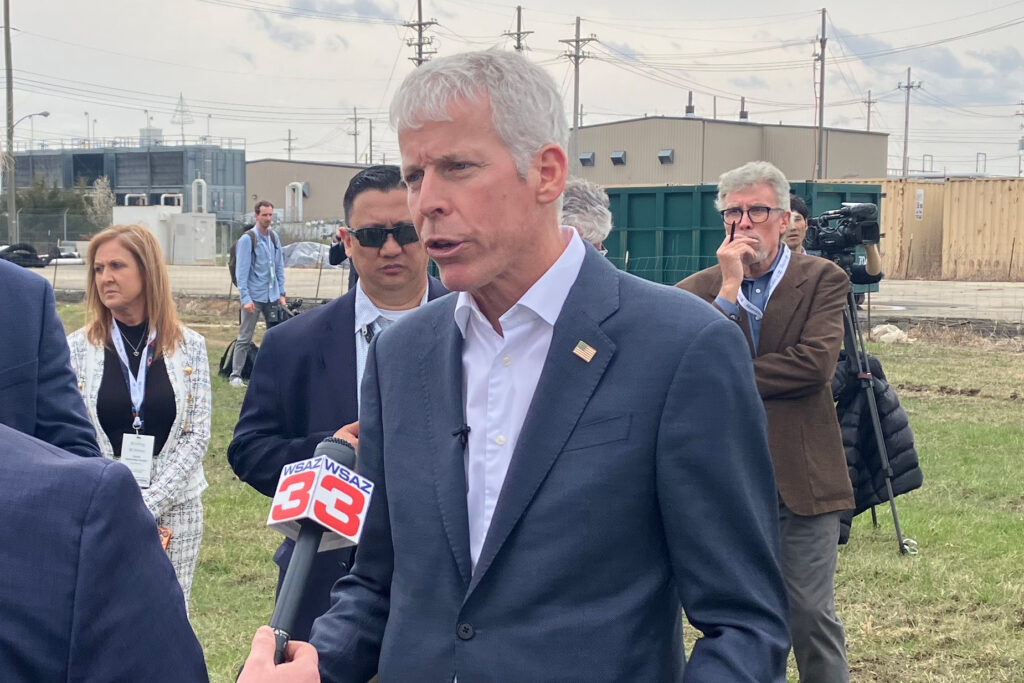
The U.S. Department of Energy and SoftBank announced the project as part of tariff negotiations with Japan. The U.S. reduced tariffs for Japan’s $550 billion investment in U.S. projects.
The Piketon project, the largest, features a 9,200-megawatt gas plant powering a 10,000-megawatt data center, called PORTS Technology Campus, on land once used for uranium enrichment.
SoftBank has not responded to renewable energy inquiries for the Piketon project, though it has experience with solar and storage.
Event speakers touted the power plant as the country’s, and potentially the world’s, largest.
“President Trump’s agenda is in this room,” Wright stated. “We believe in an America with better opportunities, more affordability, and a brighter future.”
Springsteen’s “Born in the USA” played as Wright entered, with Kid Rock’s “American Rock ‘n Roll” closing his speech.
No speakers mentioned “Iran,” despite the ongoing war’s oil and gas market implications.
Building a 9,200-megawatt gas plant ties the project to gas availability and price. Ohio, West Virginia, and Pennsylvania have substantial gas reserves, but production may not meet new plant demands, risking price spikes.
Geopolitical, financial, and environmental risks decrease when projects minimize fossil fuel reliance.
Bradley-Wright stated, “We have better options. Relying solely on fossil fuels increases costs and risks.”
Other notable energy transition stories this week:
US Offshore Wind’s Ups and Downs: On the day the Trump administration compensated an offshore wind developer to halt plans, the largest U.S. offshore wind farm began energy production, reports Ben Storrow for E&E News. The Trump administration agreement with TotalEnergies involves $928 million for offshore wind lease cessation, redirecting efforts to a liquefied natural gas terminal. Meanwhile, the 2.6-gigawatt Coastal Virginia Offshore Wind project activated its first turbine, indicating offshore wind’s progress despite opposition.
Toyota Increases US EV Investment: Toyota announced an additional $1 billion investment in Kentucky and Indiana for increased EV production, reports Suvrat Kothari for InsideEVs. This comes as other automakers reduce EV investments due to Trump administration policies.
Massive Solar Project in California: Developers plan 21 gigawatts of solar and storage in California’s Central Valley, reports Jeff St. John for Canary Media. This unprecedented project is part of California’s carbon-free electricity goals.
Inside Clean Energy is ICN’s weekly newsletter on the energy transition. Send news tips and questions to [email protected].
Original Story at insideclimatenews.org