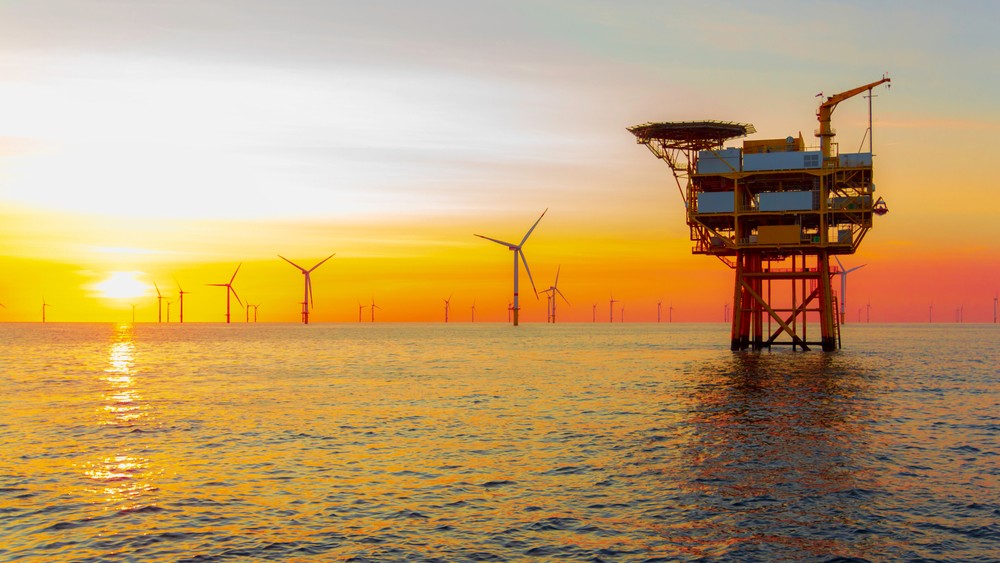
As the debate over renewable energy continues to heat up in the United States, the offshore wind industry finds itself at the center of political tensions. Recent actions by President Trump have placed significant challenges on this sector, affecting thousands of workers and halting numerous projects.
Since taking office, President Trump has been vocal in his opposition to wind power, particularly targeting offshore developments. This has led to a series of executive actions aimed at restricting wind farm growth, causing delays and cancellations of several projects. The resulting instability has deeply impacted workers, who face job insecurity and the potential loss of employment opportunities that were previously considered stable in the renewable energy field.
Under the former Biden administration, there was a notable shift towards renewable energy, encouraging oil and gas workers to transition to green energy roles. The U.S. saw a nearly 12 percent increase in clean energy jobs from 2021 to 2024, supported by the Inflation Reduction Act (IRA) of 2022. Meanwhile, employment in the oil and gas sector saw a decline of around 20 percent over a decade, highlighting a significant shift in the energy job market.
Efforts to advance offshore wind date back to the Obama administration, which introduced the first joint DOE–Interior National Offshore Wind Strategy in 2011. A study from that era suggested offshore wind could address rising energy demands while creating numerous jobs in construction and operations.
The U.S. offshore wind journey began in 2016 with the Block Island Wind Farm in Rhode Island. The Biden administration later prioritized offshore wind, implementing policies like the IRA to attract investment. This led to federal lease sales to major energy companies, focusing on areas in the Northeast, Virginia, and California.
However, President Trump’s administration took a different approach. On his first day in office, Trump issued a presidential memorandum halting offshore wind leasing on the Outer Continental Shelf. Subsequent policies further curtailed wind development and included funding cuts.
In a notable move, the administration announced plans to compensate France’s TotalEnergies nearly $1 billion to cease its U.S. offshore wind projects, emphasizing the extent of its opposition to offshore wind. This decision has had profound implications, leaving many workers in limbo.
New Jersey’s Economic Development Authority estimated that each offshore wind project could generate approximately 1,000 construction jobs annually and 100 operational jobs. The suspension or cancellation of such projects significantly impacts both workers and local economies.
Investment in workforce training has also been substantial. The Millwrights Local 1121 union, for example, spent between $10,000 and $20,000 per person on offshore wind job training. Andy Benedetto, the union’s vice president, expressed concerns over the halted progress: “We invested millions of dollars in training… and lots of hours went into putting all this together, and now that work is dried up for the foreseeable future.”
By September 2025, nine offshore wind projects, which were set to provide power to nearly 5 million homes and create about 9,000 jobs, were under review or paused. President Trump also prohibited new solar and wind projects on federal land and waters, further affecting the sector.
The production of wind energy components was expected to aid in redeveloping domestic manufacturing and creating additional jobs. Regions like Massachusetts and New Jersey were beginning to build supply chains around wind power. However, uncertainty remains regarding the future of these jobs, leaving many former oil and gas workers in a precarious position as they struggle for employment in the renewable sector.
Original Story at oilprice.com