In a surprising turn of events, President Donald Trump has dismissed Attorney General Pam Bondi, and speculation is mounting over her potential successor. Reports indicate that Lee Zeldin, the current head of the Environmental Protection Agency (EPA), is being considered for the role.
The prospect of Zeldin’s nomination is attracting attention to his controversial tenure at the EPA, raising questions about the future of environmental legislation, especially in states like North Carolina. The state is currently grappling with significant environmental challenges such as climate change, pollution, and water contamination.
During his time at the EPA, Zeldin has been at the forefront of what he describes as a massive deregulatory drive, aiming to revise what he considers to be outdated regulations.
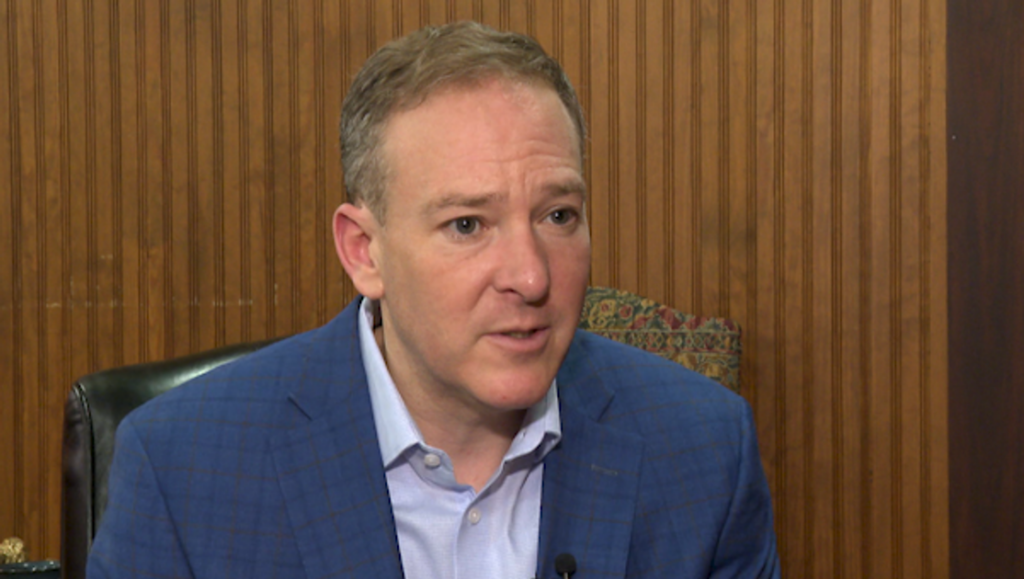
“If Congress wants us to do something other than what the law says, then change the law, and then we’ll do that. But we inherited a regulatory scheme that needs to be fixed,” Zeldin stated in an interview with WRAL News.
Under Zeldin’s leadership, the EPA has rolled back key environmental protections, including the weakening of emissions standards and the repeal of the 2009 endangerment finding. This finding was critical in establishing legal groundwork for regulating emissions under the Clean Air Act, recognizing greenhouse gases as a threat to human health.
Though Zeldin acknowledged the reality of climate change during his confirmation hearing, he later dismissed it as a hoax, a stance that has drawn sharp criticism from environmental advocates.
“To abdicate EPA authority to regulate climate change is simply unimaginable,” commented Mary Maclean Asbill from the Southern Environmental Law Center’s North Carolina offices.
North Carolina’s situation is particularly urgent, as transportation emissions surpass those from electricity generation by about 11%, highlighting the state’s vulnerability to climate change-induced events like the devastating Hurricane Helene.
In his recent visit to North Carolina, Zeldin announced new guidelines easing monitoring requirements for diesel exhaust systems, citing concerns over cost and reliability from farmers and equipment operators. He emphasized that the adjustments address real-world issues without removing emissions controls.
Critics have raised alarms over the closure of the EPA’s Office of Research and Development, a move that they argue undermines scientific research necessary for informed policymaking.
“By eliminating science, EPA is just saying we’re going to do whatever we want. It doesn’t have to be based on anything,” Asbill remarked.
The state’s water supply is another pressing issue, with PFAS contamination posing significant health risks to local communities. Zeldin acknowledged this concern, highlighting the financial burden on residents to address the contamination.
“You’re essentially paying to clean up PFAS contamination from your own water supply. That’s not right, so Congress needs to amend the federal law to deal with the passive receiver, so that we do have polluter pays,” Zeldin said.
Recently, the EPA took a step by adding microplastics, pharmaceuticals, and PFAS to its Contaminant Candidate List, aiming to further study their effects. However, critics argue this measure falls short.
“Zeldin’s EPA is not taking bold action to ensure drinking water safety. This is a PR stunt that doesn’t require a single test, set a single drinking water standard, or protect a single community,” stated Suzanne Novak from Earthjustice.
Zeldin maintains that the agency is striving to balance environmental safeguarding with economic considerations, aiming to streamline regulations while adhering to legal mandates.
“The environmental actions are key,” Zeldin said. “We’re also focused on right sizing regulation and most important is that we’re following the law.”
Several of the EPA’s decisions are now facing legal challenges. North Carolina is among the states contesting the agency’s revisions to vehicle emissions and solar grants, alleging violations of the Clean Air Act.
If Zeldin is indeed nominated for the Attorney General position, these legal battles could significantly influence the interpretation and enforcement of environmental laws across the nation.
The EPA has not confirmed whether Zeldin is being considered for the attorney general role.
Original Story at www.wral.com