Fracking’s Forever Problem: Eighth in a series about the gas industry’s radioactive waste.
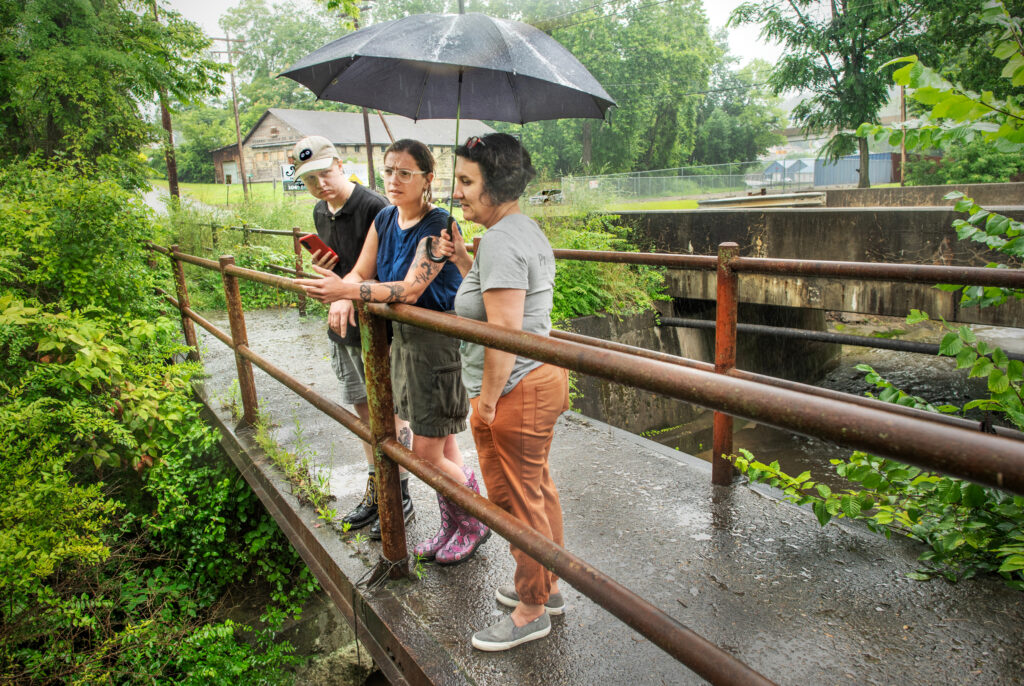
BELLE VERNON, Pa.—A tributary to the Monongahela River flows through overgrown vegetation and beneath an abandoned railroad trestle near the Westmoreland Sanitary Landfill. On a rainy July day, environmental scientist Yvonne Sorovacu and local advocate Hannah Hohman were collecting water samples and noting contamination signs. The water downstream was often covered with foam, while upstream remained clear.
Over the years, as fracking expanded in Pennsylvania, the Westmoreland landfill received huge amounts of oil and gas waste containing toxic and radioactive substances. This waste includes radionuclides like radium and harmful chemicals such as arsenic and benzene.
Despite numerous violations, oil and gas waste is sent to many landfills across Pennsylvania with minimal scrutiny. At least 22 landfills in the state accept this waste, sometimes from other states as well.
Oil and gas companies in Pennsylvania reported creating nearly 8.8 million tons of solid waste between 2017 and 2024, with about 6.3 million tons going to state landfills. However, the actual amount could be higher, according to an Inside Climate News analysis.
Evidence suggests this waste is harming local streams and rivers used for fishing, swimming, and drinking water. At Max Environmental Technologies in southwestern Pennsylvania, the EPA found radium as a likely cause of pollution in nearby creeks. Researchers have found elevated radium levels in sediment downstream of some landfills and in local freshwater mussels.
Four landfills are currently out of compliance with permits, with another seven having been non-compliant with the Clean Water Act for extended periods. Thirteen landfills discharge into waterways classified by the EPA as impaired.
State regulators have long been aware of these issues, yet little has changed in waste management practices. A 2020 grand jury report criticized Pennsylvania’s handling of fracking waste.
Compounding the issue is historical pollution from coal mining. Many landfills, including Westmoreland, are built on former coal mines. Over 5,500 miles of streams in Pennsylvania remain affected by mine drainage, despite clean-up efforts.
Westmoreland did not comment, but Max Environmental Technologies stated its Bulger site is closed, and its Yukon site is not currently accepting oil and gas waste. The Marcellus Shale Coalition claimed existing laws protect public health and the environment.
Sorovacu and Hohman noted a reddish tint in the stream from historical acid mine drainage. Sorovacu’s organization, Protect PT, has monitored the landfill for years, focusing on streams impacted by legacy pollution.
Keystone Sanitary Landfill near Scranton is another site accepting large volumes of oil and gas waste. Community activists have opposed its expansion due to proximity to public areas. The landfill has been fined for exceeding leachate storage capacities, contributing to pollution concerns.
Phoenix Resources in Tioga County has accepted over 1.7 million tons of waste. Leachate testing showed chemical levels far exceeding EPA standards.
Increased rainfall due to climate change is expected to exacerbate leachate production, posing further environmental threats. Activists are concerned about the interaction between historical and new pollution sources.
Despite challenges, local organizations continue to monitor and advocate for better waste management and accountability. The cumulative impact of pollution remains a pressing concern, as Pennsylvania grapples with its environmental legacy and the future of resource extraction.
Original Story at insideclimatenews.org