This story is part of a collaboration with Univision 45 in Houston.
HIGHLANDS, Texas—Eight months ago, Texas health officials warned residents of several industrialized communities east of Houston of an elevated cancer risk, particularly leukemia.
However, specific conclusions remain unclear due to the state’s refusal to release cancer data at the census-tract level. Advocates argue that granular data could reveal cancer clusters and link them to environmental factors.
Two independent epidemiologists criticized the decision to withhold this data. A Houston-area congresswoman and three Harris County commissioners urged the state health commissioner to release it. A local activist accused officials of protecting the state’s $68 billion petrochemical industry.
Ketki Patel, an epidemiologist with the Texas Department of State Health Services (DSHS), led the study. Patel defended the decision to publish data for a broad area without census-tract details, citing insufficient cases for statistical reliability.
Patel stated, “How am I going to drill down just to individual census tracts if there aren’t enough instances of cancer?” She also cited patient privacy laws.
In a similar 2015 cancer study, census-tract data was released. Epidemiologists consulted by Public Health Watch saw no reason to withhold it this time. Kyle Steenland from Emory University noted a three-fold excess of leukemia across 65 census tracts, calling the data shocking.
DSHS studied cancer rates in East Harris County throughout 2024, focusing on industrialized areas like Highlands and Channelview near a dioxin-laden Superfund site.
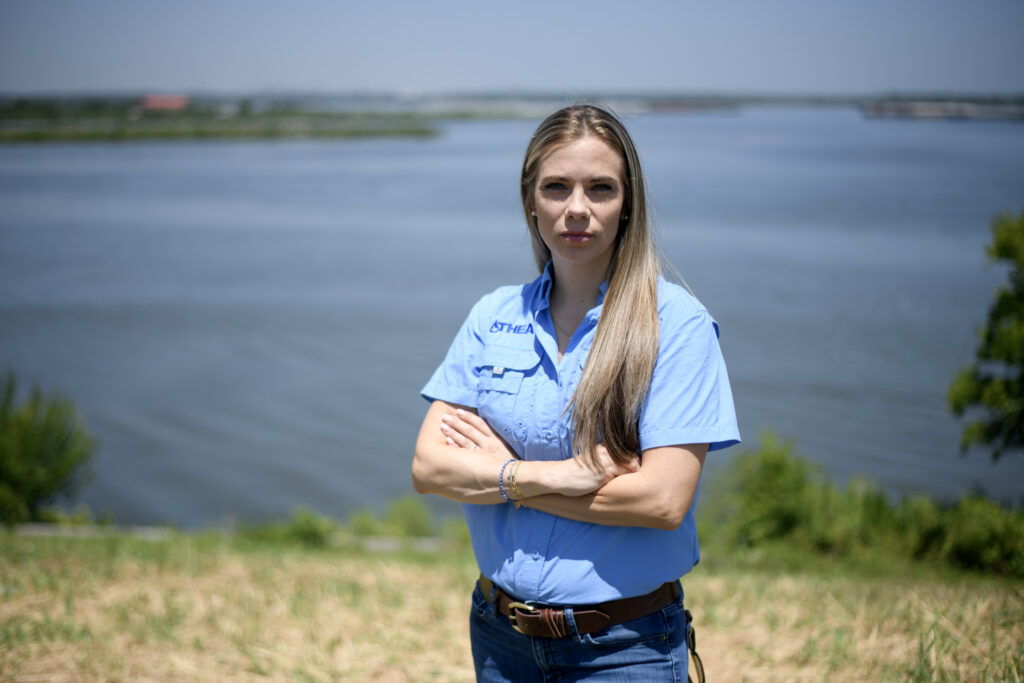
The investigation was initiated by the Texas Health and Environment Alliance (THEA), led by former Highlands resident Jackie Medcalf. Medcalf, who has faced numerous health issues, believes they are linked to toxic exposures.
Environmental Hazards Concentrated in Southern Part of Study Area
East Harris County, home to toxic Superfund sites and petrochemical facilities, faces concerns over concealed cancer clusters due to concentrated hazards.
Hold command and scroll or use the -/+ in the bottom lefthand corner to zoom into the outlined study area. Click the arrows in the top right corner to view full-screen.
The new study examined cancer rates from 2013-2021, finding significant increases in leukemia, cervical, lung, and lymphatic cancer rates compared to state averages.
Despite similar findings to the 2015 study, the 2025 report lacked census-tract data. Patel cited privacy and statistical integrity for this omission. However, experts argue that large raw numbers should permit such analysis.
Jonathan Samet, an epidemiologist, acknowledged possible links to industrial pollution, noting the high leukemia rates in proximity to refineries.
Residents of East Harris County, including Brenda Farmer and her family, have seen numerous cancer cases among friends and neighbors. They urge for transparent, localized data to address the health risks they face.
Michael Bleacher and Kristen Buster, recent arrivals in Highlands, have experienced declining health and feel misled about the area’s safety. They advocate for action based on detailed data.
Original Story at insideclimatenews.org