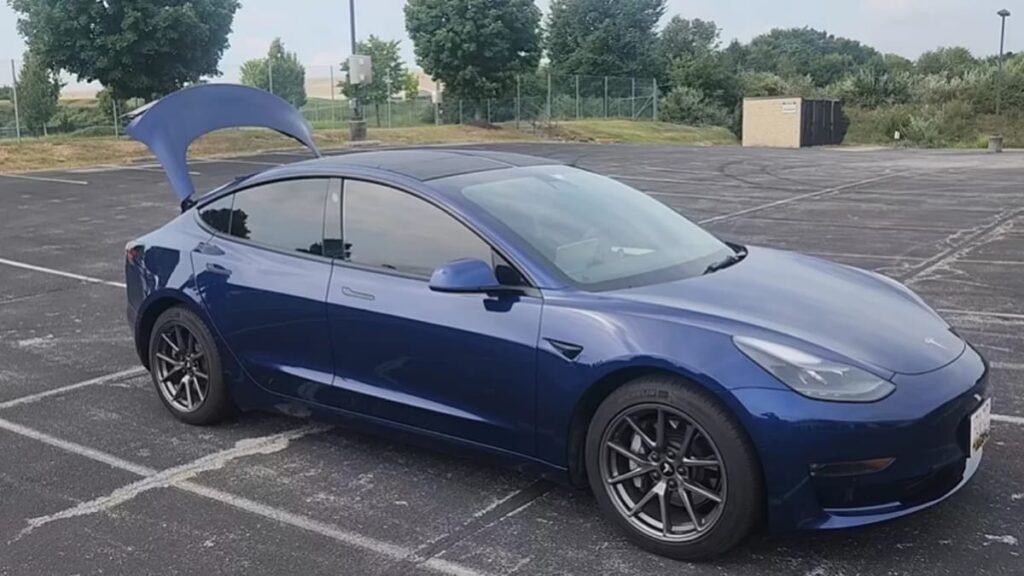
Transforming a Tesla Model 3 into a solar-powered vehicle might sound futuristic, but one American has taken the leap and shared his experiences after a month with this setup. The YouTuber, known as Mostly Offgrid, aims to minimize his reliance on traditional energy sources.
In pursuit of energy independence, Mostly Offgrid installed a solar film kit on his Tesla. Now, a month later, he offers insights into its effectiveness.
Solar Cars: An Emerging Trend
The evolution of electric vehicles has paved the way for solar-powered options, appealing to eco-conscious drivers. While some individuals like Simon Sörensen experiment with homemade versions, companies such as Solarky are making strides in this growing market.
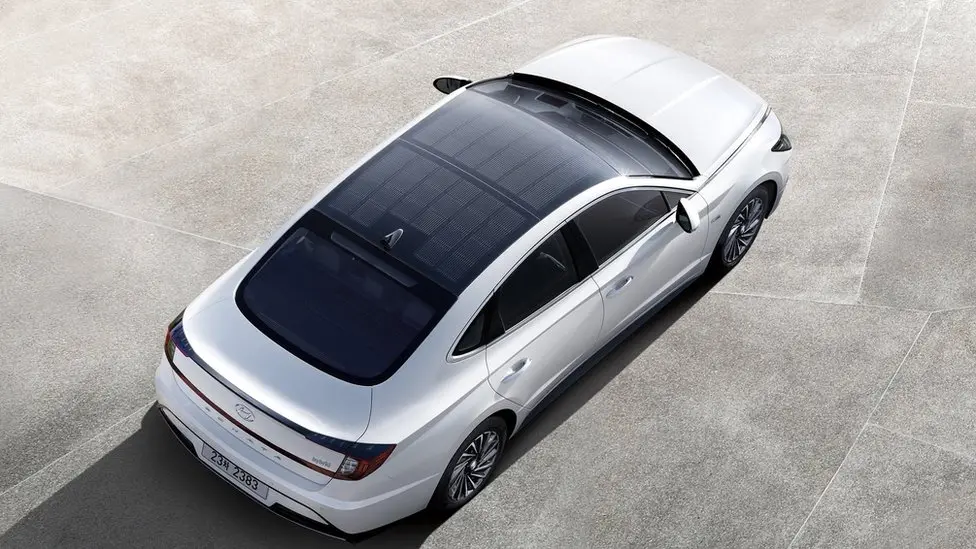
Even established automakers like Toyota are entering the solar arena, with new patent filings addressing key challenges in solar vehicle technology.
One Month with Solar Film on a Tesla
Mostly Offgrid installed the Ecoflow Heatguard Solar Film on his Tesla Model 3, investing approximately $450 in the project. The panels adhered firmly during high-speed drives, maintaining their position and effectiveness.
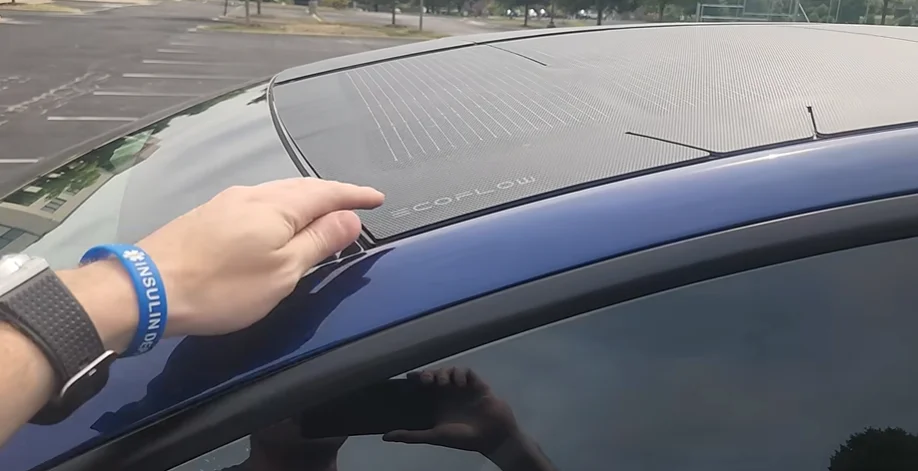
“They stick on with 3M VHB tape. The form factor is extremely good. I have not noticed any wind noise or loss in efficiency from these panels,” he reported. However, he advised careful measurement during installation, as the adhesive is nearly permanent.
The solar film does obscure the sunroof view, but Mostly Offgrid found this trade-off acceptable, especially given the heat in his region. “It does block your panoramic view,” he noted, “but I don’t really care about that because it’s very hot around here and I keep out as much sun as possible.”
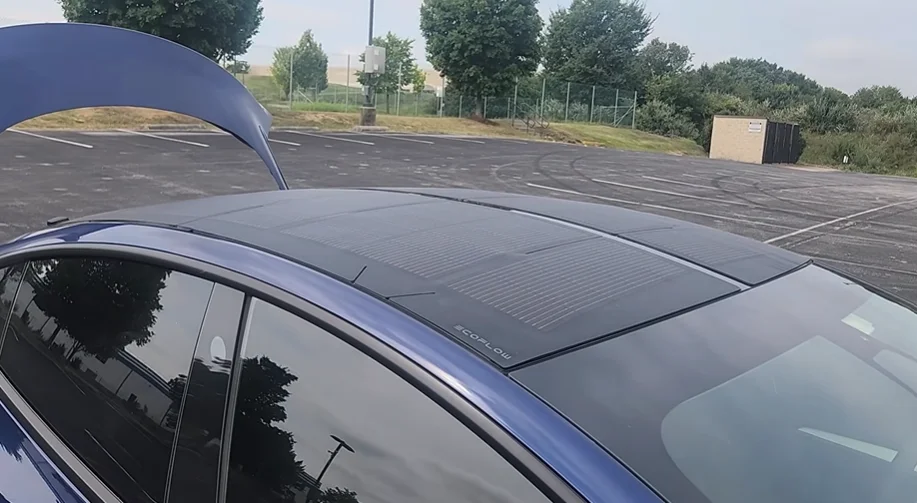
Even on cloudy days, the setup generated 138 watts, with potential peaks of 250 watts in full sun. Overall, he praised the solar film’s performance, stating, “Honestly, it worth every penny.”
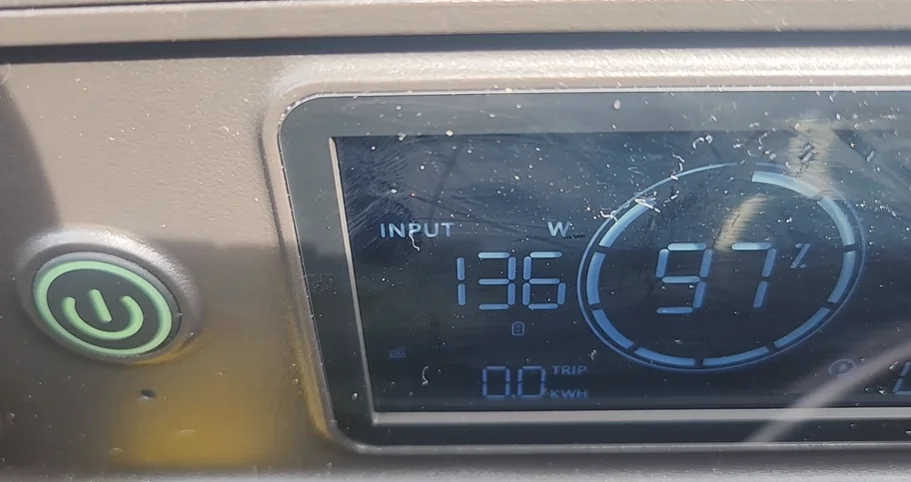
For those unconcerned with losing the panoramic view, he recommended the upgrade for its utility in off-grid scenarios.
A Brief History of Electric Vehicles
1832–1839: Robert Anderson and American inventors create early electric vehicles.
1890: William Morrison introduces a six-passenger electric wagon in the US.
1900: Electric cars comprise 28% of US vehicles, favored for quiet operation.
1912: Detroit Electric offers models with up to 80-mile ranges.
1960s: Interest in EVs declines with the rise of gasoline vehicles.
1970s: Oil crises renew interest in electric prototypes.
1990: California’s zero-emission mandates lead to the GM EV1.
1996: GM EV1, the first mass-produced modern EV, launches in California.
2008: Tesla Roadster proves electric sports cars can rival gasoline counterparts.
2010: Nissan Leaf becomes the first globally available mass-market EV.
2012: Tesla Model S introduces long-range luxury EVs.
2016: Chevrolet Bolt EV offers 200+ mile range at an affordable price.
2018: Jaguar I-PACE shows electric SUVs can compete with luxury gas models.
2020: Porsche Taycan blends performance with brand heritage.
2021: Rivian R1T and R1S launch adventure-ready electric trucks and SUVs.
2022: Lucid Air Dream Edition sets standards for range and luxury.
2023: Global EV sales exceed 10 million, indicating mainstream adoption.
2024: Solid-state battery prototypes promise improved energy density and charging speed.
Original Story at supercarblondie.com