Revolutionizing Ridehailing: The Rise of Two-Seat Robotaxis
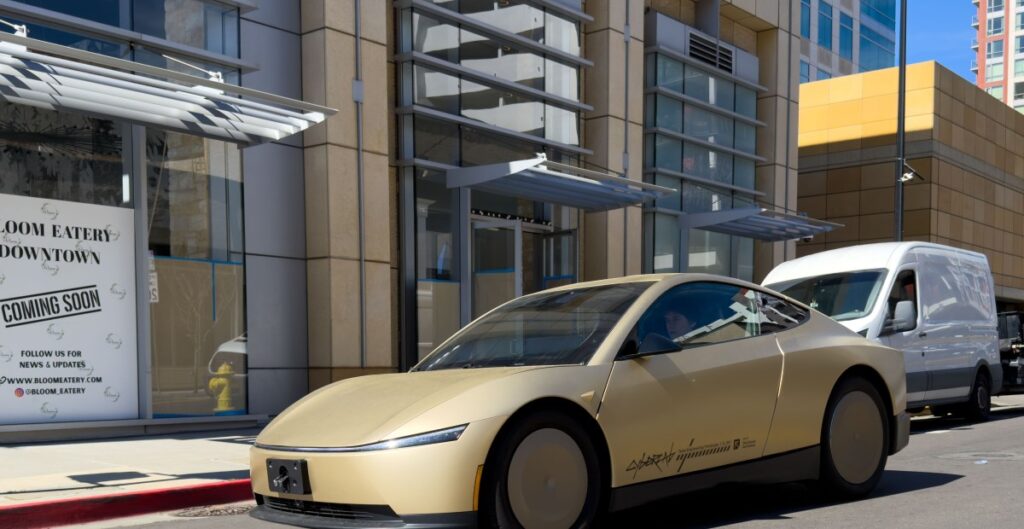
In a bold move that has puzzled many, Tesla introduced its two-seat Cybercab in 2024. The unconventional design choice quickly became a topic of debate, with critics questioning the practicality of a taxi with such limited seating. “You could strap a few people to the roof for a special discount,” quipped a social media user, highlighting widespread skepticism.
Despite the mixed reception, Tesla proceeded to produce its Cybercab, and prototypes have been spotted undergoing tests on public roads and within Tesla’s Austin, Texas, assembly plant. Joining Tesla in the two-seat robotaxi space is Lucid Motors, which recently unveiled its own concept, the Lucid Lunar, at an Investor Day event in New York City.
Lucid’s two-seater Lunar robotaxi concept. Image: John Voelcker / The Verge
Lucid’s introduction of the Lunar comes as part of a broader strategy to achieve profitability through new models, an innovative electric powertrain, and robotaxi collaborations. The Lunar, unveiled by acting CEO Marc Winterhoff, emphasizes interior space and luggage capacity, challenging traditional design norms.
In collaboration with Uber, Lucid has secured a commitment for the purchase of 20,000 Gravity vehicles equipped with Nuro’s robotaxi technology. A similar arrangement is planned for Lucid’s forthcoming midsize electric vehicle model, reinforcing the company’s focus on autonomous driving and ridehailing services.
The logic behind the two-seat design is rooted in efficiency and cost-effectiveness. According to Lucid’s chief engineer Zach Walker, smaller and lighter vehicles require less battery capacity, translating to lower costs and faster charging times. This cost advantage is crucial for ridehailing companies seeking to minimize operational expenses.
Walker elaborates that each 1-kWh reduction in battery size saves approximately $1,000 annually in recharging costs for a robotaxi covering 100,000 miles per year. This potential efficiency, reaching up to 6 miles per kilowatt-hour, positions the Lunar as a competitive option against existing four-seat compact EVs.
Design considerations extend beyond cost savings. The Lunar’s sleek, low-profile design reduces aerodynamic drag, enhancing efficiency at higher speeds necessary for highway travel. However, this approach has drawn criticism for limiting accessibility, prompting comparisons to the upright, easy-to-enter designs like Giorgetto Giugiaro’s iconic New York City taxi model.
As Tesla and Lucid push forward with their two-seater concepts, the future of urban transportation could see a shift towards smaller, more efficient vehicles tailored to the needs of ridehailing services. While the debate continues, the potential for cost savings and efficiency gains keeps the conversation around two-seat robotaxis alive.
Original Story at www.theverge.com