Amid growing concerns about climate change and its legal implications, a landmark case is set to shape the future of environmental lawsuits in the United States. The Supreme Court is preparing to address a pivotal question: Can lawsuits against oil companies for climate damages be pursued under state tort law, or are they preempted by federal statutes?
Background of the Case
In 2018, officials from Colorado took legal action against oil companies, arguing that emissions from fossil fuels had contributed to global warming and, consequently, adversely affected the state through extreme weather events and increased health risks. At the time, the field of climate attribution science, which investigates the specific impacts of global warming on localized weather conditions, was still in its infancy.
The Supreme Court case, Suncor v. Boulder, will determine whether such climate lawsuits can proceed under state laws. This decision could either pave the way for numerous similar lawsuits across the country or block them entirely.
Scientific Developments
Recent advances in climate attribution science have bolstered its credibility, with rapid analyses now capable of linking greenhouse gas emissions to extreme weather events. The United Nations Intergovernmental Panel on Climate Change has recognized this field as a crucial area of study. In July, the U.S. National Academies released a comprehensive report affirming the method’s validity, while also highlighting some significant challenges, such as limited observational data and the complexity of atmospheric dynamics.
Challenges and Opposition
Despite the progress in climate science, efforts to challenge it have intensified. Alice Hill from the Council on Foreign Relations remarked, “You’ve seen more concern expressed about the science by the fossil fuel companies.” This concern stems from the potential for increased liability.
Interest groups have sought to undermine the credibility of climate scientists, and Republican lawmakers have introduced measures to shield fossil-fuel companies from legal actions. Some states have even enacted laws to protect oil and gas producers from such lawsuits.
Legal Perspectives and Implications
In the Suncor case, new attribution techniques were introduced after the Supreme Court agreed to hear it. Defendants Suncor Energy Inc. and ExxonMobil Holding Corp. argued that it is impossible to trace greenhouse gases to specific sources, a point contested by the Natural Resources Defense Council, which supports Boulder’s stance.
However, several amicus briefs have questioned whether the new scientific methods meet legal standards for causality. The Pacific Legal Foundation contended that applying modern legal theories to historical oil production decisions is unfair, while the Breakthrough Institute doubted the feasibility of linking specific emissions to particular harms.
Justice Samuel Alito has recused himself from the case, leaving the remaining justices to deliver a verdict next year. The decision will have far-reaching implications, potentially influencing how future cases consider scientific evidence in establishing liability.
Hill noted, “The judges will have to make a determination whether the attribution science is developed enough to be admitted and used.” For Boulder, pursuing this legal path involves navigating numerous legal hurdles before any liability can be established.
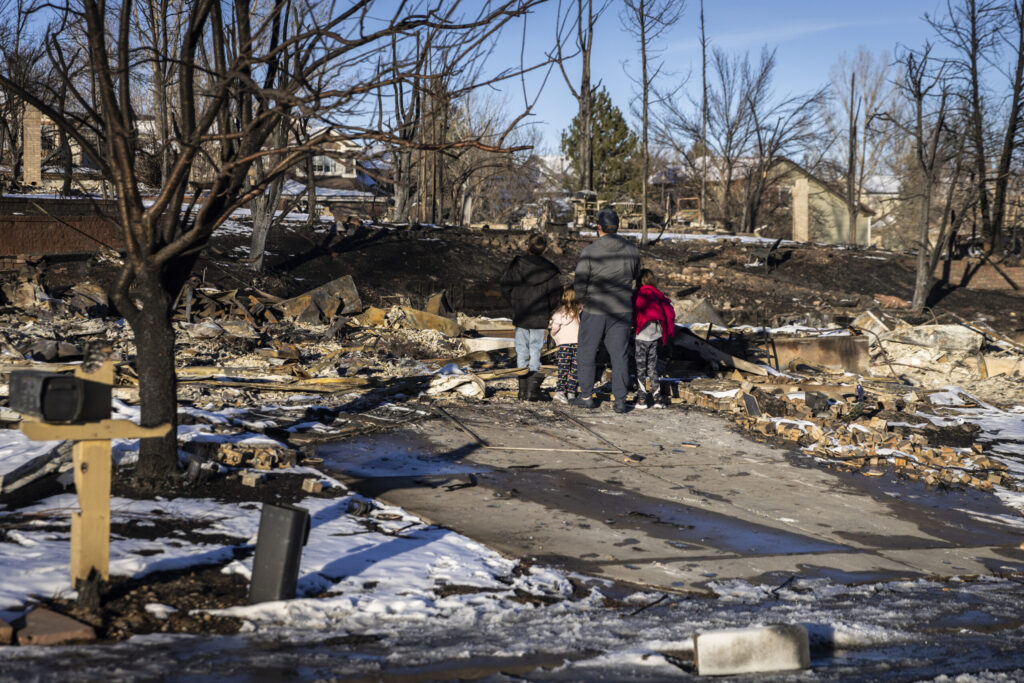
Top photo: Residents survey remains of homes that were burned during the Marshall Fire in Superior, Colorado, in Boulder County, on Jan. 2, 2022. Photographer: Chet Strange/Bloomberg.
Copyright 2026 Bloomberg.
Original Story at www.claimsjournal.com