Social Media’s Influence on Climate Change Anxiety: A New Perspective
In a world increasingly dominated by social media, a recent study highlights a concerning link between online engagement and emotional responses to climate change. The research, spearheaded by the University at Buffalo, delves into how digital platforms may be shaping perceptions and anxieties about environmental issues.
The study, published in Climatic Change, surveyed 1,400 adults in the U.S. in early 2024. Participants provided insights into their social media habits, emotional reactions to climate threats, and their stance on various policies and actions related to climate change.
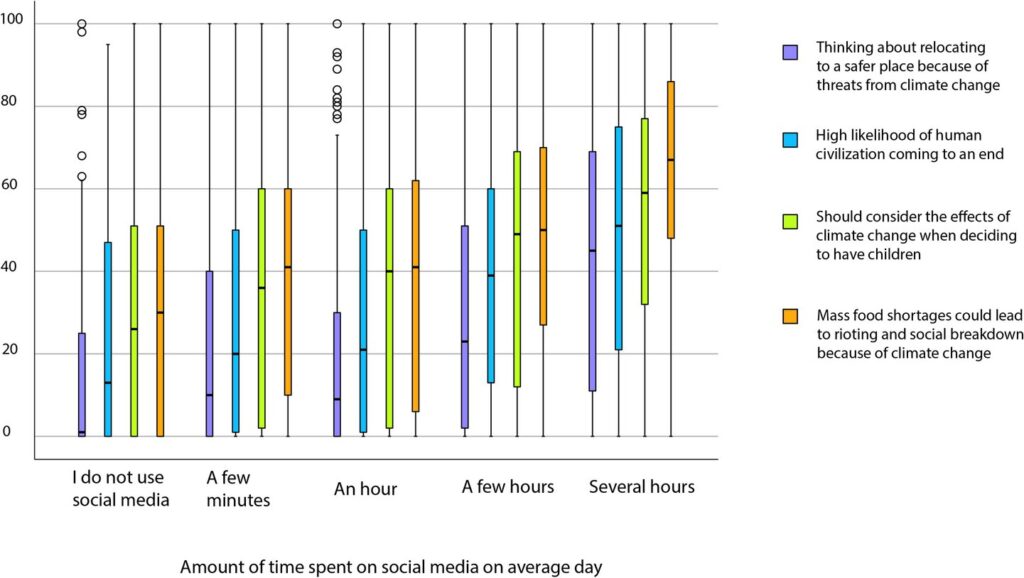
Findings suggest a significant connection between heavy social media usage and heightened climate anxiety. This anxiety manifests as both general concern, known as climate distress, and a more severe outlook termed climate doom, which is characterized by fears of societal collapse due to climate change.
Interestingly, the study identified that climate doom is linked to support for radical actions like sabotage and targeting fossil fuel infrastructures, contrasting with climate distress, which does not align with support for authoritarian measures like population control.
Holly Jean Buck, Ph.D., the study’s lead author and an associate professor at the University at Buffalo, stated, “When we think of climate anxiety or climate doomerism, it tends to be focused on mental health from an individual, psychological viewpoint. That is certainly important to study, but our results point to a collective dimension with implications for climate politics and broader society.”
The research team, including Janet Yang, Ph.D., and Prerna Shah, explored the role of different social media platforms in shaping climate perceptions. Platforms like TikTok and Snapchat were notably associated with climate doom and radical action support, while Instagram, Reddit, and others highlighted concerns about misinformation and skepticism.
Yang pointed out, “while social media can promote awareness, its algorithms can foster polarization in risk perception. This study shows a connection between general social media use and climate distress, but further research is needed to specifically examine the type of content that people consume on social media related to climate change.”
The authors emphasize the need for more research into the design of social media platforms and their influence on public perceptions. They advocate for strategies to manage climate-related anxiety and counteract the pervasive sense of doom that could undermine collective climate action.
More information: Holly Jean Buck et al, Social media use is associated with climate anxiety, climate doom, and support for radical action, Climatic Change (2025). DOI: 10.1007/s10584-025-04048-6
Provided by University at Buffalo
Original Story at phys.org