Israeli Firm StoreDot Introduces 10-Minute Charging Electric Vehicle Batteries
After a decade of relentless innovation, Israeli company StoreDot has announced the completion of a revolutionary development: electric vehicle batteries capable of charging in just 10 minutes. The company has secured agreements with undisclosed manufacturers in China and South Korea to produce these advanced batteries.
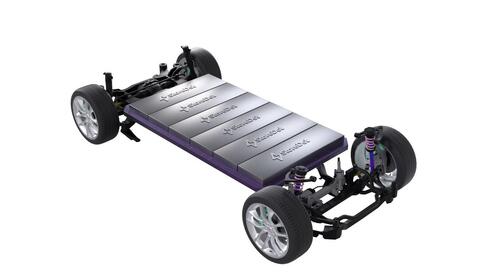
StoreDot’s innovation lies in its silicon-based battery cells designed for extreme fast charging (XFC). These cells not only charge swiftly but also maintain their capacity beyond 2,400 fast-charging cycles. A demonstration in a Polestar 5 model, supported by Volvo and Geely, showed the battery charging from 10% to 80% in just 10 minutes.
StoreDot automotive battery cells
(Photo: StoreDot)
Rather than manufacturing the batteries itself, StoreDot will license its technology for production on existing lithium-ion lines worldwide. Production agreements are already in place with two battery plants. The company is currently focusing on incorporating its batteries into future vehicle models globally.
Earlier this year, StoreDot faced challenges when its IPO plans for Nasdaq were canceled, leading to workforce reductions. Despite this, the company completed development using advanced AI tools, which allowed a streamlined team to accomplish complex tasks efficiently.
Dr. Doron Myersdorf, StoreDot’s founder and CEO, remarked, “There was a revolution here that I could hardly believe.” He highlighted the role of AI in reducing workforce needs while maintaining development efficiency.
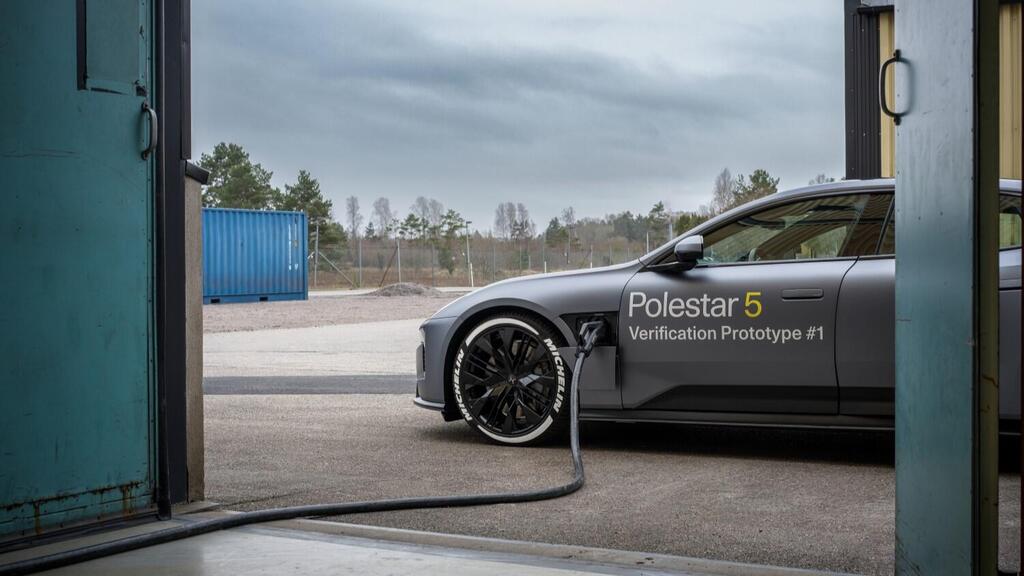
StoreDot technology demonstrated in a Polestar 5
(Photo: Polestar)
StoreDot has initiated its first commercial agreements with prominent European automakers to integrate XFC technology into their future vehicle platforms. Independent evaluations confirmed the technology’s compliance with safety standards and its superior fast-charging performance.
StoreDot’s XFC technology uses a silicon anode with an NMC cathode, offering an energy density of 300 to 330 watt-hours per kilogram—about 30% higher than LFP batteries, which are common in China. Although the battery may cost 10% more, it would only raise the vehicle’s total price by approximately 4%.
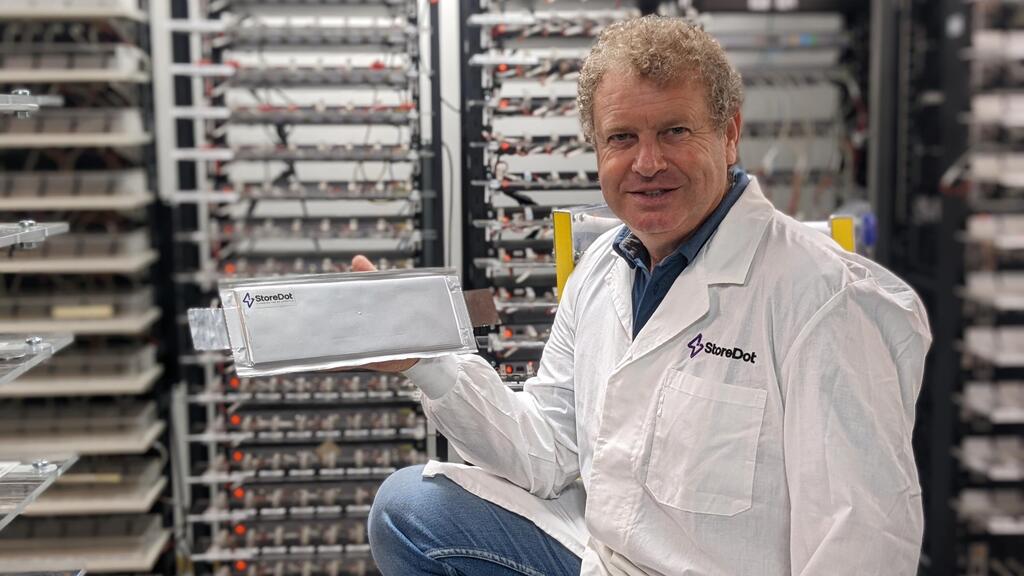
‘There was a revolution here that I could hardly believe,’ Dr. Doron Myersdorf said
(Photo: StoreDot)
Despite initial plans for a costly gigafactory, StoreDot transitioned to a licensing model, similar to semiconductor companies, to mitigate expenses. The company now licenses its 100 patents to existing manufacturers in countries like South Korea, Canada, and China.
Besides the automotive industry, StoreDot is exploring other applications for its technology, including drones, humanoid robots, and data centers, where fast charging can replace ultracapacitors.
Founded in 2012 by Doron Myersdorf, Prof. Simon Litsyn, and Prof. Gil Rosenman, StoreDot has pivoted from initial plans for displays and memory devices to focus on electric vehicle batteries. It has attracted over $200 million in investments from entities like VinFast, Volvo, Mercedes-Benz, and BP.
The company is preparing for a cautious return to the capital markets to expand its licensing agreements with automakers in the U.S. and Europe. Myersdorf emphasized, “We believe this is a very strong story for the public markets, and it could bring us substantial amounts of capital that we can work with and use to achieve truly significant growth.”
Original Story at www.ynetnews.com