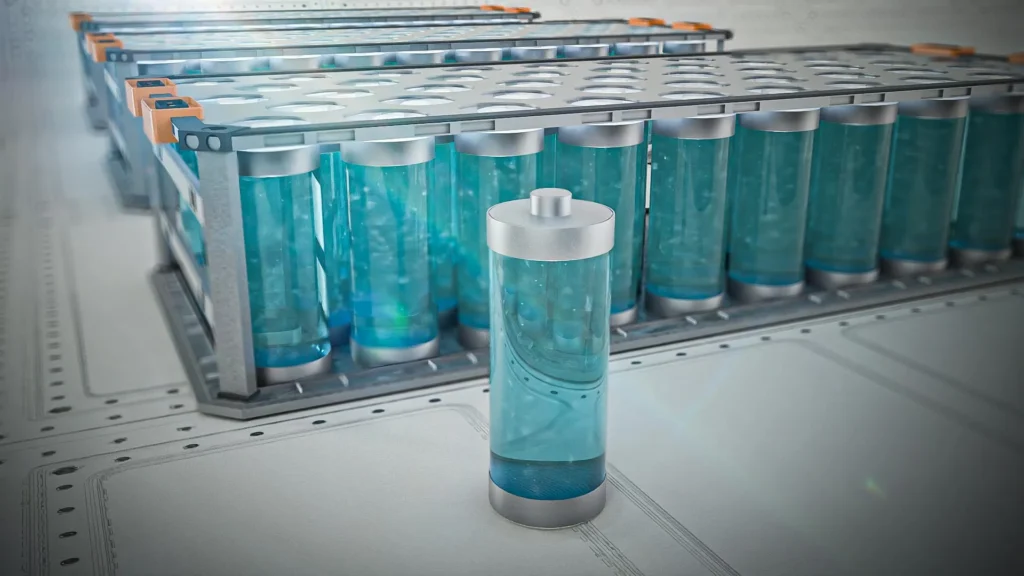
Sodium-Based Batteries Offer Dual Benefits: Energy Storage and Water Desalination
Sodium ion batteries are emerging as a promising alternative to lithium-ion technology, promising not only sustainable energy storage but also the novel ability to desalinate seawater. Recent studies illuminate this dual potential, positioning sodium batteries as a versatile solution for future energy and environmental challenges.
Researchers from the University of Surrey have discovered that sodium-based battery materials, when retaining their natural water content, exhibit significantly enhanced performance. This finding challenges the conventional practice of removing moisture, which is traditionally perceived as detrimental to battery efficiency.
A Sustainable Substitute for Lithium
Lithium-ion batteries are prevalent in today’s electronic devices and large-scale energy storage systems, yet they are costly and pose environmental concerns due to the extraction of lithium and other materials. In contrast, sodium is abundantly available in seawater and various minerals, making it a cost-effective and environmentally friendly alternative for energy storage solutions. Sodium ion batteries function similarly to lithium-ion ones by transferring charged sodium particles between electrodes during charge and discharge cycles.
Despite these advantages, sodium ion batteries have historically lagged behind in performance metrics such as energy capacity, charging speed, and longevity compared to their lithium counterparts.
Enhanced Performance with Water Retention
A study published in the Journal of Materials Chemistry A focused on sodium vanadium oxide, particularly a form known as nanostructured sodium vanadate hydrate (NVOH). This material includes water molecules within its structure and is engineered at a nanoscale to optimize ion movement through the battery. Instead of removing the water through heat treatment, the researchers experimented with maintaining its presence.
The results were remarkable: the hydrated material demonstrated a substantial increase in charge capacity, faster charging times, and sustained performance over more than 400 charge cycles. The hydrated sodium vanadate hydrate held nearly twice the charge of typical sodium-ion materials, ranking it among the top cathode materials for this battery type. The cathode plays a crucial role in a battery’s operation, and improving its efficiency can significantly boost overall battery performance.
Dr. Daniel Commandeur, who led the research, stated, “Our results were completely unexpected. Sodium vanadium oxide has been around for years, and people usually heat-treat it to remove the water because it’s thought to cause problems. We decided to challenge that assumption, and the outcome was far better than we anticipated. The material showed much stronger performance and stability than expected and could even create exciting new possibilities for how these batteries are used in the future.”
Functionality in Salt Water and Desalination
Further testing revealed that the sodium vanadate hydrate could function effectively even in salt water, an environment that typically poses challenges due to potential chemical reactions and ion movement interference. Remarkably, the material also facilitated electrochemical desalination by extracting sodium and chloride ions from the salt water. This method utilizes electrical reactions and specially selected electrodes to separate salt from water, differing from traditional pressure or heat-based methods.
Dr. Commandeur added, “Being able to use sodium vanadate hydrate in salt water is a really exciting discovery, as it shows sodium-ion batteries could do more than just store energy — they could also help remove salt from water. In the long term, that means we might be able to design systems that use seawater as a completely safe, free and abundant electrolyte, while also producing fresh water as part of the process.”
This discovery hints at the potential for devices that can both store renewable energy and desalinate seawater, particularly benefiting coastal areas with limited freshwater access but ample seawater and renewable energy resources. Although the research is preliminary, it sets the stage for further exploration into commercial and large-scale applications.
The innovative approach by the Surrey team not only simplifies the manufacturing process by eliminating the water removal step but also brings sodium ion technology closer to competing with lithium-based systems. By leveraging sodium’s abundance and affordability, these systems could offer a safer and more sustainable method for energy storage and desalination.
The research marks a pivotal step in redefining sodium ion batteries’ role in future energy landscapes, potentially enabling a single technology to meet both energy storage and water purification needs.
Original Story at www.sciencedaily.com