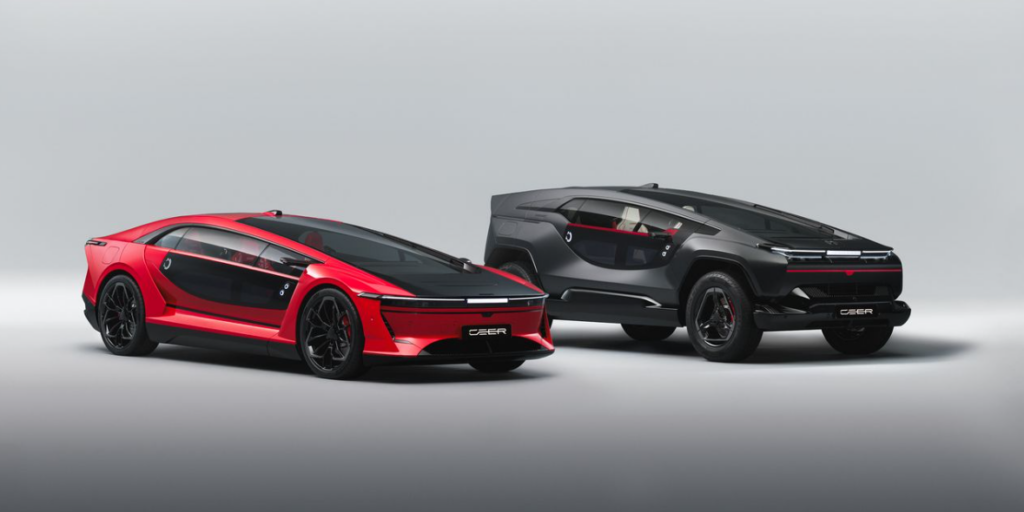
Saudi Arabia, a country known for its vast oil reserves, is making an unexpected move in the automotive sector by introducing its first car, which will be entirely electric. The Ceer Exobot Sedan and SUV represent a significant step towards the nation’s ambition of achieving net-zero emissions by 2060.
Driven by three electric motors, the Ceer Exobot models produce a combined 838 horsepower and 738 lb-ft of torque. The sedan can accelerate from 0 to 62 mph in just 2.6 seconds, while the SUV accomplishes this in 2.9 seconds, demonstrating impressive performance metrics for both vehicles.
The electric motors, sourced from BMW under a licensing agreement initiated in 2022, are supplied by Rimac Technology for the rear drive and Hyundai Transys for the front motors. The platform and electrical architecture are provided by Foxconn, a company looking to expand beyond its traditional electronics manufacturing into the electric vehicle sector.
Both models are equipped with 112-kWh batteries, offering a range of up to 416 miles based on the outdated NEDC standard. It’s worth noting that more current testing standards might reduce this range estimate by 20 to 30 percent. The vehicles utilize an efficient 800-volt architecture and support fast DC charging up to 250 kW.
Designed by former McLaren designer Rob Melville, the Ceer Exobots feature a unique aesthetic with a clear glass roof, the largest in any production car, and innovative door designs reminiscent of large bird wings. Inside, a 48-inch display stretches from A-pillar to A-pillar, promising to entertain and inform passengers.
The SUV measures 16.5 feet in length and 5.5 feet in height, while the sedan is slightly longer at over 17 feet and stands just over 4.5 feet tall.
Although Ceer Motors intends to prioritize the domestic and Gulf Cooperation Council (GCC) markets initially, it is open to exploring international opportunities. “Saudi Arabia is our home market and our immediate priority,” stated Ceer to Autoweek. “Our vehicles are being developed to meet global standards, giving us the flexibility to enter additional markets when the time is right.”
The venture is supported by Saudi Arabia’s Public Investment Fund (PIF) and Foxconn, ensuring a strong foundation for production, which is expected to commence in January 2027 at King Abdullah Economic City. Deliveries are slated to begin by March 2027, with plans for five additional models, including larger sedans, SUVs, and compact cars, to follow.
For more details, visit the Public Investment Fund (PIF).
Original Story at www.autoweek.com