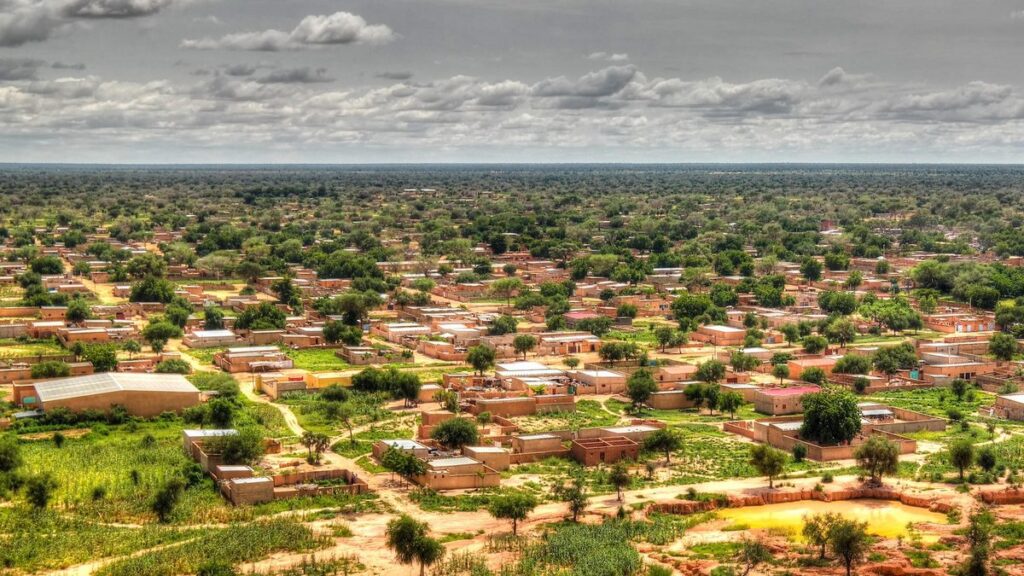
Revival in the African Sahel: A New Era of Rainfall and Renewal
In a surprising turn of events, the African Sahel, once synonymous with drought and famine, is experiencing a significant increase in water levels. This transformation is evident as wells refill, Lake Chad shows signs of recovery, and once-barren lands become fertile again. This rejuvenation has led to the return of near-extinct species like the oryx and a resurgence in farming activities.
The late 20th century saw the Sahel’s soils hardened by relentless sun exposure. However, the region is now witnessing erratic and extreme rainfall. While these conditions have resulted in lethal floods, they have also replenished rivers, filled desert depressions, and restored dried riverbeds known as wadis. This process, which began in the 1990s, has notably accelerated in the past five years.
According to Richard Taylor, a hydrogeologist at University College London, “Across the Sahel, from Ethiopia to Senegal, we have evidence of increased terrestrial water storage.” Taylor’s research focuses on the interplay between climate, land use, and groundwater recharge.
With a strengthening monsoon, there is talk among scientists of the Sahel being on the verge of a new humid era.
While increased rainfall since the 1970s and 1980s droughts offers some explanation, it doesn’t fully account for the Sahel’s transformation. Researchers attribute additional changes to land surface modifications, including the Great Green Wall initiative, traditional water harvesting techniques, and the disruption of irrigation projects due to conflict.
The Sahel, a semi-arid band stretching across North Africa, is critical for its residents, who rely heavily on its unpredictable rains. With a population exceeding 150 million, the region is seeing a long-term trend towards more intense rainfall. This shift, coupled with rising underground water reserves, heralds an agricultural renaissance.
The West African monsoon, which determines the Sahel’s rainfall, plays a pivotal role. Its northward reach can mean the difference between a successful harvest and failure. As the monsoon strengthens, scientists are optimistic about the Sahel entering a new humid phase.
Wildlife is benefiting from this change. In Chad’s Ouadi Rimé-Ouadi Achim nature reserve, species like aardvarks, porcupines, and foxes are thriving again. The scimitar-horned oryx, once extinct in the wild, now boasts a population of over 600. West African giraffes have also returned to areas they previously abandoned.
Farmers are witnessing positive changes as well. By nurturing natural tree regrowth, they have improved crop yields on previously treeless fields in southern Niger. Support from aid programs, such as the World Bank’s PROLAC, has helped establish small-scale irrigation systems around renewed oases in Chad, Niger, and Cameroon.
Not only are new ponds forming on formerly arid lands, researchers have found wells across the Sahel are refilling.
Achta, a farmer in Chad, shared her experience: “In the past… there was not enough water to irrigate crops, and our harvests were meager. Now our lives have changed.” The World Bank highlights her story as indicative of broader transformations in the Lake Chad basin.
Severe storms, known as Mesoscale Convective Systems, have dramatically increased, delivering most of the Sahel’s rainfall. A threefold rise in extreme storms since the 1980s underscores the changing climate dynamics. The U.N.’s Intergovernmental Panel on Climate Change attributes this to warming in the North Atlantic, driven by global heating and reduced sulphate aerosols from coal burning.
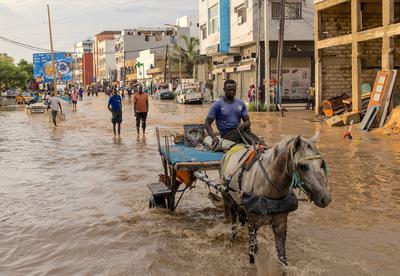
These intense storms, while initially destructive, have boosted groundwater reserves as water quickly fills rivers and wadis, eventually seeping into aquifers. Taylor notes that rainfall intensity significantly impacts groundwater recharge. NASA’s Gravity Recovery and Climate Experiment supports this with satellite data showing increased gravitational force due to rising terrestrial water storage.
Beyond rainfall, land events, such as the Great Green Wall and traditional water-harvesting techniques, contribute to groundwater recovery. While some argue these techniques are pivotal, others believe they aren’t widespread enough to account for the entire resurgence.
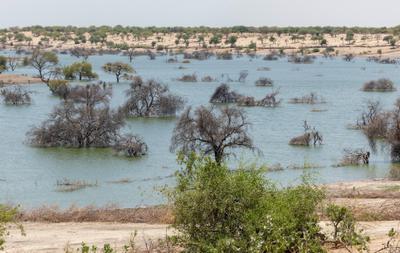
Soil crusting from past droughts has increased runoff, directing more water to Lake Chad, which is now recovering. This lake, once a symbol of the Sahel’s decline, has grown significantly, with hydrologists reporting a peak size comparable to the 1960s.
Nigeria plans to restore a massive irrigation project on the shores of Lake Chad, which had been abandoned for want of water.
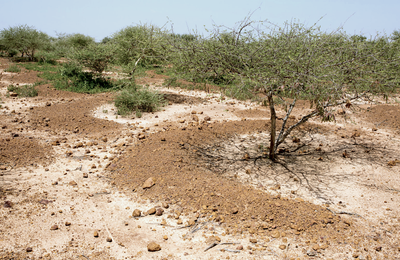
Efforts to harness rain in soils, like the Great Green Wall, are crucial. Techniques such as stone placement, zai pits, and crescent mounds help capture rainfall, though their scale may not fully explain the groundwater resurgence. Reduced river water extraction, due to declining irrigation projects and regional conflicts, has also left more water to recharge aquifers.
Climate models predict even more rainfall for the Sahel in the future, driven by global warming and reduced aerosols. Taylor anticipates that increased rain extremes will boost groundwater recharge. This optimism has prompted Nigeria to consider revitalizing the South Chad Irrigation Project, aiming to tap into the newfound water resources.
Original Story at e360.yale.edu