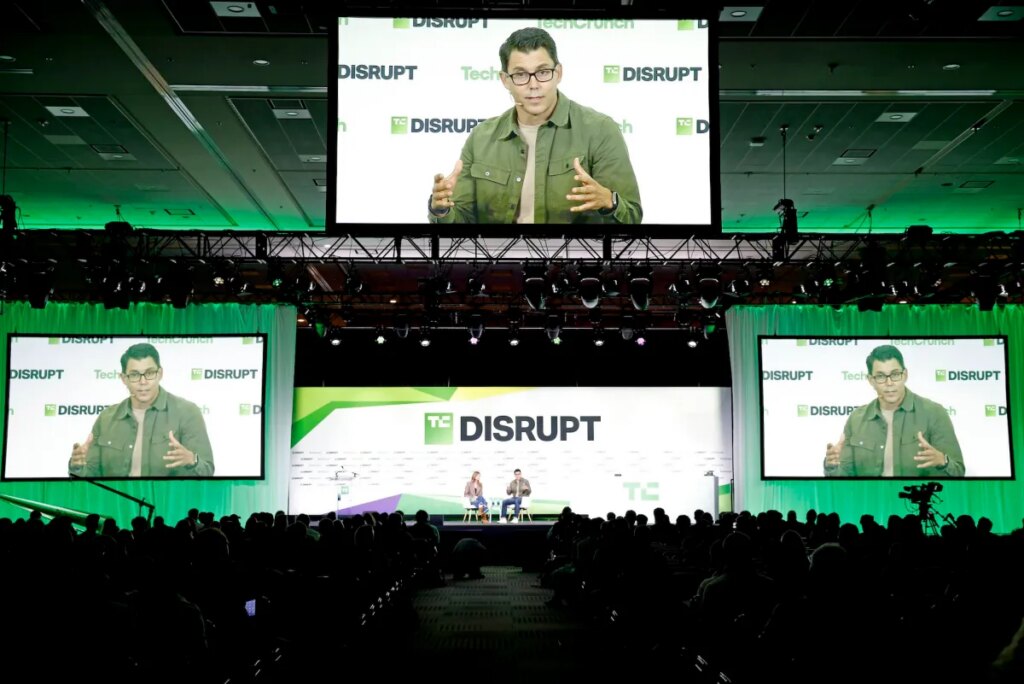
In the evolving landscape of transportation, Rivian is making strategic moves to transform its role beyond just an electric vehicle manufacturer. The company’s journey, led by CEO RJ Scaringe, is marked by a series of initiatives that highlight a shift towards becoming a comprehensive tech supplier.
Rivian’s recent advancements underscore a significant shift in its business model. The company has developed proprietary AI models for its in-vehicle assistant and is actively working on an automated driving system in collaboration with Uber. Additionally, Rivian is creating custom silicon, a 5 nm processor, in partnership with Arm and TSMC. This is complemented by a substantial $5.8 billion joint venture with VW Group, focusing on electric architecture and software.
Furthering its influence in the tech domain, Rivian has diversified into micromobility and robotics. The micromobility skunkworks project led to the formation of a startup called Also. Meanwhile, Mind Robotics, a venture founded by Scaringe, is 31% owned by Rivian and aims to cater to industrial robotics needs, with Rivian as a potential client. Doug Field, a former executive from Ford, Apple, and Tesla, has been appointed as president of Mind Robotics, as announced by Scaringe.
Scaringe envisions expanding Rivian’s joint venture with VW to encompass AI and autonomy, with plans to license its technology to various brands. This vision aligns with Rivian’s ambition to transition into a tech supplier, offering its electric architecture, software, AI models, and autonomy stack to other companies.
Moreover, Rivian’s Mind Robotics aims to provide industrial robots beyond its factories, potentially widening its market. The company’s partnership with Uber on robotaxis is pivotal; a successful launch could lead to further collaborations.
Scaringe’s vision includes reimagining Rivian’s vehicle designs with autonomy in mind. He expressed his enthusiasm in an interview with TechCrunch, saying, “Where it gets really interesting is then you think beyond R2 and R3 and start to imagine the form factors that you want to build for a personally owned autonomous vehicle. You know, it opens up all kinds of design opportunities. It can create dramatically different experiences.”
Deals!
Bedrock Robotics, a startup focusing on autonomous driving technology for construction vehicles, is reportedly raising $600 million, according to sources cited by Axios.
Dot Ai finalized its acquisition of Envoy Technologies, an electric vehicle car-sharing company, through a $65 million all-stock deal, as per a regulatory filing.
Evos secured $9 million in a pre-seed round co-led by Uncork Capital and Field Ventures, aiming to expand its AI agents for industrial work automation, including in the freight brokerage sector. Read more.
Mana Battery, based in Colorado, raised $10.15 million for its anode-free sodium battery technology, with Voyager Ventures leading the round. Learn more.
PlusAI, involved in autonomous trucking, filed a Form S-4 registration statement to advance its plan to go public via a merger, as detailed in a Securities and Exchange Commission filing.
Volvo is enhancing its automated driving system through an expanded partnership with Nvidia, utilizing Nvidia’s technology for hands-free driving capabilities. Details of the deal remain undisclosed. Read more.
Waabi has entered into a commercial partnership with Warrior Logistics for autonomous trucking operations in Texas, facilitating freight transport between Dallas and Houston. Read more.
Notable reads and other tidbits

Electric vehicle sales are gaining momentum in the United States, showing positive growth.
Laplace Intelligence, a participant in TechCrunch’s Startup Battlefield 200, is developing automated red-teaming technology to test the resilience of robots and self-driving cars.
An MIT startup, LNK Energies, claims it can convert diesel trucks to hydrogen, reducing costs and emissions. Read more.
The Paris Auto Show has brought Chinese electric vehicles to the forefront.
Tesla has debuted its SpaceX-powered Roadster with a dramatic stunt. The car’s design allows for aerial maneuvers, though legal road use remains uncertain. Learn more.
Waymo is expanding its robotaxi service to Canada, starting in Toronto, after receiving pilot program approval. The service is now open to all in San Antonio, San Diego, and Tampa. Read more.
One more thing …

TechCrunch’s Tim De Chant recently explored the 2026 Porsche Macan Turbo EV, sparking a reflection on the definition of a sports car. Read the full review.
Original Story at techcrunch.com