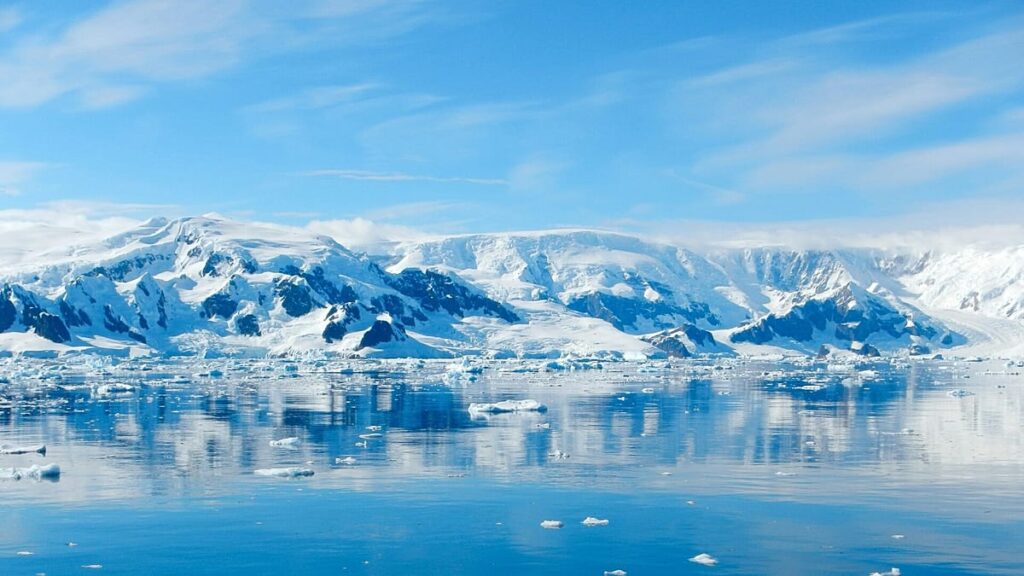
Recent research has unveiled the intricate factors contributing to the alarming reduction of sea ice in Antarctica, revealing an interconnected set of phenomena responsible for this environmental change. The findings highlight the complex interplay of natural forces negatively impacting the Antarctic region’s ice cover, with significant implications for global climate patterns.
A study conducted by the University of Southampton, published in the journal Science Advances, identifies three primary factors—deep ocean heat, strong winds, and a feedback loop—that have significantly destabilized the Southern Ocean’s sea ice post-2015. These elements have hindered the sea ice’s natural recovery process.
Scientists caution that this decline may disrupt oceanic currents, amplify global warming, and contribute to sea level rise worldwide. Lead researcher Aditya Narayanan noted the extensive loss, equating it to an ice area nearly as large as Greenland, stating, “What started as a slow build-up of deep-sea heat under the Antarctic sea ice was followed by a violent mixing of water, ending in a vicious cycle where it’s too warm to let ice recover.”
Key Drivers of Sea Ice Reduction in Antarctica
In 2013, intensifying winds began pulling warm, saline water from the deep ocean, known as circumpolar deep water, toward the surface beneath the Antarctic sea ice. The study found that these winds subsequently mixed the heat upwards, leading to significant melting of sea ice in East Antarctica.
Since 2018, a self-sustaining cycle has emerged, where reduced sea ice results in a warmer and saltier ocean surface, making it difficult for new ice to form. Researchers have observed distinct regional variations in how these changes are manifesting across Antarctica.
In East Antarctica, the primary loss is due to the upwelling of warm water from the ocean depths. In contrast, West Antarctica experiences melting primarily from warm subtropical air and persistent cloud cover, which retain heat near the ocean’s surface, notably during the summers of 2016 and 2019. Climate change exacerbates these effects by intensifying the winds that drive deep water upward.
Consequences of Diminished Sea Ice
Antarctic sea ice plays a crucial role in the Earth’s climate system. Its reflective surface bounces back about 80% of sunlight, according to the Australian Antarctic Program. With less ice, the darker ocean absorbs more heat, further accelerating global warming.
This warming can undermine ice both on land and at sea, increasing the likelihood of ice shelf collapses. Such events contribute to rising sea levels, which are closely linked to coastal flooding and shoreline erosion. Scientists estimate that each centimeter of sea level rise endangers approximately six million people.
Alessandro Silvano, a co-author of the study, emphasizes, “This isn’t just a regional problem.” The ongoing decrease in sea ice raises fears that parts of Antarctica might be nearing critical climate tipping points.
Alberto Naveira Garabato, a professor at the University of Southampton, warns, “If the low sea-ice coverage prevails into 2030 and beyond, the ocean may transition from a stabiliser of the world’s climate to a powerful new driver of global warming.”
Impact of Human Activity on Antarctica’s Ecosystem
NASA data indicates that between 2002 and 2020, Antarctica lost approximately 149 billion metric tons of ice annually. Despite this, tourism to the region is on the rise. The International Association of Antarctica Tour Operators (IAATO) reports that around 122,000 people visited Antarctica in 2024, a significant increase from about 44,000 in 2017.
Projections by the University of Tasmania suggest that tourist numbers could surpass 450,000 annually by 2033. The surge in last chance tourism places additional strain on Antarctica’s delicate ecosystem, with heightened risks of contamination, invasive species, and disease outbreaks, as warned by scientists and environmental advocates.
Original Story at www.euronews.com